





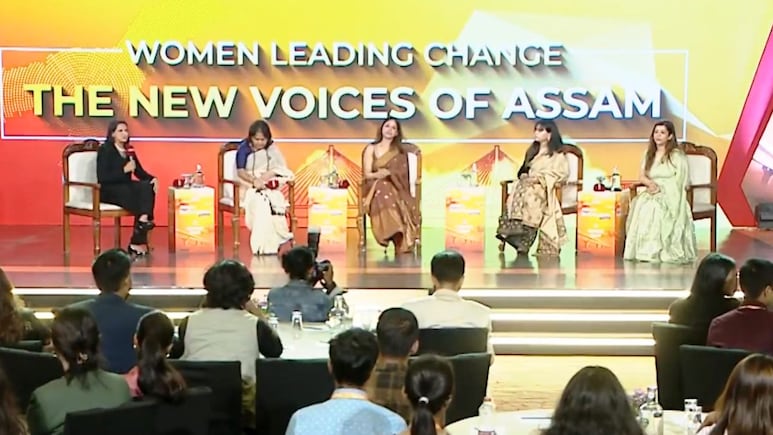
A multigenerational panel traced how women in Assam are moving from inherited roles to self-defined identities, an arc shaped by financial autonomy, cultural assertion and the decentralising force of digital platforms.
At the NDTV Assam Power Play, Rita Chowdhury located the shift in a longer continuum. Change in Assam has never been abrupt, but moved through families, classrooms and movements that allowed women to claim space, she said. "Power begins with self-respect."
She emphasised the newest generation, unbound by some of the "mental boundaries" older women inherited, has a wider platform to assert individuality. Technology, she added, has given young Assamese women a sense of voice that earlier generations had to fight to build.
Stuti Choudhury brought the lens to financial independence. The loom is no longer only a domestic symbol; its patterns now fund start-ups, higher education and entrepreneurial ventures.
Rural schemes, from seed capital to women's collectives, have moved thousands from beneficiaries to breadwinners. But she flagged gaps in urban life, childcare, safe transport, and workplace infrastructure for women in the entertainment and service sectors. Pay parity has improved but remains a negotiation.
Drishti Medhi traced her trajectory through the story of her widowed mother, arguing that representation begins at home. Digital media accelerates narratives but also forces young women to take clear positions.
Akshata Narain said the women of Assam were always empowered but underrepresented. The change now is visibility and leadership, she added. She pointed to pioneers like Assam's first woman pilot Dheera Chaliha Hazarika and contemporary filmmakers who lead rather than occupy space. Cultural identity remains central, whether through the Mekhela Sador or through adapting traditional weaves for wider markets.
Track Latest News Live on NDTV.com and get news updates from India and around the world

