



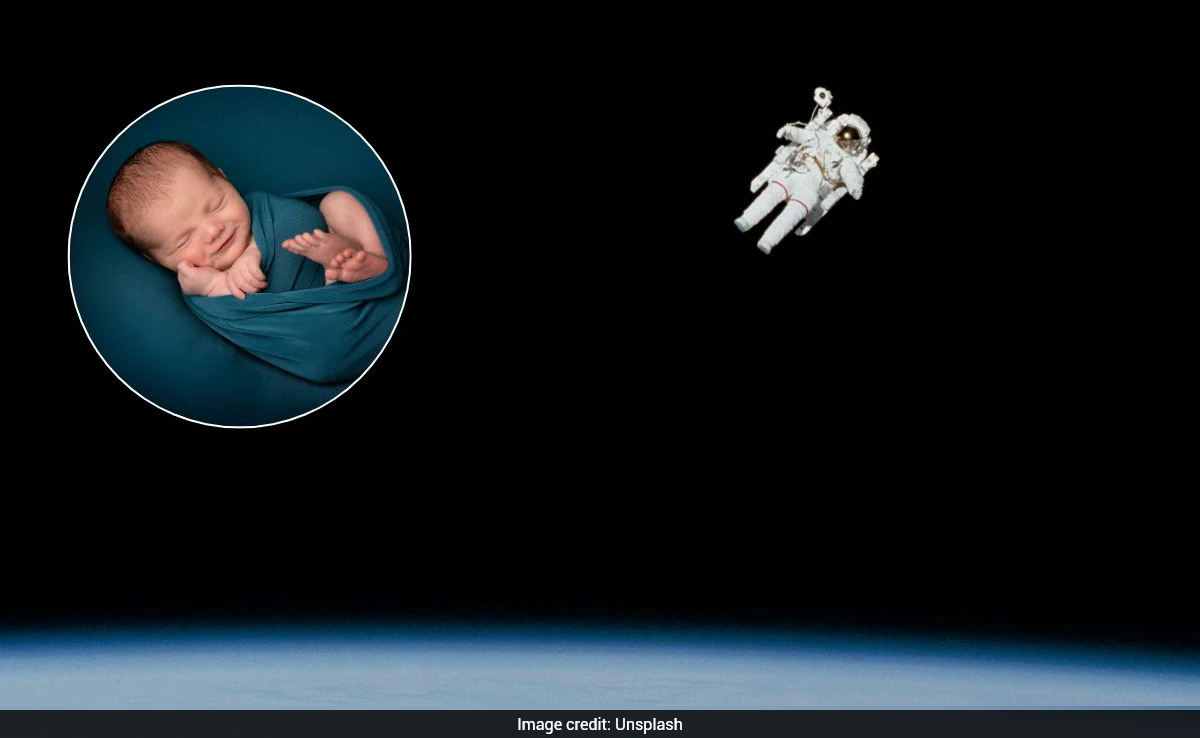
Scientists have been constantly making efforts to colonise the Moon and Mars, but the rapid advancement comes with a crucial question: can humans safely reproduce in space? A new study attempted to find answers, but unfortunately, there is still no clarity. Experts have warned that space environments pose significant risks to reproductive health, including radiation, microgravity and stress.
"Despite over 65 years of human spaceflight activities, little is known of the impact of the space environment on the human reproductive systems during long-duration missions," researchers in the study, published in the journal Reproductive BioMedicine Online, said.
The researchers revealed that space radiation can damage DNA, harm sperm and eggs, and increase cancer risk. This is particularly concerning for developing fetuses, as radiation can cause cellular damage.
Also read | All About Vandi Verma, the Indian-Origin Scientist Behind Mars Rover's AI-Powered Drive
Microgravity can alter hormones, reduce sperm and egg quality, and affect embryo development. Several studies have been conducted on animals, which have shown mixed results, with some indicating normal development and others showing adverse effects.
"Extended time in space poses potential hazards to the reproductive function of female and male astronauts, including exposure to cosmic radiation, altered gravity, psychological and physical stress, and disruption to circadian rhythm," the researchers said.
However, they further noted that the effects of radiation and microgravity on human reproduction are not yet fully understood, and they also emphasised the need for more studies.
Also read | Scientists Believe Earth Was Purple 2.4 Billion Years Ago. Here's What It Means For Future
"Although short-term missions appear to have minimal impact on fertility, the long-term effects of radiation, microgravity, hormonal disruption, and epigenetic change remain unclear," the researchers said.
"As missions extend in duration and humanity moves towards establishing permanent off-world habitats, such as lunar bases or Mars expeditions, concerns about fertility and reproductive health are no longer hypothetical but pressing."
To know more about the topic, the scientists have recommended further research on human reproduction in space, along with developing protective measures, such as radiation shielding. Such progress must also focus on establishing strong ethics rules and guidelines.
"As human presence in space expands, reproductive health can no longer remain a policy blind spotsays Dr Fatahi Karouia, senior author of the study and a research scientist at NASA, in a statement.
"International collaboration is urgently needed to close critical knowledge gaps and establish ethical guidelines that protect both professional and private astronauts - and ultimately safeguard humanity as we move toward a sustained presence beyond Earth."
Track Latest News Live on NDTV.com and get news updates from India and around the world

