





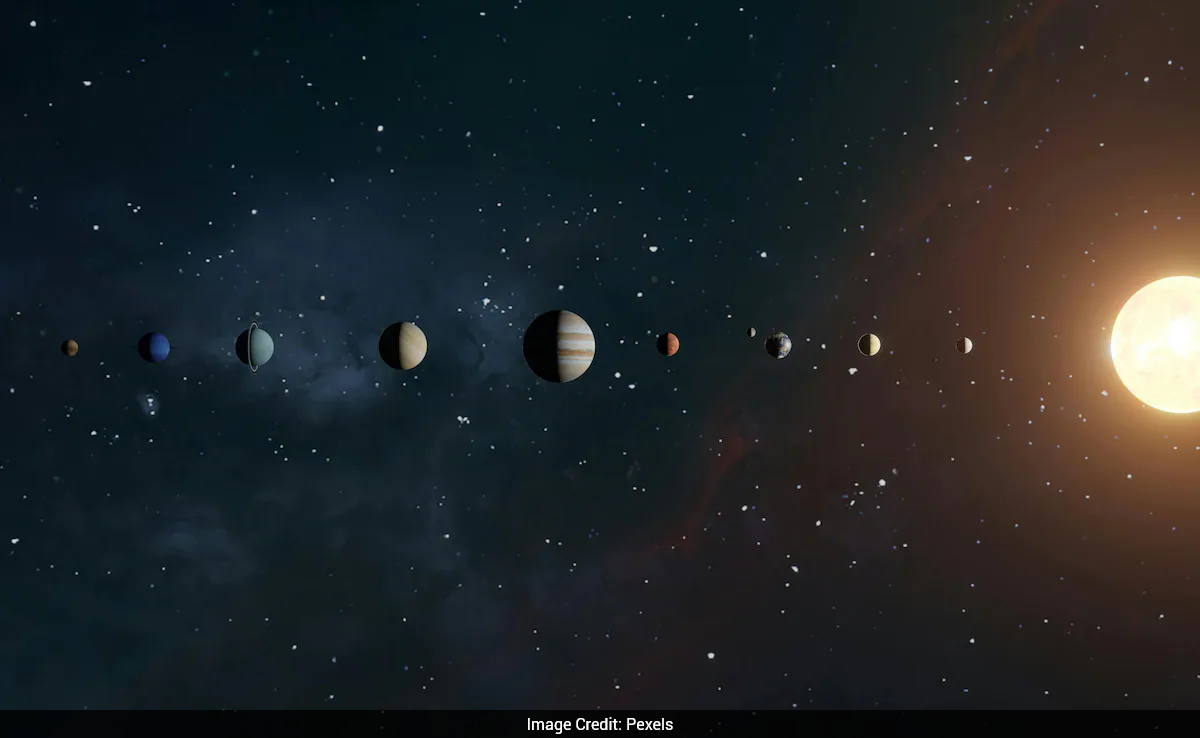
Sky lovers are in for a special treat this weekend as six planets come together in a rare and beautiful sky event. This event is often called a planet parade because many worlds appear lined up in the same part of the sky. For a short time after sunset, people will get a magical chance to see several planets at once if the sky is clear, reported People.com.
From now until the end of February, Mercury, Venus, Jupiter, Saturn, Uranus, and Neptune will be visible in the same part of the sky. Some of these planets will be visible without any instruments, while others will require the help of binoculars or a telescope.
Best Viewing Time
According to NASA, the best opportunity to witness this celestial spectacle will be on Saturday, February 28th. Mercury and Venus will appear slightly higher after sunset, while Saturn will be visible near the horizon. At the same time, a nearly full moon will also be visible in the night sky.
The visibility of the planets will begin shortly after sunset and will be limited, especially for Mercury and Venus. However, Jupiter will remain in the sky until late in the evening.
Which Planets Will Be Visible
Those looking at the sky will be able to see a total of six planets: Mercury, Venus, Jupiter, Saturn, Uranus, and Neptune.
Venus will be the brightest and easiest to spot. It will be visible low in the western sky. Mercury will be visible briefly just above Venus. Saturn will be visible slightly higher in the southwest. Jupiter will shine high in the east and will become clearer as the night progresses. Uranus will be found between Jupiter and Saturn and below the Pleiades constellation, but binoculars will be necessary to see it. Neptune will be very close to Saturn, and a telescope will be needed to see it.
Where To Look In The Sky
Look west and southwest to see Venus, Mercury, and Saturn immediately after sunset. To see Jupiter, look east, where it will appear high in the sky. Uranus will be approximately between Jupiter and Saturn, while Neptune will be visible near Saturn.
For a better experience, it is important to have a clear and open horizon.
How To Watch The Planet Parade
People are advised to go out with binoculars immediately after sunset and observe the western sky. First, look for Venus near the horizon, then look upward to find Mercury and Saturn. Jupiter, the largest planet in the solar system, will be easily visible in the east.
Light pollution won't significantly hinder viewing, but clouds can be problematic, so clear skies are essential.
The unique feature of this celestial event is that the planets usually appear along roughly the same path in the sky. This parade is unique because of its timing, and this time is considered perfect.
Track Latest News Live on NDTV.com and get news updates from India and around the world

