





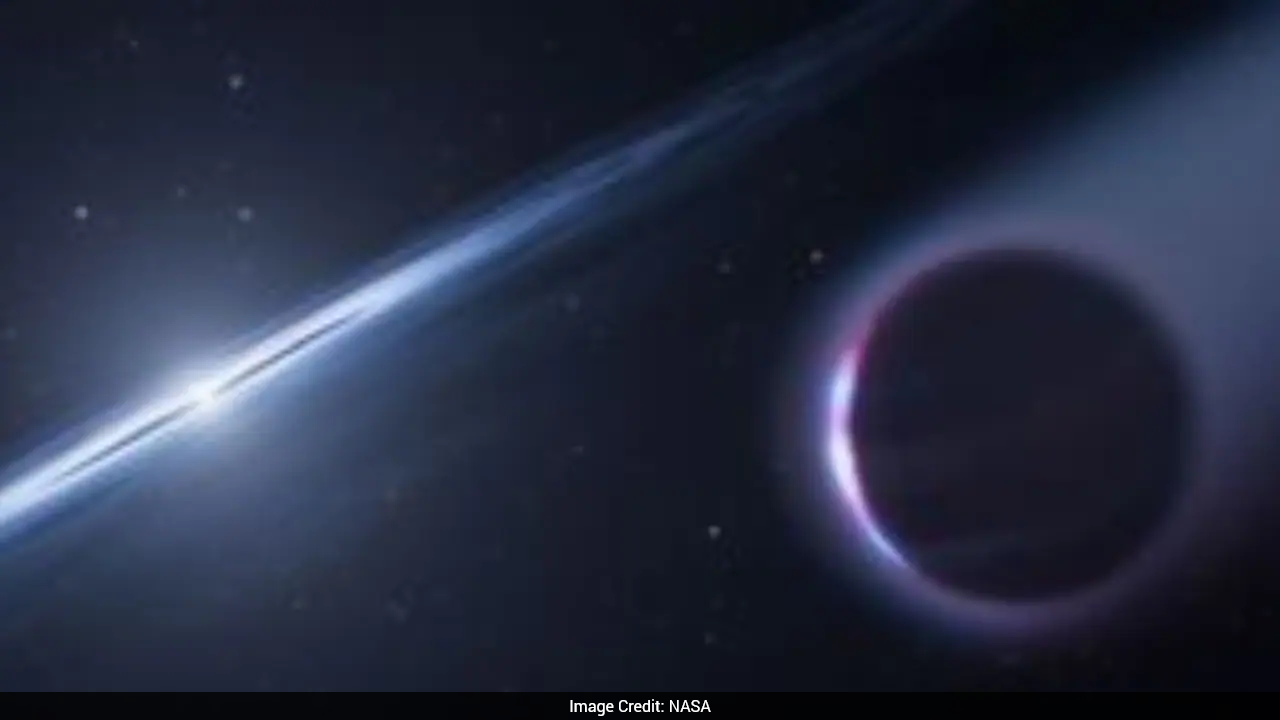
Astronomers have discovered evidence that a white dwarf star named HS 0209+0832 may have a second-generation planet orbiting it. The discovery was made by studying old data from NASA's Hubble Space Telescope. Researchers found an unusual amount of the chemical element niobium, which suggests that the planet may have formed from material released by the dying star, according to NASA.
When Hubble first observed the star in 1999, its data contained around 100 unidentified chemical features. Jamie Williams, the lead author of the study and a doctoral candidate at the University of Warwick in the United Kingdom, studied the records again using an updated chemical database. He found that niobium matched many of the unidentified features.
Williams explained that the discovery points to the possibility that planets can form even after a star reaches the end of its life.
A white dwarf is the remaining core of a low-mass star that has used up its nuclear fuel and lost its outer layers of gas and dust. A second-generation planet is a planet that forms from material released by a dying star.
Earth and the other planets in our solar system are first-generation planets because they formed from material left over from the birth of the Sun.
Nicholas Stone, a theoretical astrophysicist at the University of Wisconsin-Madison and a member of the research team, explained that niobium and other elements heavier than iron are formed under unusual conditions inside dying stars. Their presence can indicate that a star has released its inner material into space.
The research team checked Hubble's findings using data from NASA's retired Far Ultraviolet Spectroscopic Explorer (FUSE) mission. These observations also showed strong signs of niobium in the system.
NASA's Transiting Exoplanet Survey Satellite (TESS) observed the white dwarf for four months. It detected repeated changes in brightness, suggesting that a planet orbits the star at a distance of about 6 million kilometres. This is much closer than Mercury's distance from the Sun.
Researchers estimate that the possible planet is a gas giant about the size of Jupiter. It is also rapidly losing its atmosphere because the white dwarf is still very hot and may be releasing enough energy to strip away the planet's outer material.
The lost material could form a comet-like tail and create a disk around the white dwarf before falling back onto its surface. This may explain why Hubble detected niobium while studying the star.
Despite losing material, the planet is likely to remain in the system, according to Williams.
Track Latest News Live on NDTV.com and get news updates from India and around the world

