





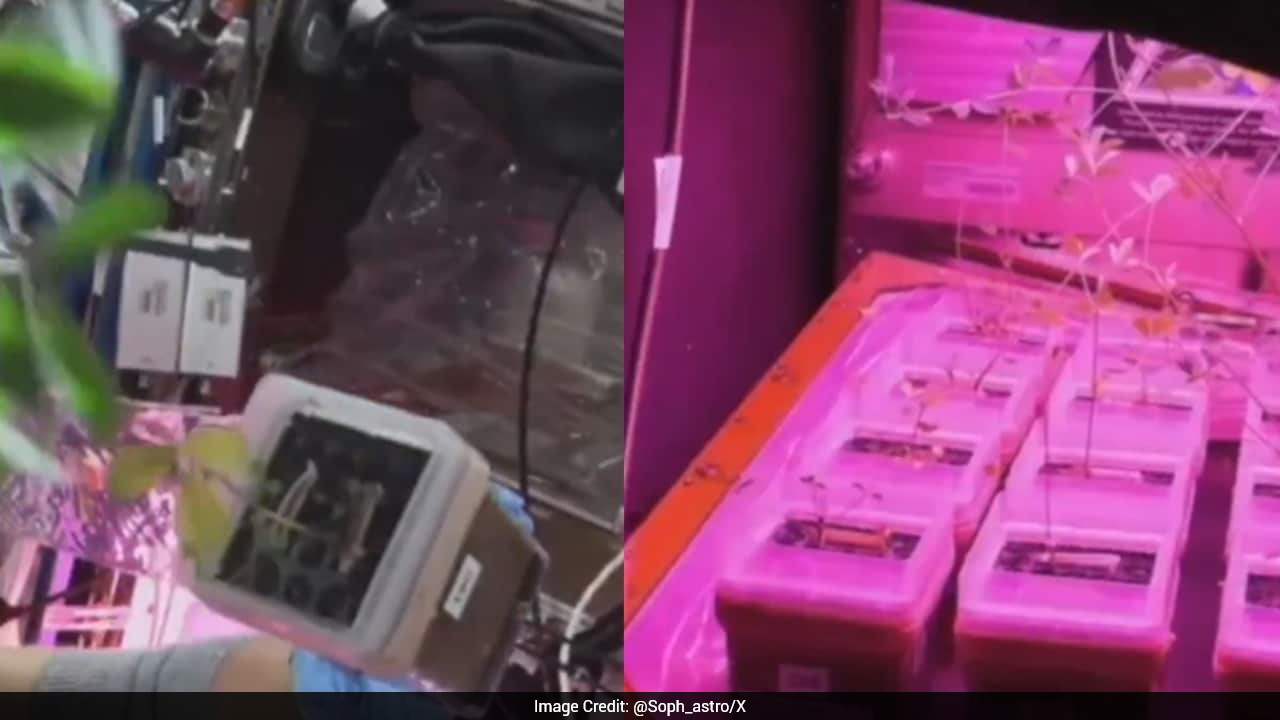
A small garden floating in space has caught attention after astronaut Sophie Adenot shared a look at the glowing plant system aboard the International Space Station. She explained that the pink glow seen in recent timelapses from Columbus came from the station's vegetable production system, known as Veggie.
Adenot wrote that many people noticed the pink glow in the recent timelapses done in Columbus. She said it was thanks to Veggie, the International Space Station's vegetable production system, which is their little space garden.
She explained that the Veggie chamber glows magenta-pink because it emits a light spectrum that is perfect for plant growth.
Watch Video Here:
Day 144, orbit 2233 — Many of you noticed the pink glow in the recent timelapses done in Columbus… That's thanks to Veggie 🌱, the International Space Station's vegetable production system — our little space garden! The Veggie chamber glows magenta-pink because it emits a light… pic.twitter.com/3BXa2Ze0dI
— Adenot Sophie (@Soph_astro) July 7, 2026
During Expedition 74, Veggie hosted the Veg-06 experiment. Adenot said the experiment had two main goals. The first was to study how alfalfa plants and beneficial bacteria work together in microgravity to capture nitrogen from the air and turn it into nutrients that plants can use. The second was to study how lignin, the material that helps plants stand upright on Earth, changes in space.
The alfalfa plants were successfully grown, watered and cared for by the crew before being harvested. The aerial parts and roots of the plants were then stored in a freezer and sent back to Earth for further analysis on board the CRS SpX-34 cargo Dragon.
Adenot said working on Veggie gives astronauts a real taste of home. She said it reminds them of what a garden looks and smells like, and that there is something very special about watching plants grow and caring for them day after day.
She said she loved working on the experiment.
Adenot added that being able to grow fresh food in space will be important for long exploration missions, not only for nutrition but also for crew morale. She said a better understanding of nitrogen fixation is also important for improving soil quality on Earth, while studying lignin may benefit agriculture and forestry in the long run.
She ended by saying, "Go science!"

