





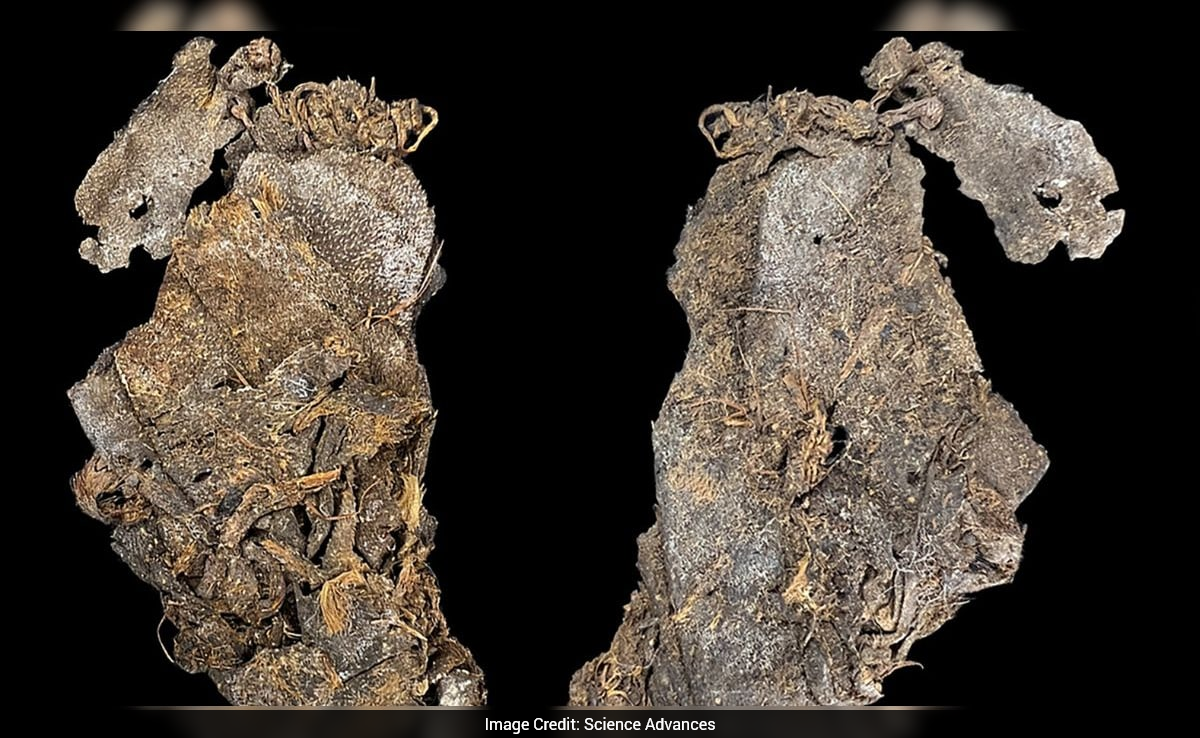
Archaeologists have found pieces of animal hide that are about 12,000 years old and may be the oldest known sewn clothing made by humans. The discovery was detailed in a study published in the journal Science Advances. The small scraps were found inside Cougar Mountain Cave in Oregon, reported NYPost.
These two elk skin remains date back to the Late Pleistocene and the last phase of the Ice Age, approximately 12,060 to 12,620 years ago. This suggests that the early inhabitants of North America had already mastered advanced sewing skills thousands of years before the construction of the Egyptian pyramids (1700 to 2700 BC).
These pieces of skin were joined together with rope-like cords made of animal skin. Scientists confirmed their age and provenance through radiocarbon testing and species-based identification.
Manufacturing Process
Researchers speculate that these skins may have been stitched together with bone needles. Bone needles were also found at the excavation site, along with tools that may have been used to capture animals.
Experts are not entirely sure whether these stitched skins were actually clothing. It is possible that they were part of a bag or shelter.
Significance Of The Discovery
If proven to be clothing, these would be the oldest physical evidence of stitched skins to date and the first known clothing from the Pleistocene.
This discovery also contributes to understanding how ancient humans survived during the extremely cold period known as the Younger Dryas, when temperatures dropped significantly worldwide.
According to researchers, modern humans were the only hominins to permanently settle above 45 degrees north latitude around 45,000 years ago. They explained that surviving in the harsh cold and limited resources required advanced techniques for maintaining body heat and gathering food.
The study states that the method of sewing with bone needles enabled people to create clothing that adhered to the body, allowing them to withstand extreme cold. While ordinary animal skins did not provide complete protection against hypothermia, stitched garments provided better heat preservation and did not hinder movement.
The study also found that bone needles were common in the Pleistocene, but declined in later warmer periods.
Track Latest News Live on NDTV.com and get news updates from India and around the world

