





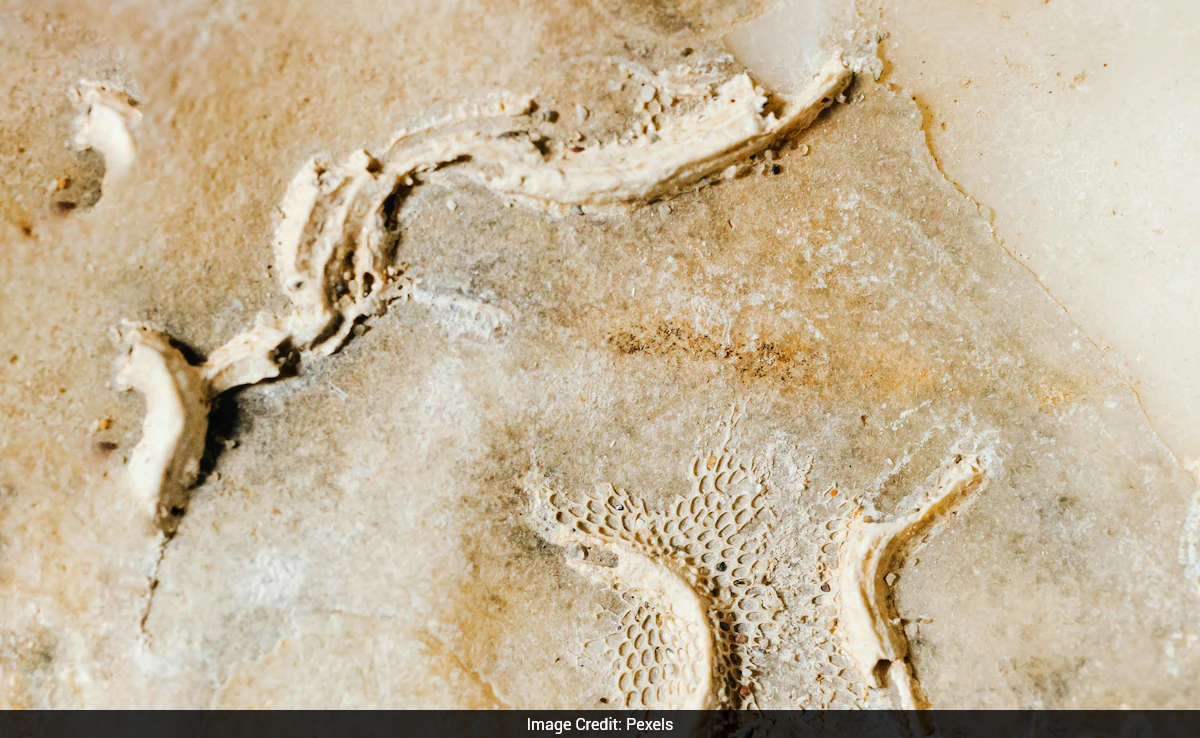
Scientists have uncovered an extraordinary collection of ancient fossils in China that is helping to explain a little-known chapter in the history of life on Earth. The fossils, which date back 512 million years, include many species never seen before and offer new insight into how life survived after one of the planet's earliest mass extinctions.
Scientists have unearthed ancient fossils known as the Huayuan Biota from a quarry in Hunan Province, South China. These remains were uncovered during several field studies conducted between 2021 and 2024.
The Huayuan Biota contains 153 distinct species from 16 major animal groups. These include sponges, arthropods, and unique, segmented apex predators like radiodonts. Researchers say these fossils together reveal a complex and well-organised food web.
Ninety of these species have never been identified before and are completely new to science.
These fossils date back to the period immediately following the mass extinction known as the Sinsk event. This extinction occurred approximately 513.5 million years ago and is believed to have been caused by a significant drop in oxygen levels in the oceans.
This event halted the rapid expansion of complex life that had begun during the Cambrian explosion, about 540 million years ago.
The Cambrian period lasted from about 541 to 485 million years ago. This period began with one of the most significant evolutionary events in Earth's history, when nearly all major animal groups first appeared in the fossil record. This transition is often referred to as the "biological Big Bang."
Most of our knowledge about Cambrian life comes from rare fossil sites that formed under special conditions. These conditions also preserved soft-bodied organs, which normally decay over time.
Limitations Of The Old Fossil Record
The most famous example of such exquisitely preserved Cambrian fossils is the Burgess Shale of Canada, which is estimated to be about 508 million years old. However, this site dates back about 5.5 million years after the Synoptic Event.
On the other hand, major fossil sites like the Chengjiang and Qinjiang biotas in China predate this mass extinction. This time lag prevented scientists from fully understanding the true impact of the Sinsk event for a long time. It is estimated that approximately 41 to 49 percent of marine life species were wiped out during this event.
Researchers say that the lack of high-diversity fossil sites associated with this specific time period poses a major obstacle to understanding the evolution of life during the Cambrian explosion and its subsequent recovery.
When the Huayuan Biota was compared to 45 other Cambrian fossil sites around the world, strong connections emerged between these fossils found in China and the relatively new Burgess Shale fossils from North America.
This suggests that Cambrian organisms could have migrated very long distances across oceans, with ocean currents and sea-level changes likely playing a key role.
The research also revealed that the deep-sea environment represented by the Huayuan Biota was significantly less affected by the Sinsk extinction than shallower seas. Such deep regions may have served as safe havens for marine life or emerged as hotbeds of new evolutionary activity.
Scientists say the Huayuan Biota provides rare and valuable evidence, filling a significant gap in understanding one of Earth's earliest mass extinctions and the subsequent recovery of life.
Track Latest News Live on NDTV.com and get news updates from India and around the world

