





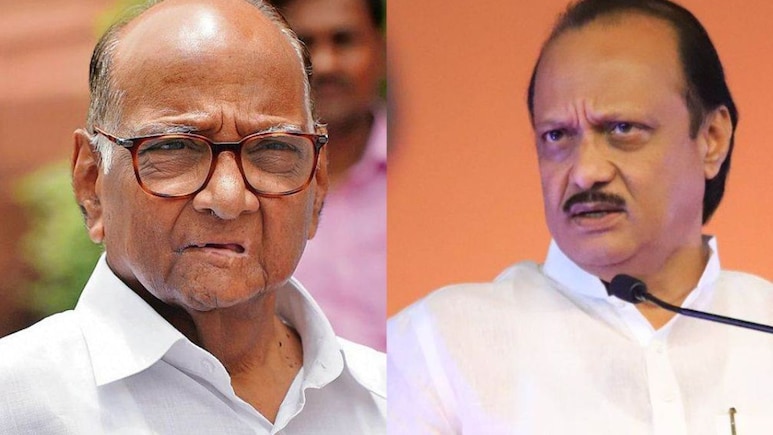
The results of the Pune and Pimpri-Chinchwad Municipal Corporation elections have delivered a clear political message: the Pawar brand, once considered decisive in these urban power centres, no longer guarantees victory on its own.
Despite tactical coordination between the two Nationalist Congress Party (NCP) factions led by Sharad Pawar and Ajit Pawar, the electorate did not respond with the kind of consolidation the leadership had hoped for.
In Pune Municipal Corporation, the BJP has emerged with a clear upper hand. The party has either won or taken strong leads in a large number of wards, positioning itself to dominate the civic body.
The NCP factions, even when fighting on broadly aligned lines, failed to convert their traditional pockets of influence into a citywide momentum. Pune's voter profile has changed significantly over the past decade, with middle-class, first-time voters and apartment-centric societies responding more to governance, infrastructure, and national-level political narratives than to legacy local leadership.
The Pawars' campaign struggled to counter this shift with a compelling, unified urban vision.
Pimpri-Chinchwad was expected to be different. Historically, PCMC has been considered a Pawar stronghold, especially under Ajit Pawar's influence.
However, the results here too have disappointed the NCP camp. The BJP has made deep inroads and is leading or winning enough seats to challenge, if not outright deny, NCP dominance.
This outcome is particularly significant because Pimpri-Chinchwad was seen as the testing ground for whether Ajit Pawar's personal clout could still decisively shape urban verdicts. The verdict suggests that charisma alone is no longer sufficient without strong organisational unity and a clear political narrative.
One of the key reasons behind the setback is the incomplete nature of the Pawars' coming together. While there was seat coordination and an attempt at joint campaigning, this was never projected as a full political reunion. On the ground, workers remained divided, loyalties were confused, and voters were unsure whether this was a genuine reconciliation or merely a temporary adjustment to stop the BJP. That ambiguity diluted the impact of the alliance.
At the same time, the BJP entered both elections with superior booth-level management, a clearer message, and a sustained urban presence built over years. In contrast, the NCP's effort appeared reactive, stitched together close to the polls, and overly dependent on legacy goodwill rather than future-oriented promises. Internal competition between local leaders loyal to different Pawar camps also weakened campaign coherence in several wards.
The losses now raise a larger question about the future of Pawar unity.
Will these results push Sharad Pawar and Ajit Pawar to reassess their separation more seriously, or will the setback instead harden positions and revive internal rivalries? So far, both sides have maintained that cooperation was limited to civic elections and that no formal merger has been decided. After these results, the incentive to immediately expand that cooperation appears uncertain.
For the Pawars to truly come together, it would require more than electoral arithmetic. It would need clarity on leadership, resolution of organisational overlaps, a shared ideological direction, and a credible urban agenda that speaks to changing cities like Pune and Pimpri-Chinchwad.
Whether the current defeat becomes the catalyst for such introspection or merely pushes the idea of reunification to the backburner is something that remains unresolved.
Track Latest News Live on NDTV.com and get news updates from India and around the world

