






In Kolkata's social vocabulary, a particular group has long held a special place - the 'bhadralok', or what is often referred to as the 'madhyabitta' (middle-class). In English-language discourse, this social class was once described as the "middling class", and the term later evolved into the "educated middle class", sometimes simply called the "middle class".
During the colonial period, British officials, who first encountered this social group, referred to them as "educated natives." Like most modern social classes, however, the boundaries of the bhadralok community are difficult to define precisely.
In West Bengal, and particularly in Kolkata, the bhadralok have historically played a central role in shaping public opinion.
In earlier decades, the Congress party enjoyed considerable support among Kolkata's urban middle class, while rural Bengal leaned more towards the Left parties. Later, during the final phase of Left rule, Buddhadeb Bhattacharjee maintained significant support among urban educated voters, while Mamata Banerjee emerged as the political favourite in rural Bengal. Eventually, Banerjee managed to expand her influence across both demographics.
However, in the 2026 Assembly election, a different pattern appears to be emerging in parts of urban Kolkata. In some areas, there is visible anti-incumbency after nearly fifteen years of Banerjee's government. Among sections of the bhadralok, too, a certain level of dissatisfaction has become evident.
Their concerns revolve around several issues that have dominated political debates in the state, including the education recruitment scam, allegations of corruption in political campaigns, and the activities of the so-called "syndicate" networks involved in construction and local contracting. For many members of the Bengali bhadralok community, these controversies have created a sense of disillusionment with the present administration.
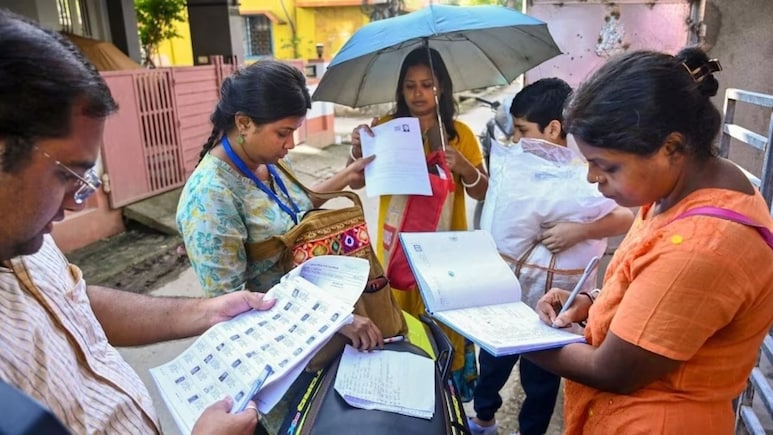
The Special Intensive Revision (SIR) of the voter list has added another layer of controversy. Some argue that the deletions disproportionately affect slum residents or minority communities in Kolkata, while others suggest that the exercise targeted illegal infiltrators, including Bangladeshis living in railway colonies or old refugee settlements.
Differing Opinions
Renowned filmmaker Arindam Sil said, "We are not against SIR, but we are worried about the abrupt huge deletion. Bengali cultural degradation is a wrong perception because there are good films Bengalis are still creating. Tagore's songs, dance and book fairs -- all are still happening. But deleted voters can't get hearings from tribunals. This is unthinkable."
Painter and renowned artist Samir Aich disagreed. "After the RG Kar and Sandeshkhali incidents, Bengali culture has completely eroded. I do not subscribe to any particular party but, as a creative person, I think Bengal has lost its cultural glory in the past 15 years. Vote bank politics should be stopped. The SIR idea is good," he said.
Retired police officer Nazrul Islam also said implementing the SIR was a good decision and that the Trinamool Congress government in the state had "destroyed" the state's development model.
Banerjee and the Trinamool have argued that many genuine voters have been removed from the list and that the deletions do not affect only minority communities, but also a significant number of Hindu voters.
There have been several reported instances where academicians, teachers, professors, college students, and government employees discovered that their names were missing from the voter lists. For many people, the process of correcting the records and re-entering their names has proven to be complicated. The SIR verification procedure requires filling out multiple forms and appearing for inquiries, which many citizens have found difficult and stressful.
The BJP has tried to counter these criticisms by arguing that voter list revisions have taken place in several other states as well, including Kerala, Assam and Tamil Nadu, without similar political turmoil. The party says the protests in West Bengal are largely incited by the Trinamool.
Banerjee, however, has argued that there is a political conspiracy behind the process, claiming that it is being used as a method to remove voters sympathetic to her party. In her campaign speeches, she accused the Election Commission of functioning as a political instrument of the BJP, an accusation that the saffron party has denied.
Voices Raised
As a result, two parallel currents are now visible in Kolkata's public discourse. On the one hand, there is genuine discontent among sections of the bhadralok community regarding governance issues. Many of these voices regularly appear in television debates and discussions across social media platforms. Among sections of the Bengali middle class, criticism of the government has been growing.
However, the SIR controversy has also caused discomfort among several independent intellectuals and professionals who do not align with the Trinamool Congress. For example, Dr Kunal Sarkar, a well-known cardiologist, and Professor Sukanta Chowdhury, emeritus professor of Jadavpur University, have expressed concerns about the way the process has been handled. These figures are generally regarded as free-thinking public intellectuals rather than supporters of any particular political party, yet they have voiced dissatisfaction with how the Election Commission and judicial officers conducted the SIR process
Sarkar said, "It is terrible. The BJP should not advance its political interests through the Election Commission and SIR."
In the end, how all these factors will influence the final electoral outcome remains uncertain. As the saying goes, the final word will only be known when the results are declared.
(Jayanta Ghosal is Contributing Editor, NDTV)
Disclaimer: These are the personal opinions of the author

