






The case of Maung Henry Htoo Aung Linn before the Delhi High Court is not only about admission to Delhi University, but a contradiction in India's handling of refugees, citizenship and identity in the border states of the northeast.
A young Myanmar refugee who fled his country and studied in India is now seeking university admission through lawful means. He does not claim to be an Indian citizen, does not seek Scheduled Tribes benefits and does not try to enter the electoral roll. He stands before the court as a refugee, asking that Delhi University should not insist on a passport that his condition as a refugee makes difficult, if not impossible, to produce.
Then, there are long-standing allegations in Manipur that some Myanmar nationals have crossed the border, obtained Aadhaar cards, entered electoral rolls, acquired local identity documents and accessed benefits available to Scheduled Tribes under broad categories such as Any Kuki Tribes.
The matter that India must look into is that the honest refugee is visible and vulnerable, while the illegal immigrant with Indian papers may become administratively invisible.
Maung Henry's case shows the burden carried by those who follow the transparent route. According to available details, he fled Myanmar in 2022, completed Class 10 in Mizoram and Class 12 in the Science stream in Meghalaya, and later sought admission to Delhi University. His difficulty began because Delhi University requires foreign applicants to submit a passport. His lawyers argued that treating a refugee in the same manner as an ordinary foreign applicant violates the logic of equality and dignity under Articles 14 and 21 of the Constitution.
"How can you expect a passport from a refugee?" the court said during the hearing.
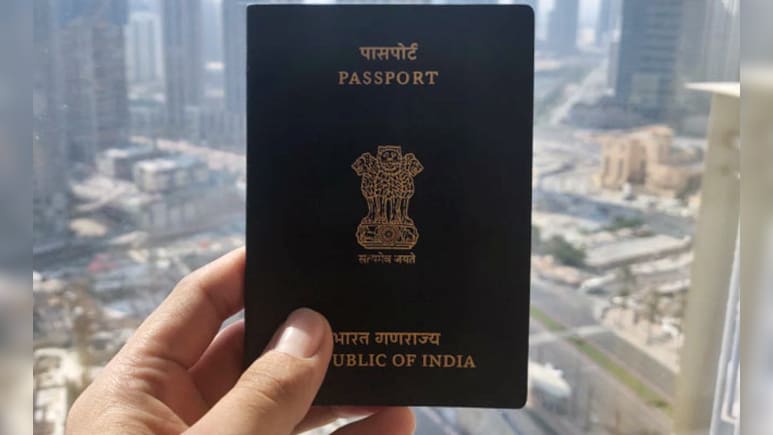
A passport is issued by a State and a refugee is often a person who has lost the protection of that very State. To demand a passport as the only acceptable identity document from such a person is to misunderstand the nature of displacement.
This does not mean universities should abandon verification and Delhi University has every right to protect its admission process. Public institutions cannot function on sympathy alone. They need documents, records, scrutiny and accountability. Admission to Delhi University is highly competitive even for Indian citizens and a refugee cannot be admitted merely because the person is a refugee.
But the person should not be rejected merely because of not having a passport.
The United Nations Human Rights Council (UNHRC) registration, Indian school records, residence verification, police verification and clearances from the ministry concerned can together provide an alternative documentation system. Such a system would not weaken the law but make it more realistic.
India is not a signatory to the 1951 UN Refugee Convention or the 1967 Protocol. It also does not have a dedicated national refugee law due to which refugees are often handled through executive discretion, local practice, court intervention and UNHCR documentation. The absence of a clear legal framework has led to confusion, especially in relation to people fleeing Myanmar.
The problem becomes acute in Manipur. The India-Myanmar border is porous and ethnic ties run across the boundary with some communities on both sides sharing kinship, language, culture and clan connections. In normal times, this social closeness may serve as a bridge but in times of conflict, it becomes a source of suspicion.

Manipur has already suffered from ethnic violence and competing claims over land and indigenous identity. Documentation is no longer a technical matter but it touches political and social dimensions. An Aadhaar card, a voter identity card, a Scheduled Tribes certificate or a land-related document can alter access to rights and political representation.
This is why the allegations of illegal Myanmar nationals obtaining Indian documents in Manipur need an investigation. It would be fraud against the State and injustice to genuine citizens if a foreign national enters India and obtains critical documents illegally.
The Scheduled Tribes framework is meant to protect recognised indigenous communities and it cannot become a route through which doubtful citizenship is normalised. The category 'Any Kuki Tribes' has long been politically sensitive in Manipur because of questions over identity, classification and cross-border ethnic overlap. Any misuse of this category by non-citizens would deepen public resentment and weaken trust in constitutional safeguards.
In the case of Maung Henry, he did not hide behind forged citizenship. He only asked to be treated as what he is - a refugee seeking education.
Many in Manipur believe that doubtful citizens have managed to secure documents and benefits while genuine refugees who remain transparent face restrictions. The State cannot allow such questions to remain unresolved. Refugees must be protected as refugees and citizens must be verified as citizens but illegal immigrants must not be allowed to become citizens through paperwork acquired by fraud or negligence. There must be a clear distinction between the three categories. First, there are Indian citizens belonging to recognised Scheduled Tribes communities and their constitutional rights must be protected.

Second, there are genuine Myanmar refugees who have fled conflict or persecution and are willing to register, submit to verification and live under lawful restrictions. They deserve humanitarian protection, education and dignity without being granted citizenship benefits by default.
And third, there are illegal immigrants who may have obtained Indian documents through false claims, weak verification or local networks. They must be identified through due process and fraudulent documents must be cancelled. Confusing these categories is dangerous as it harms genuine citizens and genuine refugees while fuelling ethnic mistrust.
The Delhi High Court case should not be seen only as a matter of Delhi University admission rules, but should become a national moment for policy clarity. India needs a refugee documentation framework that allows verified refugees to study, work within permitted limits and live with dignity. It also needs a strict citizenship verification mechanism in sensitive border states to prevent illegal entrants from acquiring citizen-only benefits.
A refugee card must not become citizenship, Aadhaar must not become proof of nationality by default, electoral rolls must be protected from doubtful entries and Scheduled Tribes benefits must go only to legally entitled Indian citizens. But universities must be given a lawful methods to consider genuine refugees who cannot produce passports.
A humane refugee policy and a strict citizenship policy can go together. The state must not punish the refugee who is honest enough to identify himself or herself as a refugee, and not reward those who bypass the refugee process and enter the citizenship system through questionable means.
That would send the worst possible message that transparency brings hurdles while concealment brings benefits.
(The author is Editor, Signpost News)
Disclaimer: These are the personal opinions of the author

