






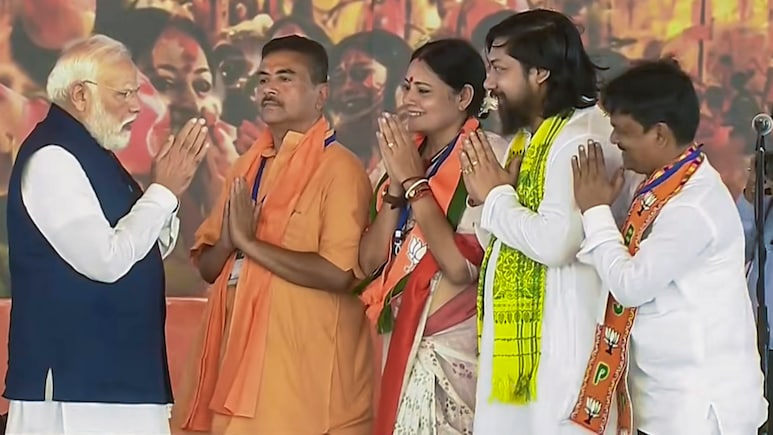
Suvendu Adhikari takes oath as West Bengal's first BJP Chief Minister on Rabindra Jayanti, May 9, and the symbolism of the date is impossible to ignore. After a long and intense election campaign built around Hindutva, border security, Bengali identity and development politics, the choice of Rabindranath Tagore's birth anniversary for the swearing-in ceremony appears to be a carefully crafted political message.
But the question many are now asking is whether this marks a genuine ideological shift towards Bengal's syncretic cultural ethos, whether it is a repackaging of a political agenda, or if the state is witnessing its second renaissance moment?
Transformation
The Bengal Renaissance was not merely a cultural movement but a period of profound social, intellectual and religious transformation in 19th- and early 20th-century Bengal. From Raja Ram Mohan Roy's campaign against Sati and his advocacy for reform within Hindu philosophy to Ishwar Chandra Vidyasagar's push for widow remarriage, girls' education and the simplification of the Bengali language and grammar, the period represented a significant synthesis of social reform, intellectual confidence and cultural change.
Bengal also became one of the earliest regions in colonial India to absorb Western education and engage deeply with European liberal and scientific thought, while simultaneously reinterpreting its own philosophical traditions.
The Tagore family became closely associated with that intellectual churn. Dwarkanath Tagore, grandfather of Rabindranath Tagore, was among the prominent Bengali reformist elites of the period and a major supporter of the Brahmo Samaj founded by Raja Ram Mohan Roy.
At a time when orthodox sections strongly resisted reform, several Bengal thinkers attempted to reconcile ancient Indian philosophical traditions with rationalism, liberal thought and spiritual universalism rather than treating them as opposites. That engagement between tradition and modernity later became one of the defining features of Bengal's intellectual identity.
The later phase of the Bengal Renaissance expanded beyond social reform into spirituality, science and an emerging national consciousness. Ramakrishna Paramahamsa's emphasis on religious harmony, Swami Vivekananda's attempt to combine Vedantic thought with modern education and national regeneration, and Sri Aurobindo's synthesis of spirituality and political philosophy shaped a wider cultural awakening.
At the same time, scientists such as Jagadish Chandra Bose and Prafulla Chandra Ray contributed significantly to modern Indian science and industry, with Ray founding Bengal Chemicals and Pharmaceuticals in 1901. It is this layered legacy of reform, spirituality, intellectualism and modernity that the BJP now appears to be invoking while framing its own vision of Bengal's "second renaissance".
Historic Shifts
Prime Minister Modi seeks to bring this renaissance in Bengal through a blend of cultural revivalism, Sanatani civilisational identity and economic modernisation. West Bengal had already witnessed one historic political transformation in 2011, when power shifted from the Left Front to the Trinamool Congress. The state changed from "red to green".
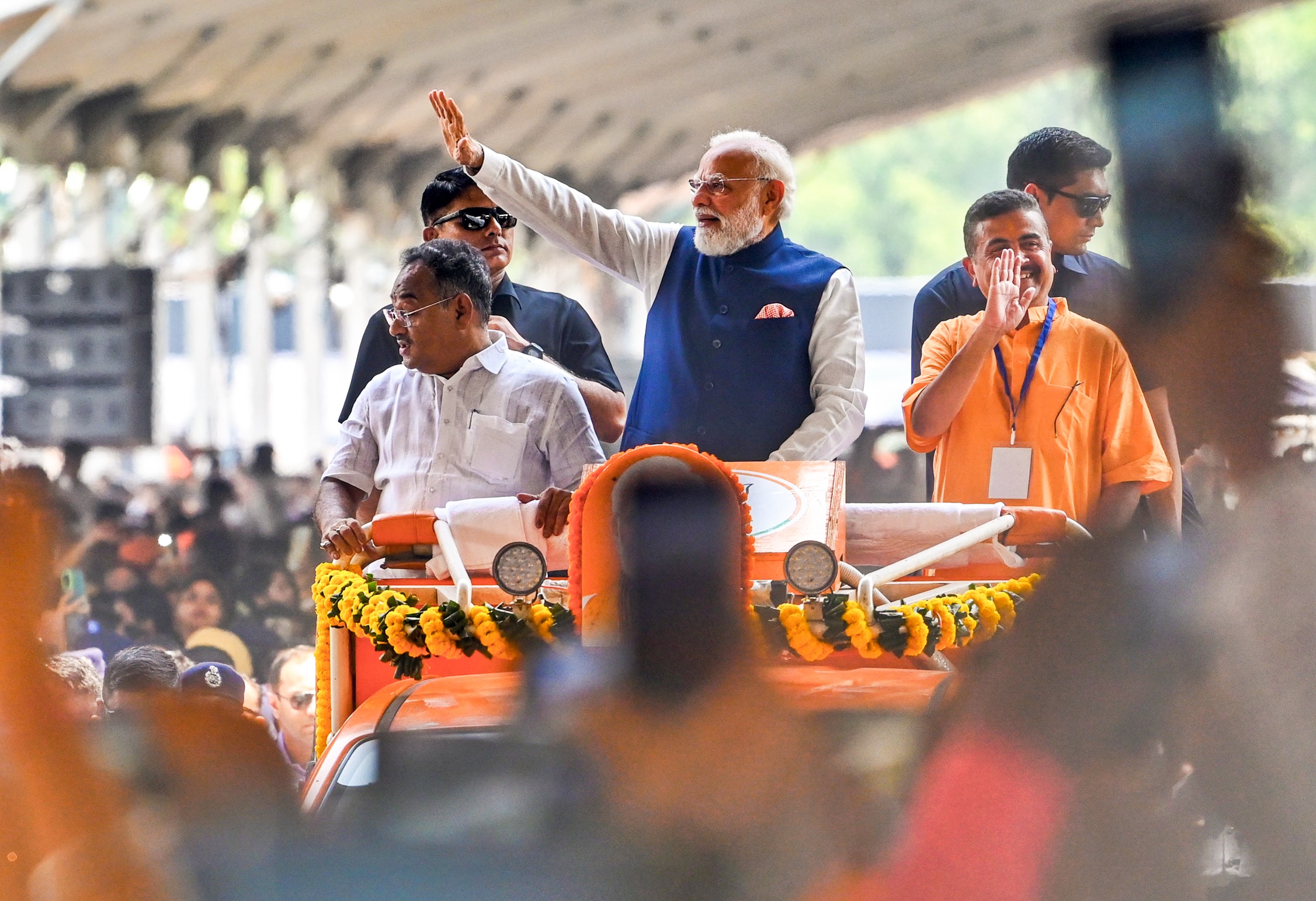
Photo Credit: ANI
Now, Bengal has witnessed another historic shift. For the first time, the BJP is forming a government in the state, with Suvendu Adhikari as chief minister.
One of his first symbolic decisions has been to shift the administrative headquarters back to the Writers' Building from Nabanna. The colonial-era structure remains deeply tied to Bengal's political memory under British rule.
Revival Of Past Glory
There was a time when Bengal represented intellectual, industrial and cultural leadership for the country. Gopal Krishna Gokhale's famous observation, "What Bengal thinks today, India thinks tomorrow", symbolises that confidence and influence.
The BJP leadership now argues that Bengal's lost stature can be rebuilt. The party describes this political shift not merely as a change of government but as an attempt to resurrect Bengal's historical confidence and economic strength.
The Weight Of Bengal's History
Bengal's history has always been layered and complicated. It is a land shaped by repeated economic distress, famines, communal tensions, migration, ideological battles and political violence. At the same time, it remains one of the most culturally heterogeneous and socially plural regions in India. The current BJP leadership believes Bengal now wants to move beyond prolonged conflict and rediscover stability, prosperity and confidence.
Adhikari himself has repeatedly said that his top priority is to build "a new Bengal". According to him, the roadmap is not impossible.
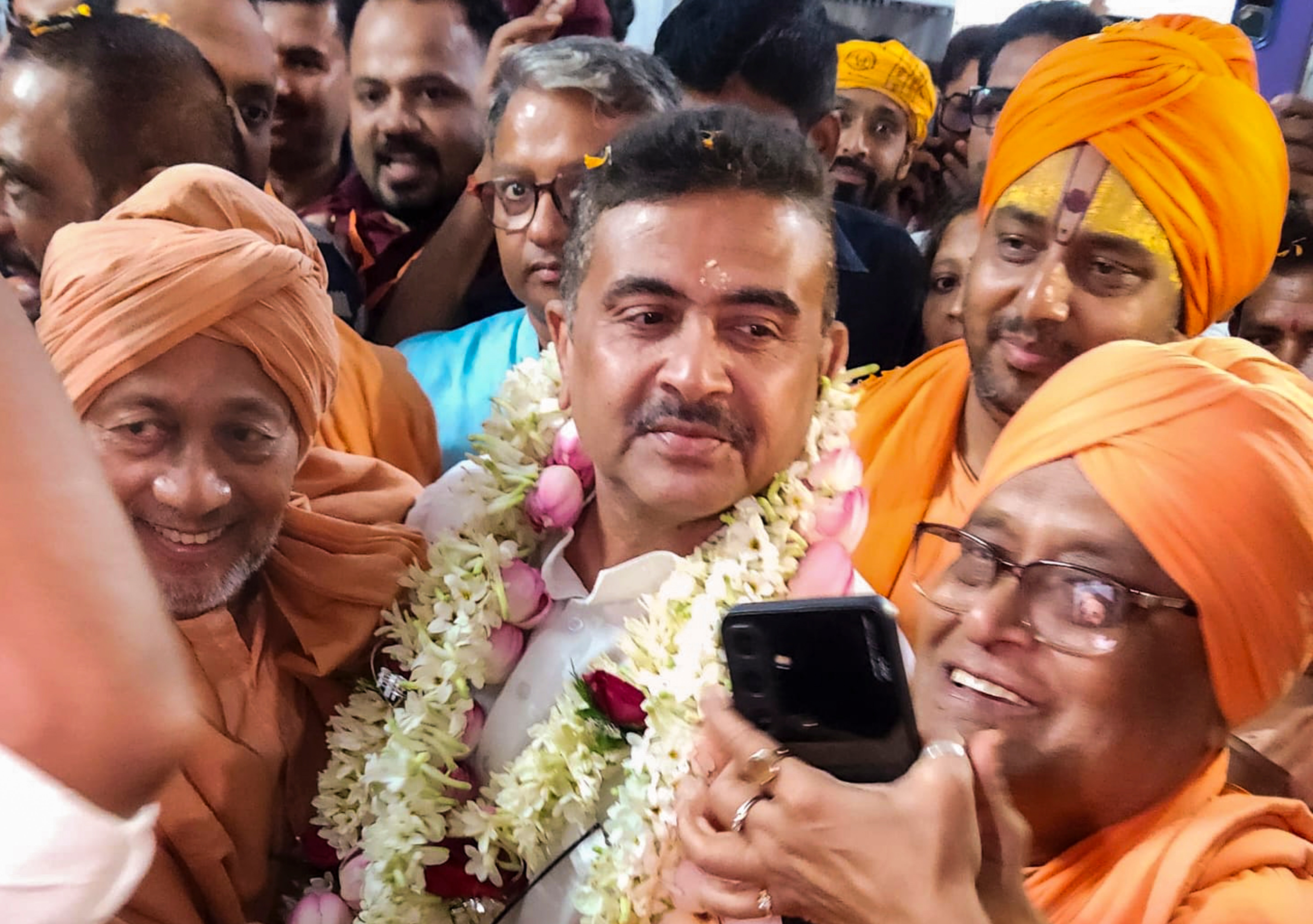
Photo Credit: PTI
Culture and corporate revival now appear to be intersecting within the BJP's idea of development for Bengal. The same Singur movement that once propelled Mamata Banerjee to power by resisting corporate industrialisation is now being reframed by the BJP as a symbol of Bengal's economic stagnation.
Since the Tata Nano project left Singur for Gujarat, Bengal has struggled to attract large-scale industrial investment. One of the biggest barriers, according to the new government, remains land acquisition. The BJP government is now expected to review and possibly relax certain policies to encourage industrialisation.
The BJP has maintained that Bengal requires not only economic recovery but also a cultural and psychological reset, while preventing the continuation of a "bad CPM culture".
BJP's Bengal Approach
This election saw the BJP increasingly adapting its political language to Bengal's cultural ethos, blending symbolism around fish, Durga and Kali with promises of economic revival, women-centric messaging and its sharper focus on border security and infiltration. The party's rise reflects an attempt to localise Hindutva within Bengal's distinct cultural identity.
Whether this vision becomes reality or remains political rhetoric will depend on what happens in the years to come. But, for now, the BJP leadership is presenting the beginning of the Suvendu Adhikari era not merely as a change in government but as the opening chapter of what they call Bengal's "second renaissance".
(The author is Contributing Editor, NDTV)
Disclaimer: These are the personal opinions of the author

