






On the night of May 2, 2013, I stood outside a government apartment near India Gate in New Delhi, close to midnight. Inside, Dalbir Kaur was waiting for the one phone call she had dreaded for years.
Her brother, Sarabjit Singh, had been brutally attacked by fellow inmates inside Pakistan's Kot Lakhpat Jail. He was in the ICU, fighting for his life.
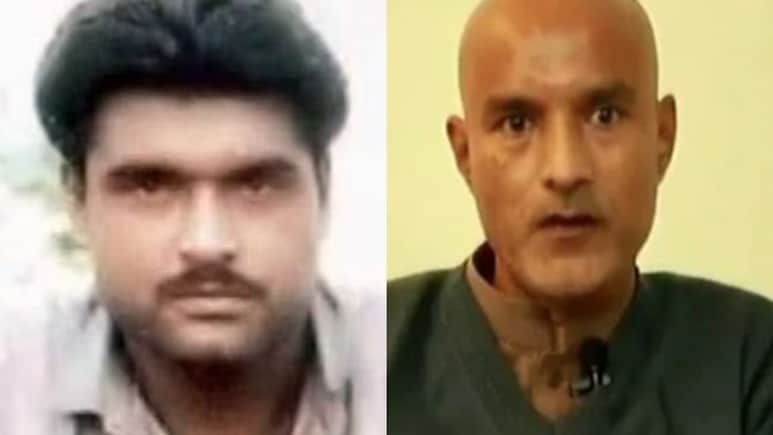
For Pakistan, Sarabjit was a convicted Indian spy - an operative allegedly linked to India's Research and Analysis Wing (R&AW). For India, he was a farmer from Bhikhiwind in Punjab, a man who had mistakenly crossed the border and been swallowed by a hostile system. Between those two competing narratives stood one woman who refused to surrender: his sister, Dalbir Kaur.
For years, she had carried her brother's cause almost single-handedly, turning personal grief into a national campaign, pleading with governments, knocking on doors, and refusing to let Sarabjit become just another forgotten Indian in a foreign prison.
That night, I was barely a month into my first job as a television reporter. Young, inexperienced, and still learning what it meant to stand witness to another family's pain. But nothing had prepared me for the helplessness of watching a sister wage a lonely, exhausting battle for justice while the system moved at its own cold pace.
Hours earlier, when news of the attack had first broken on national television, I had reacted instinctively-less as a journalist and more as an angry Indian. In frustration, I wrote on social media:
"The attack on Sarabjit Singh is a brutal reminder of our current soft policy towards Pakistan. Will we end up as mute spectators? Really?"
Late into the night, the inevitable happened.
Sarabjit Singh was officially declared dead.
Within minutes, television crews from across India and the international press had descended on the government quarter. Camera lights pierced the darkness. Microphones were thrust forward. But inside that house, none of it mattered. A sister had just lost the brother she had fought for, pleaded for, and waited for year after year without ever getting to bring him home alive.
Indian agencies later identified Amir Sarfaraz Tamba, a recruit of the banned terror outfit Lashkar-e-Taiba, as one of the accused behind Sarabjit's killing.
By the end of the day, Sarabjit's body had returned to India. His last rites were performed in his village. The government announced compensation. Statements were issued. Headlines were written. And, as so often happens in this country, the story was declared over.
Or at least, it was over for everyone else.
The nation moved on.
Dalbir Kaur never truly could. She carried that wound until her own death in June 2022.
Even today, I do not know with certainty whether Sarabjit Singh was a spy or a farmer who crossed the border by mistake. History may continue to debate that question. But what I do know is this: Sarabjit's story broke something inside me.
Because Sarabjit was never just one man.
He came to represent a painful truth India has lived with for decades - that many Indians have suffered silent, brutal ends across the border while their families grieve in quiet dignity and the rest of us slowly forget. Some die unnamed. Some disappear into prison cells. Some are reduced to files, denials, and diplomatic caution.
And some are still waiting.
One of them is Kulbhushan Jadhav.
Jadhav was kidnapped by Pakistan's ISI through a mercenary group in Iran's Baluchistan and deliberately as part of a conspiracy accused to be a spy. His family, if one can call it fortune, at least got to see him once through a glass barrier inside a Pakistani prison. Even that meeting felt less like humanity and more like cruelty staged as a procedure. He remains incarcerated, sentenced to death, his fate still trapped somewhere between diplomacy and indifference.
Years later, sitting in a cinema hall watching Dhurandhar: The Revenge, I did not expect to be taken back to that night outside India Gate.
But in the film's closing moments, when Ranveer Singh's character Jaskirat returns to his village in Punjab, something shifted inside me. The fiction on screen collapsed into memory. Suddenly, I wasn't just watching a film anymore. I was thinking of Sarabjit Singh. Of Kulbhushan Jadhav. Of the many Indians whose stories never become films, whose sacrifices never make it into patriotic montages, and whose endings are rarely heroic.
Ranveer Singh's portrayal of an Indian spy in Dhurandhar feels, in many ways, like a tribute, not merely to the cinematic idea of espionage, but to the real men and women who serve India in silence.
They work in shadows. They disappear into hostile territory. They carry secrets they can never speak aloud. And if they fall, many do so without recognition, without public mourning, without even the dignity of a final salute.
No medals. No farewell. No closure.
Such is often the life of a spy or an agent sent into enemy territory for a country that may never be able to publicly claim him.
And perhaps that is why some stories never really leave you. Because long after the cameras are gone, the headlines fade, and the nation moves on, the faces remain.
A sister waiting at midnight.
A brother dying across the border.
And a country still learning how to remember its forgotten sons.
Sometime in 2022, I interviewed former R&AW chief Vikram Sood for a documentary on the unknown gunmen in Pakistan. During that interview, he said something that has stayed with me ever since:
"Intelligence agencies and governments who want to be assertive must have long memories."
That one sentence says more about statecraft than a hundred speeches ever could.
Because while Kulbhushan Jadhav still waits for his destiny to be written, Amir Sarfaraz Tamba the man accused in Sarabjit Singh's killing, was himself gunned down in Lahore in April 2024 by unidentified assailants who arrived on a motorcycle.
The unknown gunmen will remain a mystery.
As will many of the Indians who continue to work in covert operations to safeguard this country. Men and women for whom the nation comes above comfort, recognition, family, and sometimes even life itself.
Fittingly, Dhurandhar: The Revenge ends with the words: "Balidan Param Dharma" - Sacrifice is the highest duty.
That is why Dhurandhar is not just a film.
It is, in many ways, the echo of every mother, sister, and wife who has quietly sacrificed a loved one for the nation. It is a reminder of every life lived in secrecy, every mission buried in silence, every patriot whose name cannot be spoken aloud.
The real question is not whether India can produce more such stories on screen.
The real question is this: Will India have the long memory to remember those who disappeared into the shadows for her?
(Aditya Raj Kaul is a Senior Executive Editor, National Security & Strategic Affairs, NDTV)
Disclaimer: These are the personal opinions of the author

