






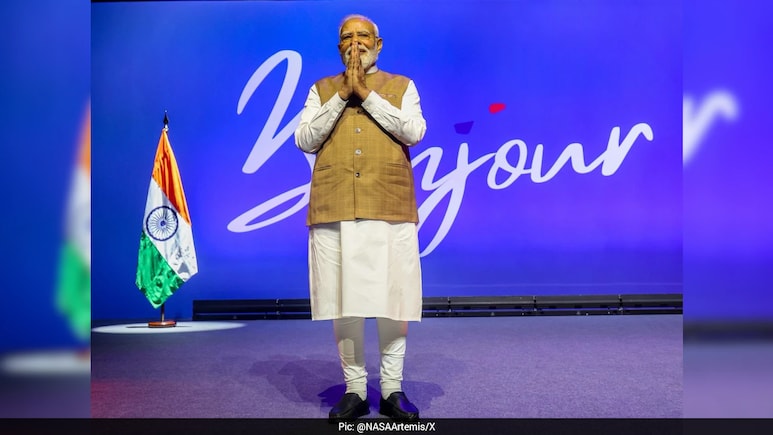
Prime Minister Narendra Modi is visiting West Bengal's Tarakeshwar on June 20 for three major reasons. The first and most important reason is the celebration of West Bengal Day.
The BJP government under Chief Minister Suvendu Adhikari has declared June 20 as the official "West Bengal Day", beginning from 2026. The date carries historical significance because on June 20, 1947, the Bengal Legislative Assembly voted on the partition of Bengal, resulting in the creation of West Bengal as a part of India.
PM Modi will participate in the first official state-level celebration of West Bengal Day at Tarakeshwar. He will address a public gathering at the Tarakeshwar Rajbari ground.
The choice of Tarakeshwar is not accidental. The place has historical importance. In April 1946, a resolution connected to Bengal's future was passed there, and Syama Prasad Mookerjee played a major role in asserting that Bengal should remain with India.
The second reason behind the prime minister's visit is the release of the 23rd instalment of the PM-KISAN scheme. From Tarakeswar, he will release Rs 18,880 crore to around 9.44 crore farmers across India. More than 45 lakh farmers from West Bengal will receive over Rs 900 crore under this scheme. Around one crore farmers are expected to join the programme through video conferencing.
The third reason is related to religion, development, and political symbolism. PM Modi will visit the historic Tarakeshwar Shiva Temple and offer prayers. This will be the first time a sitting prime minister visits the temple.
Along with this, several development projects will also be launched, including railway projects and the foundation stone for the modernisation of the Eastern Railway hospital. The Tarakeshwar temple area has also been prepared for the Prime Minister's visit.
So, tomorrow's programme combines three elements: West Bengal Day celebrations, farmer welfare politics through PM-KISAN, and religious-cultural symbolism.
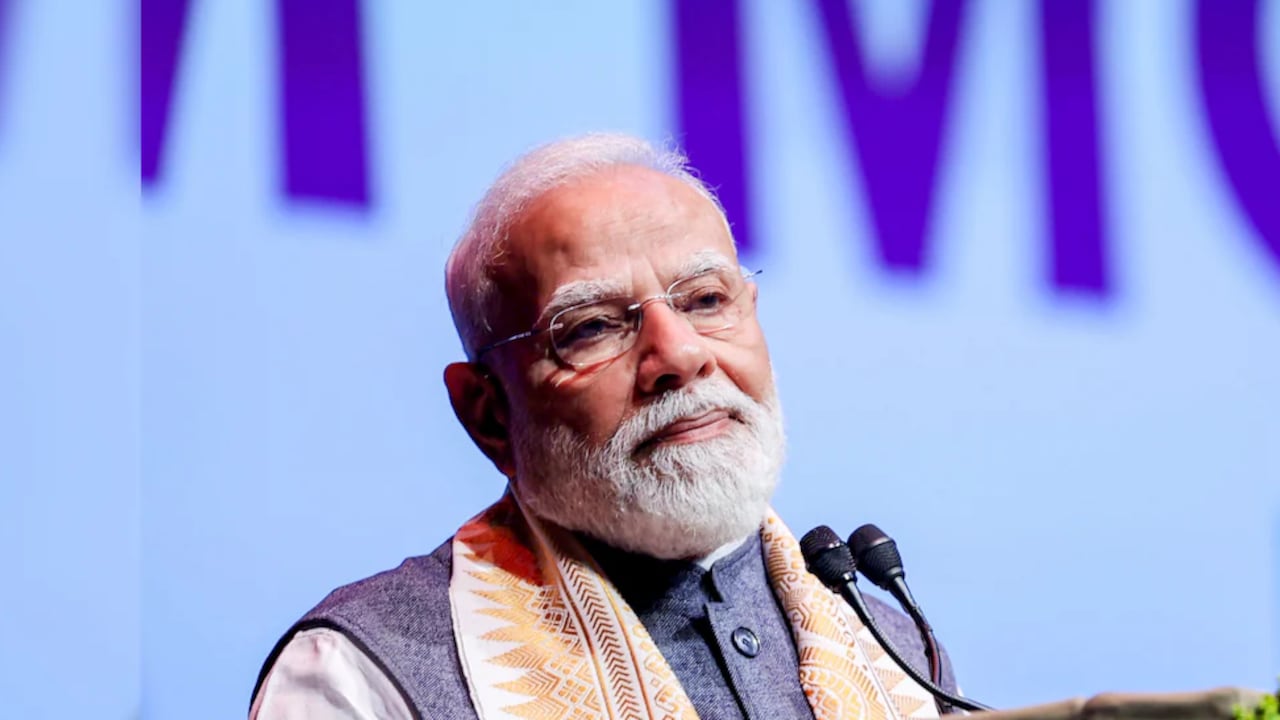
But the bigger question is: why is June 20 such a politically sensitive date in West Bengal?
The debate over West Bengal Day is not merely about choosing a date. It is actually a debate over Bengal's history, identity and political narrative.
West Bengal never had an officially recognised "Statehood Day" like many other states. The controversy became intense when the Raj Bhavan started observing June 20 as West Bengal Day, referring to the 1947 Bengal Assembly decision that created West Bengal after the partition of Bengal.
The Trinamool Congress government, led by Mamata Banerjee, strongly opposed this idea.
Mamata Banerjee argued that June 20 should not be celebrated because it represents the trauma of partition, displacement and communal violence. According to her, the date reminds people of the painful division of Bengal rather than a moment of celebration.
The Trinamool Congress government instead wanted Poila Boishakh, the Bengali New Year, to be recognised as "Bangla Dibas". The argument was that Poila Boishakh represents Bengali culture, unity, and heritage without carrying the painful memories of the Partition.
In 2023, the West Bengal Assembly passed a resolution proposing Poila Boishakh as Bangla Dibas and also recommended Rabindranath Tagore's song "Banglar Mati Banglar Jol" as the state song.
Mamata Banerjee said that people of Bengal do not support June 20 because, according to her, it is associated with violence and bloodshed.
She accused the BJP of politicising history and trying to create divisions among Bengalis by pushing the June 20 narrative.
However, the BJP and Suvendu Adhikari have a completely different interpretation.
According to them, June 20 is not a day of sadness but the day when West Bengal was created through a democratic vote in the Bengal Assembly. They argue that the decision prevented the western part of Bengal from becoming part of East Pakistan.
The BJP connects June 20 with Syama Prasad Mookerjee's role and presents it as a day that protected the identity of Hindus in Bengal.
Suvendu Adhikari criticised the Poila Boishakh proposal, saying that a cultural festival cannot replace a historical statehood date. According to him, changing the date cannot change history.
The BJP also links this issue with broader questions of identity, security, illegal migration, and border concerns. This became an important part of Suvendu Adhikari's political messaging.
After the 2026 election, when Suvendu Adhikari became Chief Minister, the BJP government decided that June 20 would officially be observed as West Bengal Day every year.
This has created a direct political clash: For the Trinamool, June 20 represents the pain of Partition and should not be celebrated. For the BJP, June 20 represents the birth of West Bengal and the preservation of its identity. Therefore, the battle over West Bengal Day is actually a battle over how Bengal's history should be remembered.
The political significance of June 20 becomes clearer when we look at the historical argument presented by Swapan Dasgupta. Swapan Dasgupta has written an important analysis explaining why June 20 has become such a major political and cultural issue in West Bengal. According to him, the debate is not simply about a date on the calendar. It is about competing interpretations of Bengal's history.
The creation of West Bengal in 1947 was not just an administrative decision. It was the outcome of a historical struggle over whether Bengal would remain within India or become part of Pakistan after Partition.
The Hindu-majority areas of western Bengal voted to remain with India, which led to the formation of West Bengal. This historical context is what the BJP highlights while supporting June 20 as West Bengal Day.
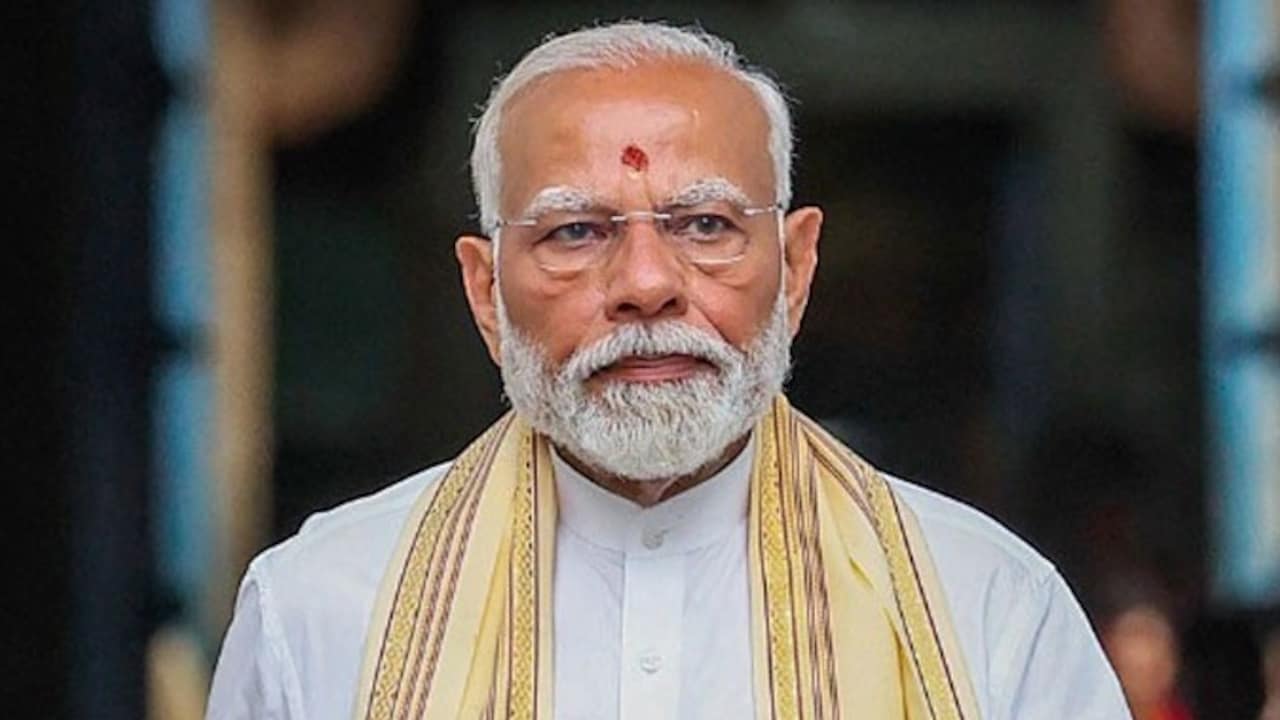
For many supporters of this view, the day represents the survival of Bengal's identity within India. However, critics argue that this interpretation ignores the pain of the Partition. Millions of people were displaced, communities suffered, and Bengal experienced one of the most tragic episodes of modern history.
This is why Mamata Banerjee and the Trinamool see June 20 differently. They believe that celebrating such a date without remembering the suffering of Partition risks reopening old wounds.
The disagreement, therefore, is not only political but emotional. It is about whether Bengal's identity should be remembered through the lens of Partition and state formation or through cultural unity and shared heritage. This conflict also reflects a larger ideological battle in Bengal. The BJP's argument focuses on historical memory, national identity, and the role of leaders like Syama Prasad Mookerjee. The Trinamool's argument focuses on Bengali culture, secular identity, and avoiding a politics that may deepen social divisions. The June 20 controversy is also linked to the larger political atmosphere after the change of government in West Bengal.
For the BJP government, celebrating West Bengal Day is an attempt to establish a new political narrative and reclaim historical symbols. For Mamata Banerjee, the opposition to June 20 is a way to resist what she believes is an attempt to reshape Bengal's identity through a particular political lens.
The Prime Minister's visit to Tarakeswar, therefore, carries multiple layers of meaning - administrative, cultural, religious, and political. Tarakeswar itself has a special symbolic importance. It is not only a famous Shiva pilgrimage centre but also a place associated with Bengal's political history.
The BJP is presenting the event as a combination of historical remembrance and cultural pride. However, the opposition sees it as an attempt to strengthen a particular political narrative. The question that remains is, how will Bengal remember its past?
Will the state define itself through the memories of Partition and the creation of West Bengal, or through a broader cultural identity that includes literature, language, and shared traditions?
This debate shows that history is not merely about facts. It is also about interpretation. Different political groups often remember the same historical event differently according to their ideological positions.
The security arrangements for the Prime Minister's visit are also extensive. The National Security Guard (NSG) has inspected the venue, and the railway station area has been prepared with strict security measures.
The visit comes just before International Yoga Day on June 21, when Prime Minister Modi is scheduled to lead national-level celebrations in Kolkata.
Therefore, June 20 and June 21 together create a significant political and cultural moment for West Bengal. The West Bengal Day debate has become a symbol of a larger question: who defines Bengal's identity? The answer will continue to shape the political conversation of the state for years to come
Dr Swapan Dasgupta, the West Bengal Finance Minister, historian, and academician, has written an article on the West Bengal Day debate. He has argued that there should be a proper historical and intellectual discussion on this issue. He has tried to present an academic perspective on why the BJP government is now trying to observe West Bengal Day on June 20.
To understand this debate, we have to go back to history. Bengal has actually witnessed partition twice.
The first partition took place in 1905, when Lord Curzon divided Bengal. This was known as the Partition of Bengal or Bongo Bhongo. It was not the same as the 1947 Partition, which led to the creation of West Bengal and East Pakistan.
The 1905 Partition of Bengal triggered a massive protest movement. Many leaders opposed the decision, and the anti-partition movement became an important moment in Bengal's political history.
Leaders like Ariband Ghosh, Rabindranath Tagore and Chittaranjan Das played a major role during this period. However, some historians point out that the situation was complicated because many Muslim elites were uncomfortable with the anti-partition movement. A section of Muslim leaders supported the partition because they believed it would provide greater political representation and opportunities for the Muslim community.
This created a sense of alienation among some sections of Muslims, and many historians, especially those who focus on right-wing interpretations of history, argue that this feeling of separation became stronger over time.
Later, during the Khilafat Movement, Chittaranjan Das tried to strengthen Hindu-Muslim unity and improve relations between the two communities. He made efforts to reduce the growing divide.
However, his early death meant that many of his initiatives could not fully develop.
According to this interpretation of history, one of the issues was that while trying to suppress Hindu nationalist feelings to accommodate Muslim separatist politics, the situation became more complicated instead of improving.
This is also connected to the present debate around West Bengal Day.
Those supporting June 20 argue that Bengal's Hindu nationalist sentiment and Bengali identity should also be acknowledged and respected.
They believe that observing West Bengal Day is a way to recognise that historical experience.
From this perspective, paying tribute to Syama Prasad Mookerjee, who played a key role in the creation of West Bengal, becomes an important symbolic act.
The BJP government, now in power in West Bengal, has chosen to highlight this narrative. Syama Prasad Mookerjee was also one of the founders of the Bharatiya Jana Sangh, the ideological predecessor of the BJP.
PM Modi's presence at the June 20 programme is therefore politically significant. It is not only about celebrating a state foundation day but also about establishing a particular historical narrative - the narrative of Bengali Hindu nationalism and its connection with India.
This message is not limited only to Bengal. The entire country will be watching it as a larger political and ideological statement. The June 20 event can therefore be seen as part of a broader attempt by the BJP to strengthen its cultural and historical narrative in Bengal.
At the same time, critics argue that this approach gives priority to one interpretation of history over another. The debate continues because Bengal's history itself is complex; it includes Partition, nationalism, language, culture, religion, and identity politics.
The question is not only about which date should be celebrated, but also about whose memory and whose historical experience should define Bengal's identity.
(The author is Contributing Editor, NDTV)
Disclaimer: These are the personal opinions of the author

