






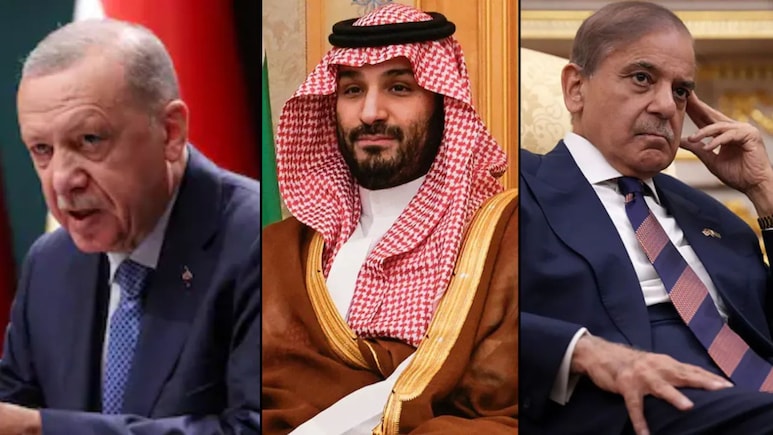
The much-publicised Mecca Joint Defence Agreement between Saudi Arabia, Turkey and Pakistan has understandably attracted attention in diplomatic and strategic circles. It is being presented by some as a significant new security alignment in the Middle East and even compared with a regional version of NATO. For India, however, there is little reason to overreact or alter the fundamentals of its foreign policy because of this arrangement.
The agreement says that an armed attack against one will be regarded as an attack against all. But merely importing a principle associated with NATO does not, by itself, make this agreement strategically meaningful. The three countries do not share a common border, have different strategic calculations and more importantly, the agreement does not clearly define its purpose, its applicability or the circumstances in which the three countries would actually act together. Saudi Arabia and Pakistan already had a bilateral defence understanding, while Turkey has its own regional ambitions.
Larger Strategic Purpose
The more important question is why this alliance has been created now and whose larger strategic interests it serves. Pakistan appears to have pursued the agreement not merely for its own immediate survival but as part of a longer-term strategy to regain relevance in the Muslim world and secure economic and diplomatic support. For Pakistan's military establishment, it also provides an opportunity to project a narrative that the country's army has acquired a stronger regional role.
The fact that US President Donald Trump has appreciated the arrangement is significant. It indicates that Washington sees value in bringing Pakistan, Saudi Arabia and Turkey into a framework that serves wider American strategic interests. In the longer term, such an arrangement could provide the US with another instrument through which Pakistan can become useful in future regional contingencies.
So, the deeper strategic purpose may be less about creating an independent military alliance and more about creating a framework that can serve others interests in the Middle East, particularly in relation to Iran. By bringing three predominantly Muslim countries together and presenting the arrangement in the language of collective defence, the pact could contribute to the continuing fragmentation and consolidation of the Muslim world into competing camps. This is especially significant because Iran remains the major regional power that any future Middle East security architecture will have to balance.
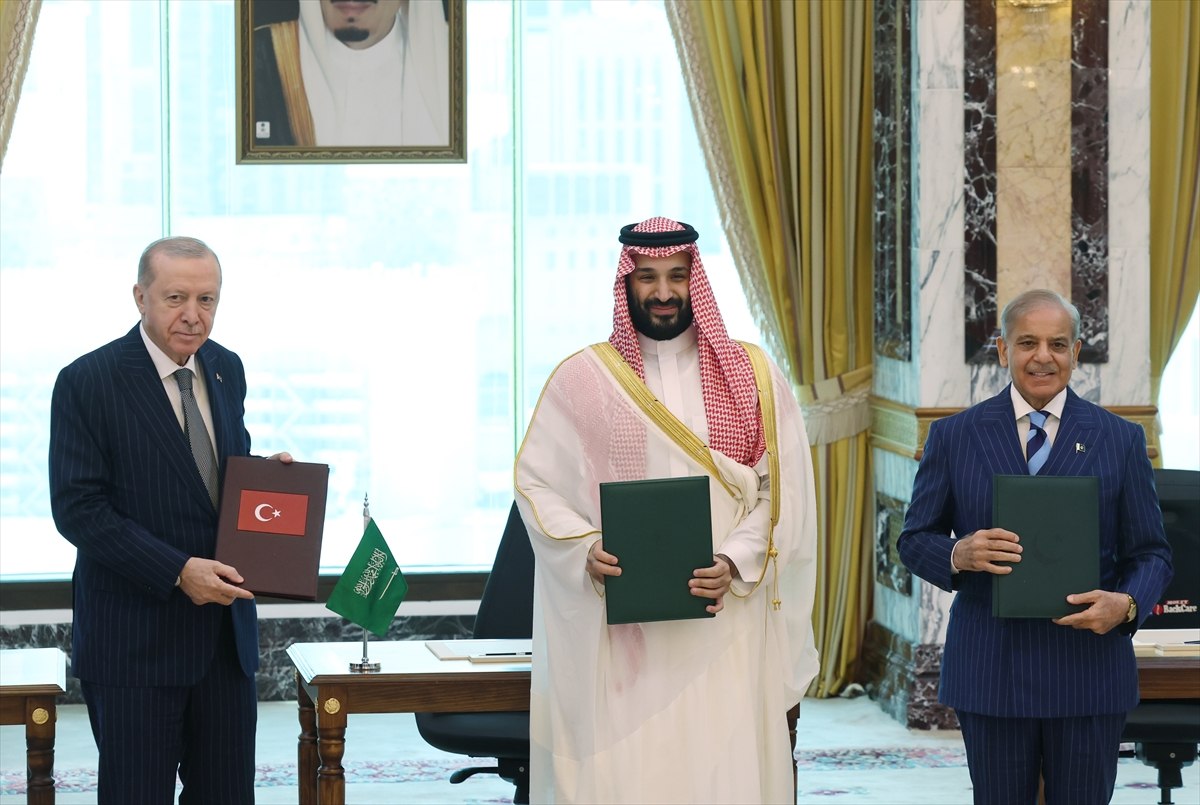
The pact should therefore not be seen simply as a Saudi-Turkey-Pakistan initiative. Its longer-term implications need to be viewed in the context of the interests of the US and other Western countries and their future engagement with the region.
Pakistan's Ambition And Its Limitations
Pakistan cannot afford to carry such a strategic burden for long. Its own economic condition remains fragile, while its army has to deal with enormous internal security challenges. A substantial proportion of Pakistan's population is Shia, while the country itself has historically struggled with sectarian and ethnic divisions. Presenting this arrangement as a consolidation of Sunni Muslim power carries its own risks.
Pakistan may gain financial assistance and diplomatic space from Saudi Arabia and Turkey, but neither country can realistically become a substitute for Pakistan's own economic reforms. The agreement favours Pakistan's military establishment more than its long-term economic interests. General Asim Munir can use it to project an image of a stronger Pakistani army and a stronger regional relationship, but strengthening the military at the expense of the civilian economy is unlikely to serve Pakistan in the longer run.
Nor can the agreement make Israel a common enemy. The US remains friendly with Saudi Arabia and maintains a strategic relationship with Israel. Saudi Arabia itself has its own interests and is unlikely to enter an open-ended confrontation with Israel or Iran simply because Pakistan wants a larger role. Turkey, too, has its own calculations.
The Missing UAE Question
There is another important omission: the UAE. Any Gulf security arrangement that does not include the UAE cannot be regarded as a comprehensive regional arrangement. The UAE has rapidly emerged as one of the most important economic, trading and strategic powers in the Gulf. It has created an exceptionally business-friendly ecosystem, attracting entrepreneurs, investors and global businesses.
Its port and logistics network, particularly the development of Fujairah, is strategically important because Fujairah provides access to the Gulf of Oman without depending on the Strait of Hormuz. This gives the UAE an increasingly important role in future Gulf trade, logistics and energy security.
The exclusion of the UAE raises questions about how far the Mecca arrangement can actually become a wider Gulf security architecture.
Meanwhile, India should not fall into the trap of assuming that Muslim countries will automatically stand closer to Pakistan because of religion. India's experience in the Gulf tells a different story.
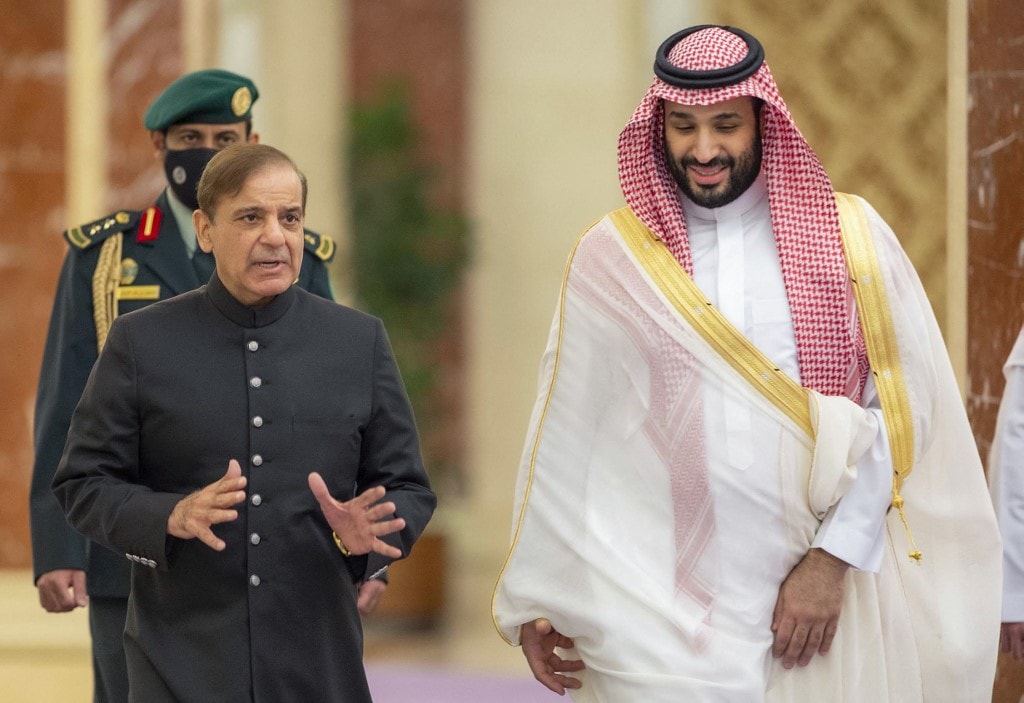
India's ties with Saudi Arabia, the UAE, Qatar, Bahrain, Kuwait and Oman are based on centuries of commercial, social and cultural interaction, not religion. The Indian presence in the Gulf predates the oil boom. Mumbai was historically a major centre of India's commercial and cultural interaction with the Gulf. Millions of Indians today contribute directly to the Gulf economies. Indian professionals, entrepreneurs, engineers, doctors, bankers, teachers and workers are deeply embedded in these societies. The Indian community contributes enormously to the economic development of the region, while remittances of around $60 billion per annum to India are a major economic link and contribution by Indians.
This shows the importance of Indian human capital on both sides. Anyone who has lived in the Gulf can see the difference. Pakistani nationals often face greater difficulties in obtaining visas and employment opportunities, while Indian talent has become deeply integrated into Gulf economies. This is not merely a diplomatic advantage; it is India's strategic human capital.
India should strengthen its relations with Saudi Arabia and all six GCC countries - the UAE, Saudi Arabia, Qatar, Bahrain, Kuwait and Oman. It should simultaneously maintain its deep relationship with Iran and continue engagement with all other stakeholders to deepen its ties as the Gulf also needs India to come out from the present crisis. India's trade route through the Gulf to western and Central Asian countries would be the future stabilising factor for the entire region.
India has repeatedly advocated a multipolar and multi-aligned world. Saudi Arabia and Turkey are exercising the same strategic autonomy by maintaining relationships with multiple powers. India should recognise this reality rather than viewing every new arrangement through the prism of old friendships and rivalries.
It would be a mistake if Pakistan is given undue importance every time Islamabad creates a new diplomatic narrative. Pakistan is looking for economic survival, financial support and diplomatic relevance. The Mecca Pact gives its army an opportunity to project all three, but it does not fundamentally change the geopolitical balance.
India should watch the agreement carefully, particularly its longer-term relationship with the US, Western countries and Iran. But it should not change its foreign policy or public discourse according to Pakistan's choices. India's strength in the Gulf is not a newly signed military pact. It is its economy, credibility, human capital, historical connections, strategic autonomy and the trust built over decades. The Mecca Pact may create a perception of a new regional alignment. But India must look beyond the perception.
(The author is a former diplomat)
Disclaimer: These are the personal opinions of the author.

