






For much of the past three decades, the global economy operated on a relatively simple premise: greater economic integration would create greater prosperity. Supply chains stretched across borders, capital moved in search of efficiency, trade expanded and geopolitical differences were often managed in the interest of economic interdependence. Efficiency, scale and openness were the dominant principles shaping economic decisions, while the risks created by excessive concentration or strategic dependence were often treated as secondary considerations.
That premise is no longer secure. The world is being reshaped by geopolitical conflict, geo-economic rivalry, trade disruptions, technological change and the reorganisation of global supply chains. The uncertainty created by these developments is no longer an occasional interruption to the global economy; uncertainty itself is becoming a defining feature of the new economic order. For India, therefore, the challenge is not simply to navigate the next crisis, but to rethink how economic resilience, competitiveness and national security need to work together.
When Uncertainty Becomes the New Normal
The recent performance of the Indian economy offers grounds for confidence. Despite wars, disruptions to energy markets, uncertainty around global trade and considerable volatility in the external environment, domestic demand has remained resilient. Growth has remained strong, public investment has continued to expand and India's services exports have demonstrated considerable durability. These are important strengths, but they should not lead to complacency.
Resilience should not be confused with preparedness. The more important question is not whether India can withstand the next external shock, but whether it can prepare itself for an economic environment in which shocks become more frequent, more interconnected and harder to predict. The distinction is crucial because the nature of risk itself is changing. A conflict in one part of the world can quickly become an energy crisis somewhere else; a trade restriction can disrupt production thousands of miles away; and a technological breakthrough can alter the competitiveness of an entire industry almost overnight.
Consider energy. India imports more than 85% of its oil consumption, making it inherently exposed to disruptions in global energy markets and maritime routes. A prolonged disruption in a strategically important shipping corridor can therefore affect far more than the price of fuel. It can feed into inflation, the current account, the fiscal position and ultimately economic growth. The lesson is not that India can eliminate its dependence on imported energy overnight; it is that energy security must increasingly be treated as an integral part of economic security.
The same logic applies to critical minerals, technology, components and other strategic inputs. In an uncertain world, the cheapest supplier is not necessarily the safest supplier, and economic efficiency can no longer be the sole measure by which supply-chain decisions are made.
From Efficiency to Resilience
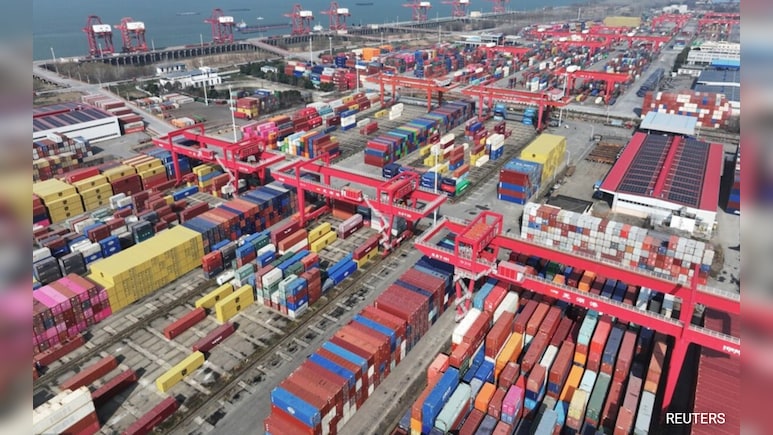
For decades, globalisation encouraged companies and countries to concentrate production wherever costs were lowest. Long and highly specialised supply chains delivered enormous efficiency gains and helped integrate developing economies into global trade. But the disruptions of recent years have exposed the vulnerabilities inherent in excessive concentration.
The emerging global economy is therefore forcing a different calculation. Reliability, resilience and trusted supply chains are becoming almost as important as cost. Companies are reassessing where they manufacture, governments are examining strategic dependencies and countries are seeking greater diversification in critical sectors. This does not mean that globalisation is ending; it means that the terms on which globalisation operates are changing.
This shift creates a significant opportunity for India. Global companies are reassessing supply chains, countries are seeking to reduce excessive dependence on individual markets and manufacturing capacity is gradually being redistributed. India has already begun to benefit from this process, particularly in electronics and other manufacturing sectors. But the opportunity will be much larger if India can move beyond simply becoming an alternative assembly location.
Assembly cannot be the destination. India must use this moment to move progressively from assembly to components, from components to specialised manufacturing and ultimately towards design, technology, engineering and intellectual property. The traditional progression up the manufacturing value chain may itself be changing because technology is moving so rapidly. India therefore has an opportunity to compress a journey that took other economies decades, provided it can build the skills, infrastructure, capital and ecosystems required to do so.
Strategic Openness, Not Strategic Dependence
Capturing this opportunity will require infrastructure, reliable and competitively priced energy, efficient logistics, better ports, stronger industrial ecosystems and continued investment in digital infrastructure. But infrastructure alone will not be enough. India also needs a much deeper and more diversified network of economic partnerships, because in the emerging global economy, trade relationships are increasingly strategic relationships.
The question of where India signs free-trade agreements should therefore not be viewed simply through the traditional lens of tariff reduction and market access. Geo-economics increasingly has to sit alongside economics. Who are our trading partners? Where are our supply-chain dependencies? Which countries can provide critical inputs? Which markets can absorb India's exports? And, perhaps most importantly, which countries are likely to remain reliable economic partners when geopolitical conditions deteriorate?
These questions will increasingly influence investment decisions. A multinational company deciding where to locate its next factory will examine not only wages, taxes and market access, but also the reliability of energy supplies, logistics networks, trade relationships and the geopolitical alignment of the country in which it invests. India therefore needs to develop a proposition that combines scale, competitiveness, resilience and trust.
This does not mean turning inward. The world is unlikely to become completely deglobalised, nor should India seek to isolate itself. India's own economic transformation depends on deeper integration with global markets. What India needs instead is strategic openness: remaining deeply connected to the global economy while ensuring that excessive dependence on any single country, commodity, technology or supply route does not become a source of strategic vulnerability.
Self-reliance, similarly, should not mean producing everything domestically regardless of cost. It should mean ensuring that India has the capabilities, alternatives and partnerships necessary to keep its economy functioning when global systems come under stress.
Turning Resilience into Competitive Strength
This is also why India's next phase of growth cannot rely indefinitely on a single engine. Public capital expenditure has done substantial heavy lifting in recent years, creating infrastructure and supporting demand. Consumption remains a powerful foundation of the economy. But sustaining 7–8% real growth over the long term will require private investment and exports to become increasingly important.
The objective should therefore be to create a virtuous cycle in which public investment creates the infrastructure, private investment creates productive capacity, manufacturing and services create exports, and exports generate the scale and competitiveness needed to sustain investment. This is particularly important at a time when global companies are looking for new manufacturing locations and alternative supply chains. India's infrastructure and domestic market can attract investment, but competitiveness will ultimately depend on how effectively Indian companies move up the value chain.
At the same time, India must continue building economic buffers. Foreign-exchange reserves, a resilient banking system, fiscal credibility, diversified energy sources, a deeper domestic market and a stronger domestic tax base all provide the capacity to absorb external shocks. But buffers are not substitutes for structural reform. They buy time; the objective must be to use that time to reduce vulnerabilities and strengthen competitiveness.
This is where the current period of uncertainty may ultimately prove valuable. Disruption has a way of exposing vulnerabilities that periods of stability allow us to ignore. Supply-chain disruptions have made companies reconsider concentration risks; energy shocks have highlighted the importance of diversification; and geopolitical tensions have demonstrated that economic relationships can no longer be separated entirely from strategic relationships. India should use these lessons before the next crisis forces them upon us.
Preparing for the India of 2047
The ambition of becoming a developed economy by 2047 will not be achieved simply by maintaining a high headline GDP growth rate. It will require an economy that is competitive enough to grow rapidly, resilient enough to absorb shocks and diversified enough to remain flexible when the world changes direction. That means stronger infrastructure, deeper private investment, more competitive manufacturing, diversified exports, secure access to critical inputs, resilient energy systems and a carefully constructed network of trusted economic partnerships.
The question, therefore, is not whether uncertainty will disappear. It will not. Nor is the question whether India can avoid being affected by global disruptions. No large, open economy can. The real question is whether India can prepare itself so that uncertainty does not derail its trajectory, and, more ambitiously, whether it can use periods of global disruption to accelerate its own economic transformation.
India has demonstrated that it can absorb considerable external turbulence while maintaining strong domestic momentum. The next task is more ambitious: to turn resilience into preparedness, and preparedness into global competitiveness. If India can do that, the uncertainty reshaping the global economy need not become a constraint on its ambitions. It could become one of the forces that helps accelerate them.
For a country aspiring to become a developed economy by 2047, this is perhaps the central economic challenge of our time. The new global economy will not reward countries simply for being large, or even for being resilient. It will reward countries that can remain open while protecting strategic interests, diversify without retreating from globalisation, and convert uncertainty into opportunities for investment, innovation and trade.
India's task is not to wait for the world to become more certain. It is to prepare for a world in which uncertainty is the certainty, and to build an economy capable of prospering in it.
Disclaimer: These are the personal opinions of the author

