




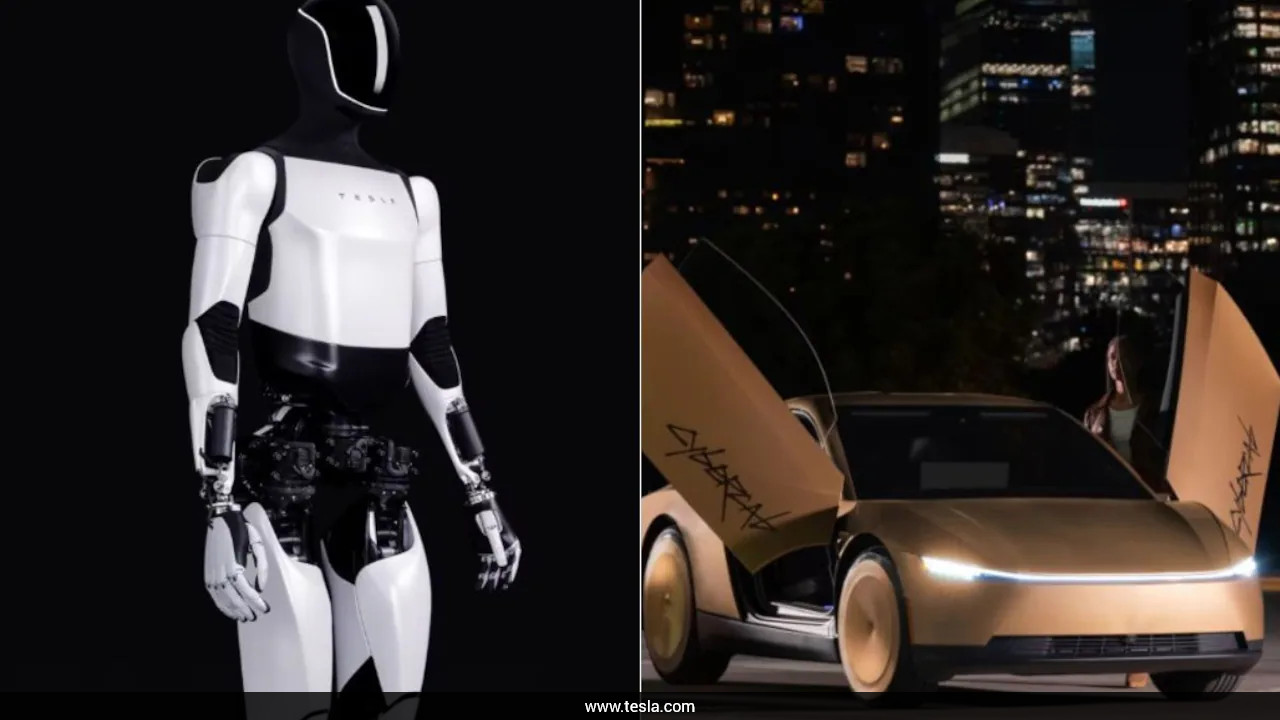
Tesla's airborne-capable Roadster has grabbed attention, but the company's longer-term ambitions extend beyond sports cars to humanoid robots and autonomous taxi services. From robotics to self-driving transport, Tesla is investing in technologies it believes could reshape how people live and travel.
Tesla made headlines again with its next-generation Roadster, unveiled on October 15. During the demonstration, the electric sports car performed short airborne manoeuvres using rocket-inspired thrusters developed with Elon Musk's SpaceX technology.
However, the Roadster is not a true flying car. It cannot sustain flight like an aircraft, and Tesla says production is expected to begin in 2028.
Real life, baby https://t.co/3QEqn18wig
— Tesla (@Tesla) October 16, 2026
While the vehicle has attracted widespread attention, the company is also investing heavily in two other major projects: Optimus humanoid robots and Robotaxi services.
Watch: Tesla Car Flies, Drives Upside Down In Stunning Demo
Tesla Optimus: Robots Designed to Assist Humans
Tesla is developing Optimus, a humanoid robot designed to perform everyday physical tasks. According to Tesla, the robot is intended to handle work that is unsafe, repetitive or boring for humans.
The company envisions Optimus assisting in factories, warehouses and potentially homes. Tesla is developing artificial intelligence systems to enable the robot to recognise objects, move independently and interact with its surroundings. However, Optimus remains under development and has not yet achieved widespread commercial deployment.
Tesla Robotaxi: Driverless Transport
Tesla's second major project is Robotaxi, which aims to provide transportation without human drivers. The company has developed Cybercab, a two-seat autonomous vehicle that operates without a steering wheel or pedals.
Tesla has introduced Robotaxi services in Austin and continues to expand its autonomous ride-hailing operations. The company believes self-driving taxis could make transportation more accessible and convenient in the future. However, regulatory requirements, safety concerns and technical challenges remain significant hurdles.
Why These Projects Matter
Tesla is seeking to become more than an electric vehicle manufacturer. Its growing focus on artificial intelligence, robotics and autonomous transportation could open new business opportunities beyond car sales.
Optimus could help automate physical work, while Robotaxi services could transform urban mobility. Yet both projects face substantial technical, regulatory and commercial challenges before they can achieve large-scale adoption.
The Roadster may have captured attention with its airborne demonstration, but Optimus and Robotaxi could ultimately play a larger role in shaping Tesla's future.
Track Latest News Live on NDTV.com and get news updates from India and around the world

