





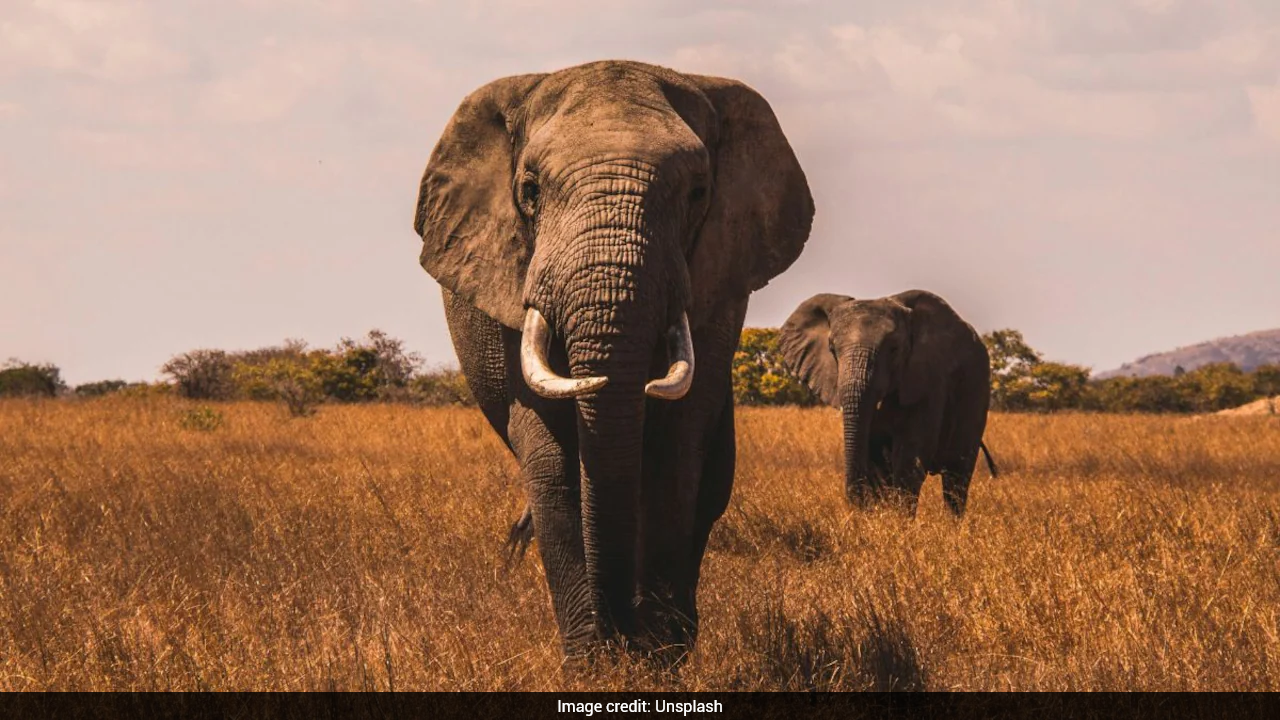
- Charlie Orchard-Lisle found a 1.8-million-year-old elephant relative tooth on a Suffolk beach
- The tooth was identified as an upper left molar of Anancus arvernensis by London experts
- Anancus arvernensis stood over 8 feet tall and lived from 8.5 to 2 million years ago
An ordinary beach walk turned extraordinary for an English family after an 11-year-old boy spotted what experts confirmed was a 1.8-million-year-old tooth from an extinct elephant relative, the New York Post reported.
On May 24, Charlie Orchard-Lisle was strolling with his mother along East Lane beach in Bawdsey, which is a coastal village in Suffolk, England, when he found the tooth.
"We were walking along and could see this thing by the lapping waves," his mother, Eleanor, told South West News Service, revealing that Charlie had been telling how much he loves elephants just 10 minutes earlier.
"It must have been quite distinctive because it caught both our eyes. We could tell it was something different - it had a different feel to it."
Also read | Dangerous 'Squishy' Toy Trend Leaves Children With Severe Burns: Here's What's Happening
He picked up the fist-sized, rock-like object and called Charlie's father over. Suspecting it wasn't an ordinary stone, they later sent photos to experts.
As mentioned by the New York Post, Professor Adrian Lister, a palaeontology research leader at the Natural History Museum in London, identified the find as an upper left molar from Anancus arvernensis.
The species is an extinct relative of modern elephants, including today's African bush elephant. It lived from the Late Miocene to the Early Pleistocene, roughly 8.5-2 million years ago, and stood over 8 feet tall at the shoulder.
Also read | Watch: Woman Shares 3 Tips To Survive Corporate Life Without Losing Your Mind, Internet Reacts
The tooth measures about 4 inches wide. Its enamel is preserved and mineralised after nearly two million years in the ground.
According to the experts, the molar was buried in the Red Crag cliffs at Bawdsey - a fossil-rich geological formation along England's eastern coast. Coastal erosion likely freed it from the sediment before waves washed it onto the beach.
"I can't believe you can find something so old that existed 1.8 million years ago and then just rocks up on the beach," Eleanor said.
"Basically, we were walking along, and 10 minutes before, my son Charlie was saying how much he loves elephants."
Track Latest News Live on NDTV.com and get news updates from India and around the world

