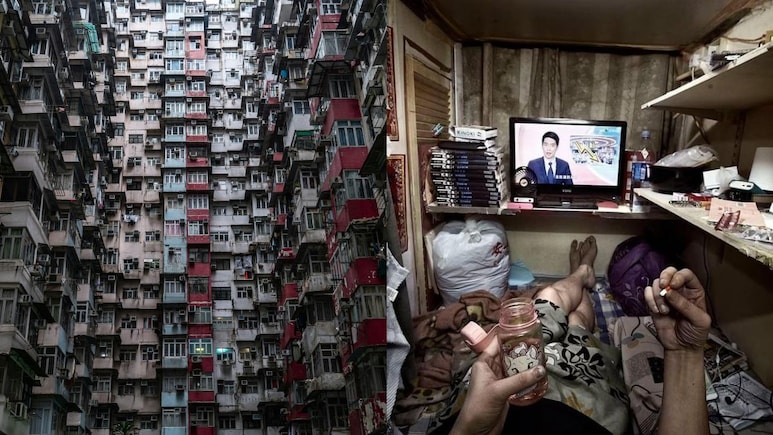
- Thousands in Hong Kong live in coffin homes as small as 16 square feet without standing room
- Hong Kong has ranked as the world's most expensive housing market for 14 consecutive years
- Around 2,00,000 to 2,20,000 residents live in subdivided or coffin-style units in old buildings
In a city famed for its glittering skyline and eye-watering property prices, thousands live in spaces so small they cannot stand upright, stretch their arms, or even turn without twisting their bodies. In one of the richest cities on Earth, people are living inside boxes.
A City Of Extremes
For 14 consecutive years, Hong Kong has held the title of the world's most expensive housing market. Glass towers rise from green hills, luxury cars glide past designer storefronts, and a handful of tycoons control vast fortunes.
Yet beneath that polished image lies a parallel city carved into ageing buildings and hidden behind metal grates and thin plywood partitions.
"These are the world's smallest apartments. They measure only 16 square feet and are known as coffin homes."
That is how Ruhi Cenet, a Youtuber introduces viewers to one of the harshest housing realities in the developed world.
For context, 16 sq feet is roughly 4 feet by 4 feet: a small single mattress (like a twin bed at 38x75 inches) that fills nearly the entire area, leaving no room to stand upright or extend arms fully.
- A standard crib is about 28x52 inches (10 sq ft); coffin homes double that but feel equally confining without headroom.
- In such cramped spaces, around 2,00,000 to 2,20,000 residents are estimated to be living in subdivided or coffin-style units.
Many are elderly, low-income workers, migrants, or people who have fallen through the cracks of an unforgiving property market. Public housing exists, but waiting times average about five years, sometimes longer. For many, the queue feels endless.
Rent for Hong Kong's 16-square-foot coffin homes typically ranges from $230 to $450 USD per month (INR 20,858 to INR 45,353).
What Is A Coffin Home
Coffin homes, also known as bedspace apartments, can be as small as 16 square feet. Some measure under 30 square feet, which places them outside newer regulatory frameworks.
Inside, the "apartment" is little more than a wooden or metal box stacked among dozens of others. In one 800-square-foot flat, as many as 30 coffin units can be crammed in. Residents sleep, eat, scroll through their phones and sometimes cook in that single, claustrophobic cavity.
"It is impossible to stand up or even stretch your arms," the documentary notes. "Despite this, these coffins serve as a living room, kitchen, and bedroom all at once."
Some units are not wider than the resident's shoulders. In one case, a man could not shut his door because his shoulder protruded beyond the frame. Another slept without a mattress because it would take up too much space.
Buildings Split In Half
Many of these units were never meant to exist. Entire floors in older buildings have been illegally reconfigured. Ceilings are lowered to create an extra layer of rooms, slicing one floor into two cramped levels. What was once a standard flat becomes a hive of narrow corridors and stacked boxes.
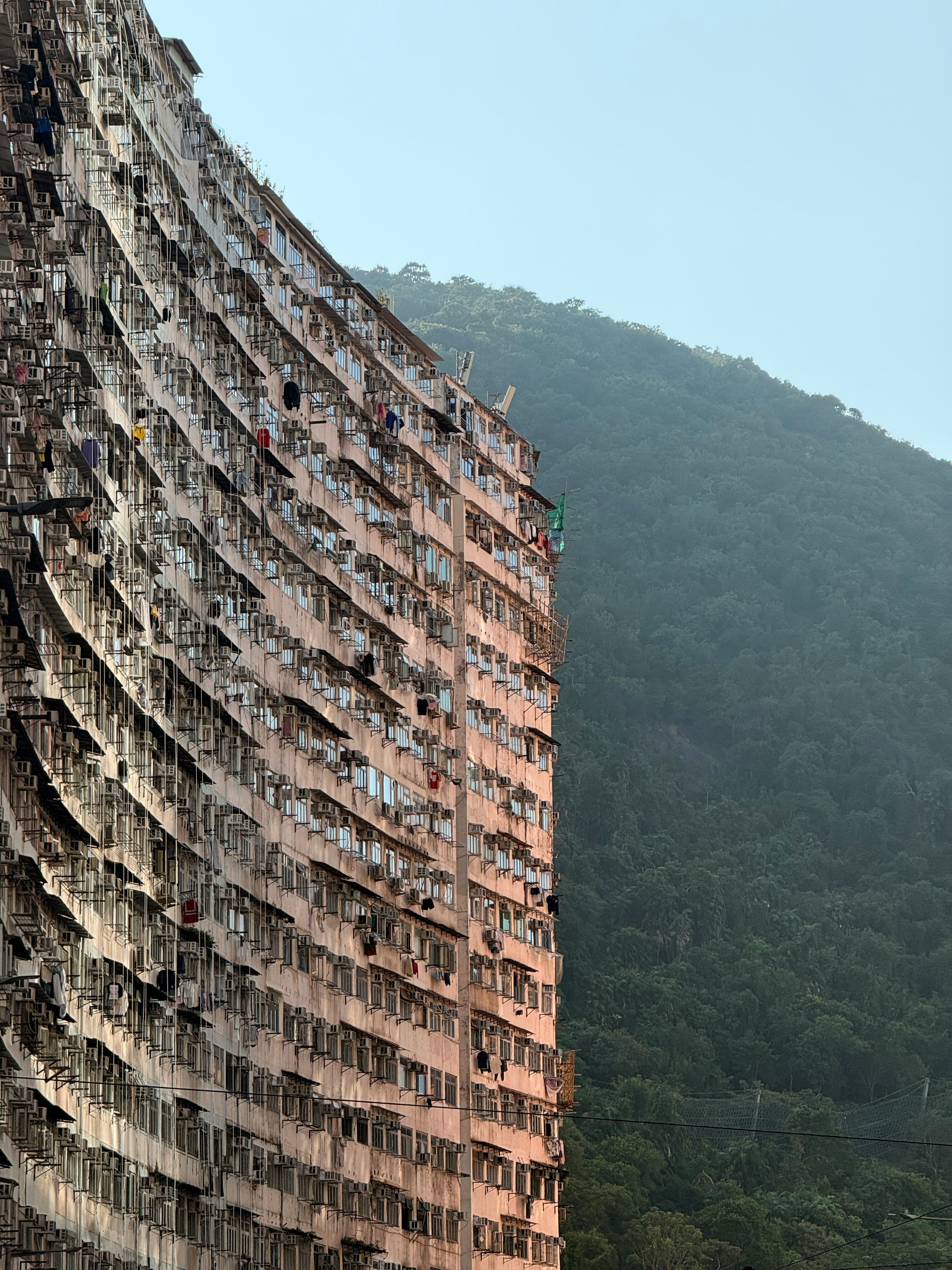
Quarry Bay, Hong Kong. Photo: Unsplash
On each level, 20 to 30 subdivided units are squeezed in. The ceiling height is so low that residents stoop constantly, which over time takes a toll on the body.
Overloaded wiring snakes through the walls. Extension cords multiply. Ventilation is minimal or non-existent. Windows, if present, are a luxury.
Living With Heat, Mould And Insects
Summer temperatures can push the apparent heat well above 40 Degree Celcius. Inside coffin homes, the air can feel suffocating.
Air quality inside some subdivided apartments has been found to be multiple times worse than safe limits. Mould spreads across ceilings. Warm, musty air lingers. In many units, there is no natural light at all.
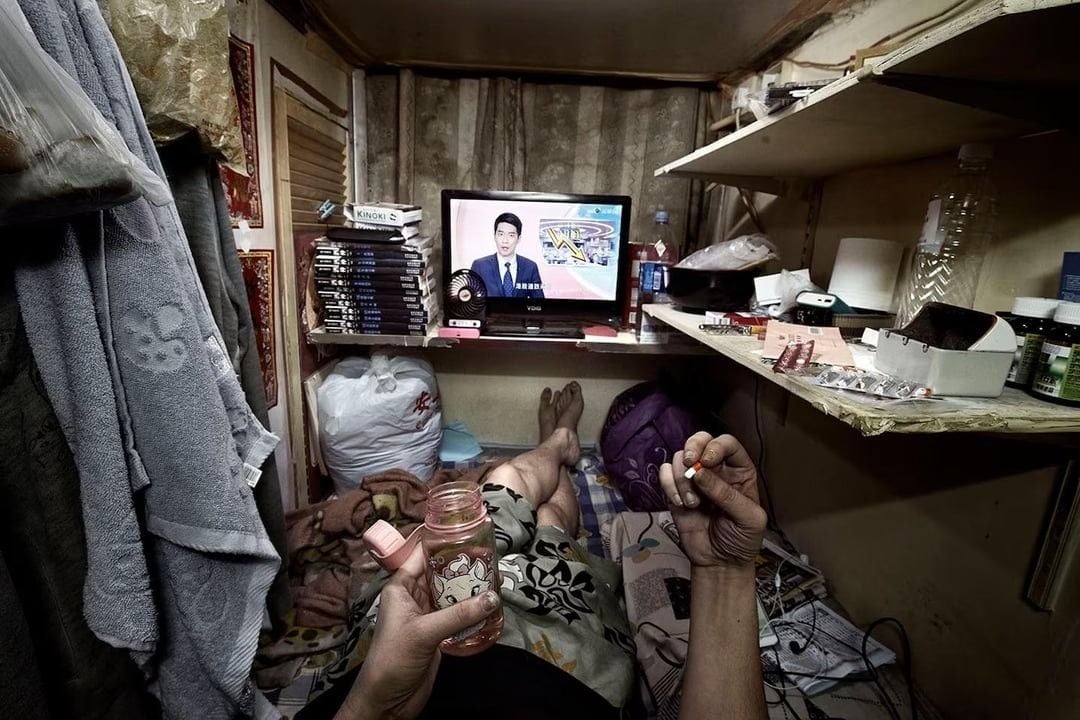
On each level, 20 to 30 subdivided units are squeezed in. Photo: X
Bed bugs and cockroaches are a persistent menace.
Cooking Beside The Toilet
That's not all. In some (most) of these subdivided flats, there are no kitchens. Residents prepare food in the bathroom, sometimes directly beside the toilet. Vegetables are washed in sinks also used after using the lavatory. Clothes hang overhead. There is often no lid on the toilet bowl.
This arrangement raises serious hygiene concerns. Cross-contamination risks are high, especially in cramped spaces with limited cleaning facilities. Yet for many, eating out regularly is not financially possible.
Bottomline
Hong Kong's skyline tells a story of prosperity. But the reality is far different. Just 75 individuals control roughly 10 percent of the territory's wealth. Luxury apartments can sell for more than 1 million US dollars even in average neighbourhoods. Monthly rents for small, standard one-bedroom flats can hover around 4,000 US dollars.
Against that backdrop, coffin homes exist almost invisibly.
Track Latest News Live on NDTV.com and get news updates from India and around the world
