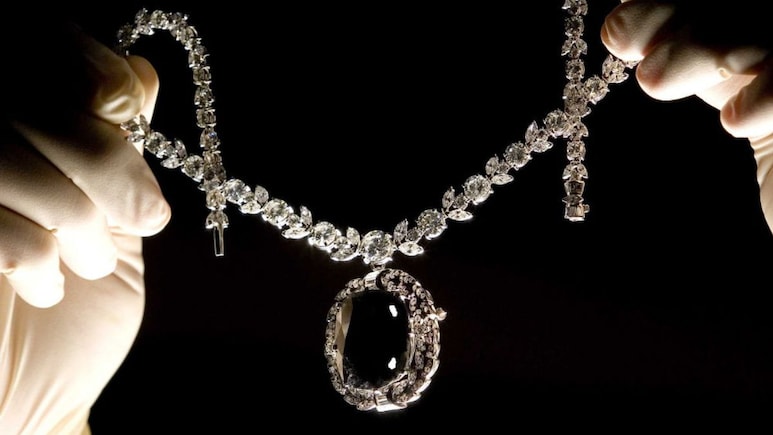
"Next to sound judgment, diamonds and pearls are the rarest things in the world," said Jean de La Bruyere, a 17th-century French philosopher.
Little did he know that the rarest gems can be cursed and bring death and devastation upon their owners. Sounds superstitious? Well! Sure. But if you study history and connect the dots, your sceptical mind will be forced to believe that gems can be cursed.
One such harbinger of death is the Kohinoor diamond, and another one is the charming Black Orlov diamond. Both originated in India, but after causing destruction and driving their owners to death, they are displayed in museums.
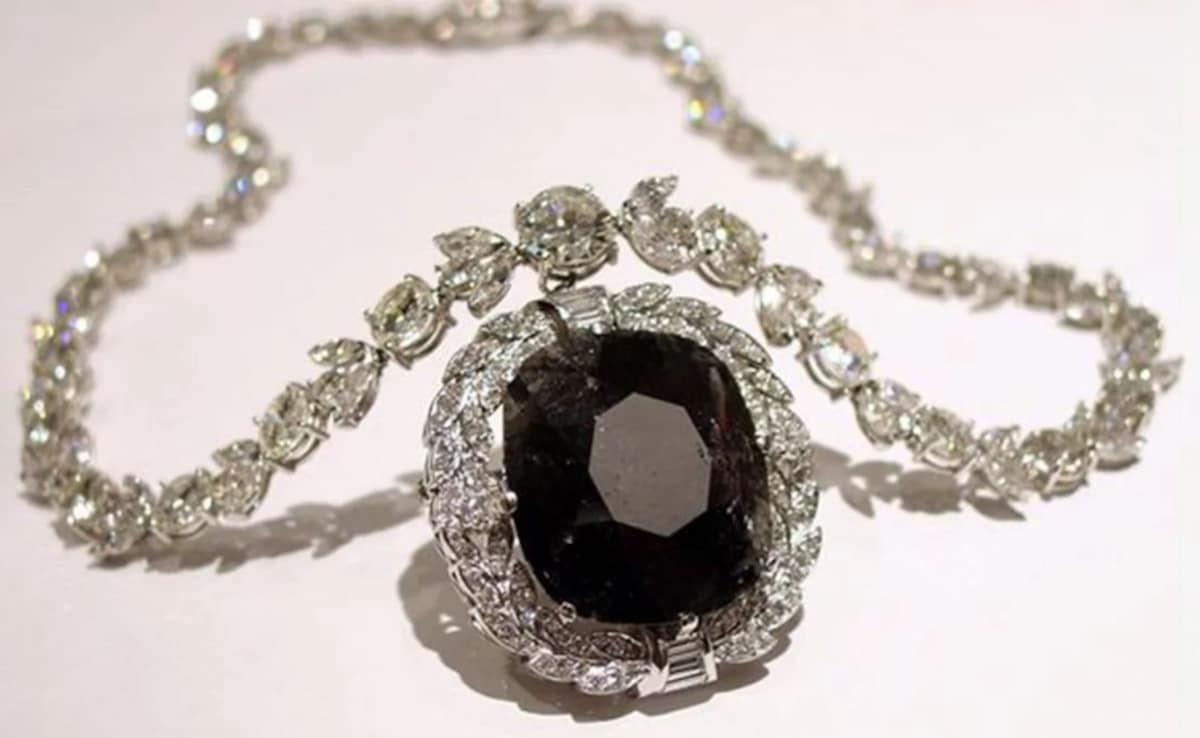
The Black Orlov diamond was auctioned for $352,000 in October 2006. Photo: International Antique Jewellers Association
Origins Of The Black Orlov Diamond
The Black Orlov is truly a one-of-a-kind gem. Known for its mesmerising beauty, it was first found in the 1800s and boasts a gunmetal grey hue. While the documents of its miner and jeweller remain murky, no one can deny its allure, which can spark a seed of greed in the purest heart.
Although what is available as a historic account, the diamond was likely found in India. However, many gemologists believe that it is next to impossible because the country is known for producing rare black gems like the Black Orlov. In fact, many Hindu communities associate black with negativity and misfortune. Despite the blurry past, the story of its curse did not fade away.
The gem originally weighed 195k when it was stolen in the early 19th century in India. It was one of the eyes in Lord Brahma's statue in a temple near Puducherry, Tamil Nadu. Hence, it was called the Eye of Brahma. However, the information about the temple name and location remains blurred in the past.
Curse Of The Black Orlov Diamond
There are two parts to the story of who stole Brahma's eye. Some evidence suggests a Hindu monk stole it and was murdered later. Another account suggests that a Jesuit cleric stole the rare diamond. Nobody knows what happened to him.
According to legend, it is believed that the gem was cursed by Lord Brahma. People still believe that it would bring misfortune to whoever comes in contact with it (or owns it).
In 1932, a diamond dealer, J.W. Paris, took the black diamond to the United States and reportedly died by suicide after jumping from a New York skyscraper.
Again, the documentation is muzzy around how two Russian princesses - Leonila Galitsine-Bariatinsky and Nadia Vygin-Orlov became its owners. It was after them that the gem came to be known as the Orlov Diamond. But in 1947, both of them reportedly jumped to their deaths. One interesting fact to note is that if you search the lineage of the princesses, you won't find anything. Hence, many historians contest the merit of the story and believe that it was a figment of imagination woven to carry forward the cursed legends of the gem.
Was Black Orlov's Curse Ever Broken
Charles Windson, a fearless diamond dealer, not only bought the infamous Orlov gem, but he also had it the 195k diamond cut into three pieces. He thought he could divide the negative energy and break the curse by breaking the gem. The one we know today and can witness is a 67.49k cushion-cut Black Orlov diamond that has been displayed in museums, including the American Museum of Natural History in New York City and the Natural History Museum in London.
It was turned into a necklace with a brooch made of the Orlov and 108 diamonds. It was suspended from a 124-diamond necklace. The remains of the other two parts of the original Brahma's eye remain unknown, adding another layer of mystery for diamond enthusiasts and historians.
Rumours have it that Felicity Huffman decided to wear the Black Orlov diamond necklace for the 2006 Academy Awards. However, at the last moment, she had a change of heart. The actor turned heads in a black gown and donned pear-shaped diamond drop earrings.
Months after Huffman decided not to wear the necklace, it was sold for $352,000 (Rs 3.1 crore) at Christie's Magnificent Jewels auction in October 2006. Interestingly, its value was estimated between $100,000 (Rs 89 lakh) and $200,000 (Rs 1.7 crore).
According to Natural Diamonds, Dennis Petimezas, President, Watchmaker's Diamonds and Jewelry, owned the Orlov necklace from 2004 to 2006. Speaking about the curse and rumoured negative energy it entraps, he said, "Never felt nervous about owning the Black Orlov."
Maybe he is right, and this is the truth. Maybe breaking the diamond broke its curse, but who would like to test it, given its history of bringing misfortune to its previous owners? There is no news of the Black Orlov diamond bringing misfortune to anyone today, and its whereabouts are also unknown.
Also Read | How The Kohinoor Diamond Brought Death And Devastation For All Its Male Owners
Track Latest News Live on NDTV.com and get news updates from India and around the world
