- Robbie Grewal's series showcases Titan's rise from an idea to a consumer brand
- Titan was founded in 1984 as a joint venture between Tata Group and TIDCO
- Xerxes Desai envisioned Titan as a premium brand competing globally
Robbie Grewal's recent series, Made in India: A Titan Story, inspired by the creation of Titan, has stolen the spotlight once again, shining it on one of India's most remarkable corporate success stories.
The series shows how long before Titan became a household name associated with watches, jewellery, eyewear and lifestyle products, it was little more than an ambitious idea in the mind of a Tata executive who believed India could create a world-class consumer brand.
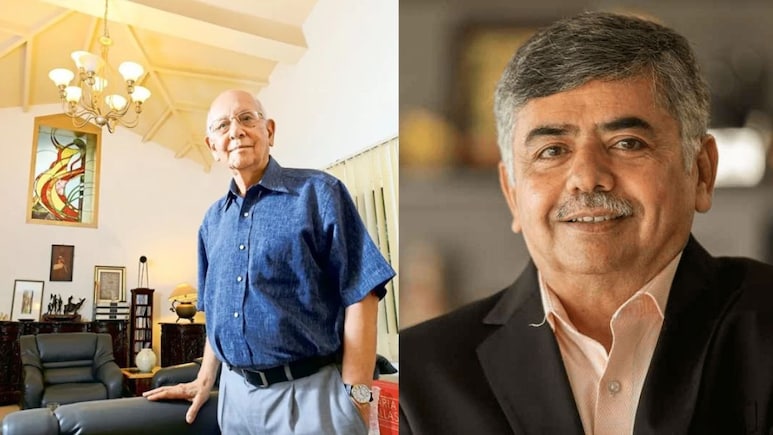
The story of Titan is not simply about watches. It is a story of vision, persistence, innovation and leadership. It is also the story of two men: Xerxes Desai, the dreamer who imagined what Titan could become, and Bhaskar Bhat, the executor who transformed that dream into one of the Tata Group's biggest success stories.
The Man Who Saw An Opportunity Where Others Didn't
The seeds of Titan were planted in the late 1970s.
At the time, Xerxes Desai was working at the Tata Group and searching for new business opportunities. During this search, he became convinced that India needed a modern watch company capable of producing stylish, high-quality timepieces.
When he presented the idea to JRD Tata, the chairman immediately recognised its potential. Turning that vision into reality, however, proved far more difficult.
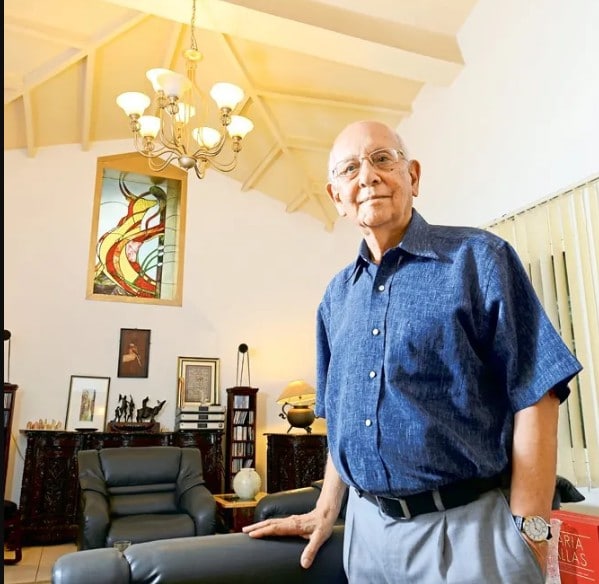
Xerxes Desai was working at the Tata Group and searching for new business opportunities. Photo: LinkedIn
India was still operating under the Licence Raj. Foreign exchange regulations were strict, technology imports were heavily controlled, and Swiss manufacturers were reluctant to share expertise.
On top of that, the watch industry was dominated by the government-owned Hindustan Machine Tools, better known as HMT.
For nearly a decade, Desai and his team fought through regulatory and commercial obstacles before the project finally received approval.
The Birth Of Titan
In 1984, Titan was formally established as a joint venture between the Tata Group and the Tamil Nadu Industrial Development Corporation.
The partnership would become one of India's most successful examples of public-private collaboration.
The company's manufacturing plant was set up in Hosur, while its headquarters were established in Bengaluru. The choice of Hosur was strategic. It was located close to Bengaluru, home to HMT's watch factory, allowing Titan to recruit experienced engineers and managers from the industry leader.
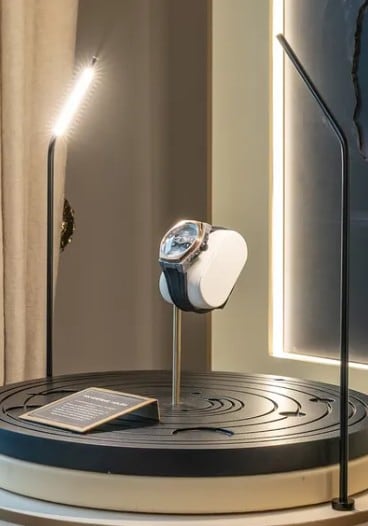
In 1984, Titan was formally established as a joint venture between the Tata Group.
Titan officially began operations in 1986 with an investment of Rs 100 crore.
Its first collection included Exacta, Classique, Spectra, Royale and Fastrack. Even in its earliest days, Titan refused to position itself as merely another watch company. Desai wanted the brand to be aspirational.
That decision would shape everything that followed.
The Philosophy That Changed Titan
Those who worked with Xerxes Desai often recall one phrase that defined him: "Think Big".
The phrase was the foundation of Titan's culture.
One of the most famous stories involves Bhaskar Bhat's interview in 1983. When Bhat arrived, he noticed a large sign outside Desai's office that simply read "THINK BIG".
Instead of discussing technical details, Desai spoke about the global watch industry and the opportunity that lay ahead.
Bhat would later describe that conversation as transformative.
Desai believed Indian companies should compete with the best in the world, not merely dominate local markets.
Building A Premium Indian Brand
At a time when most Indian consumers viewed watches as functional items, Titan introduced the idea that watches could also be fashion statements.
The company invested heavily in design, marketing and technology.
One of Desai's most ambitious projects emerged in 1994, when he challenged engineers to create the world's thinnest watch. The result was the Titan Edge, launched in 2002, featuring an ultra-thin movement and setting a global benchmark in watchmaking.
Desai also expanded Titan beyond watches. In 1994, he launched Tanishq, a move many considered risky at the time. The Indian jewellery market was fragmented and dominated by traditional family jewellers.
The business struggled initially, but the foundation had been laid for what would eventually become Titan's largest revenue driver.
Not Every Gamble Worked
For all his successes, Desai's tenure was not without setbacks.
One embarrassing incident occurred shortly after Titan began manufacturing watches. A quartz watch gifted to JRD Tata from the first production batch reportedly stopped working.
More significantly, Titan's attempt to expand aggressively into Europe during the 1990s proved costly. The company underestimated the demands of international retail markets and struggled with quality expectations and delivery standards.
The consequences showed up in the numbers. Revenue continued growing, but profits fell sharply. By the time Desai retired in 2002, Titan was facing one of the most challenging periods in its history.
Many wondered whether the company could regain momentum.
Enter Bhaskar Bhat
When Bhaskar Bhat took over as Managing Director in April 2002, Titan was at a crossroads.
Unlike Desai, who was known for bold vision and unconventional thinking, Bhat brought a different style of leadership.
An IIT Madras graduate and alumnus of IIM Ahmedabad, Bhat had spent nearly two decades inside Titan before taking the top job. Colleagues described him as grounded, empathetic and strategically focused.
His challenge was daunting. Titan's revenues were under Rs 1,000 crore and profitability had weakened considerably.
Rather than attempting dramatic reinvention, Bhat focused on fixing what was broken.
The Turnaround That Changed Everything
One of Bhat's first priorities was reviving the watch business.
He assembled what became known internally as the "Mission Impossible" team and tasked them with restoring Titan's competitiveness.
At the same time, he doubled down on a business many still viewed with scepticism: jewellery.
The critical shift came when Titan moved Tanishq's focus from 18-carat jewellery to the 22-carat gold products preferred by Indian consumers. The move transformed Tanishq from a struggling venture into one of India's most successful jewellery brands.
That single strategic decision altered Titan's future.
Over time, jewellery became the company's biggest business, contributing more than 80 per cent of revenues.
A Lifestyle Powerhouse
Under Bhat's leadership, Titan steadily expanded into new categories.
The company entered eyewear, fragrances, accessories and handloom retail. Brands such as Fastrack, SKINN, EyePlus and Taneira helped broaden Titan's reach far beyond watches.
By the time Bhat stepped down in 2019 after 36 years with the company, Titan had undergone a dramatic transformation.
Revenue had grown from under Rs 1,000 crore in 2002 to nearly Rs 20,000 crore. Net profit had surged from Rs 6.2 crore to Rs 1,388 crore.
The company's market capitalisation had risen from around Rs 220 crore to approximately Rs 95,000 crore.
The Unusual Ownership Story
One of the lesser-known aspects of Titan is its ownership structure.
Unlike many major Indian corporations, Titan remains a partnership between a private conglomerate and a state government institution.
The largest shareholder is TIDCO, the Tamil Nadu government's industrial development corporation, with a stake of roughly 27.88 per cent. The Tata Group follows closely with around 25 per cent.
This means the Tamil Nadu government remains Titan's biggest shareholder.
The company also attracted the confidence of legendary investor Rakesh Jhunjhunwala, who began buying Titan shares in the early 2000s when they traded around Rs 40. His investment eventually became one of the most celebrated bets in Indian stock market history, generating enormous wealth over two decades.
The Titan Today
Today, Titan is far removed from the company that sold just 17 watches on the first day of business with Ajoy Chawla as the managing director.
It is India's leading watchmaker, the owner of some of the country's most recognised consumer brands and one of the Tata Group's most valuable companies.
The company operates thousands of retail outlets, sells products across multiple categories and has built a presence in international markets. Every few seconds, a Titan watch is purchased somewhere in the world.
What began as a challenge to HMT's monopoly has evolved into a consumer empire.
Track Latest News Live on NDTV.com and get news updates from India and around the world
