





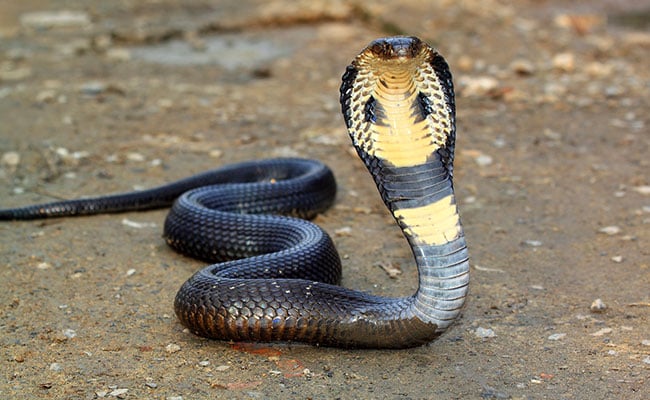
Kerala has witnessed a worrying surge in snakebite deaths this summer, with six people losing their lives within a single week as extreme heat drives snakes closer to human habitations, according to officials and experts.
The latest death was reported from Idukki on Sunday, where a 75-year-old woman, Vishalakshi, died after being bitten by a snake while collecting mangoes near her house. She was rushed to a private hospital but died despite emergency treatment. Her death marked the sixth snakebite fatality in the state between April 20 and April 26.
The same day, six more snakebite cases were reported from Alappuzha, Kannur, Malappuram and Thiruvananthapuram districts, highlighting the scale of the unfolding crisis. Among those injured is Hannah, a 15-year-old from Thiruvananthapuram, who remains on ventilator support.
Deadliest Week Of The Season
Between April 20 and April 26, snakebite deaths were reported from six districts across Kerala, making it the deadliest week of the season so far.
In Thiruvananthapuram on April 20, eight-year-old Dikshal Dileep died after being bitten while sleeping inside his house. Two days later, on April 22, Thrissur reported the death of another eight-year-old, Aljo, following a krait bite. His younger brother Anoj was also bitten by the same snake and continues to remain hospitalised.
Alappuzha district recorded two deaths within a span of 24 hours. Saleena, 42, died on April 24, followed by Indira, 65, on April 25. Both cases led to intensified surveillance in the district.
In Kannur, Nafeesa, 70, died early Sunday at the Government Medical College Hospital. Doctors confirmed snakebite through laboratory tests despite the absence of visible bite marks. Her condition deteriorated, and she was placed on ventilator support before her death.
Later the same day, Vishalakshi's death in Idukki became the sixth fatality of the week.
Rising Deaths Over The Past Year
The recent deaths form part of a broader pattern. Health Department records show that Kerala reported 34 snakebite deaths in 2023-24 and 30 deaths in 2024-25. Between April 2025 and the first week of April 2026, the state recorded 19 snakebite fatalities.
The sharp spike seen this April has raised concerns among officials that the current season could see higher fatalities than in previous years.
Heat And Breeding Season Increase Risk
Experts have attributed the surge to extreme summer temperatures forcing snakes out of their natural habitats and into cooler spaces occupied by humans.
Herpetologist Sandeep said encounters between humans and snakes typically increase during March-April and again between July and August. "Climate is the main factor driving these interactions," he told reporters.
Experts also pointed out that summer coincides with the egg-hatching season of the Big Four venomous snakes, the common krait, Russell's viper, spectacled cobra and saw-scaled viper.
"These snakes remain inactive during peak daytime heat and resume activity when temperatures drop. They often enter homes in search of cool enclosed spaces," licensed snake catcher Kannan told NDTV. He added that breeding further increases the risk of human encounters. A single common krait can produce around 15 snakelets, while cobras and Russell's vipers may produce up to 40.
Muhammed Anwar Yunus, Assistant Conservator of Forests and state nodal officer of the SARPA programme, said cold-blooded snakes move into cooler spaces during extreme heat. "This coincides with the breeding season and increases human-snake encounters," he said.
Hospitals Flag Treatment Challenges
Even as access to treatment improves, doctors have flagged gaps in hospital infrastructure. The Kerala Government Medical Officers' Association said administering anti-snake venom carries the risk of severe allergic reactions, including life-threatening anaphylaxis. Such cases require ventilators, intensive monitoring and continuous medical supervision.
Officials reviewed the situation at a meeting chaired by the Director of Health Services on April 24 and directed hospitals to strengthen treatment protocols.
At present, antivenom is available at 146 hospitals across Kerala, including selected community health centres and all taluk hospitals. However, ICU facilities remain unevenly distributed across districts.
Limits Of Antivenom
India's polyvalent antivenom is effective only against four species, the Indian cobra, common krait, Russell's viper and saw-scaled viper. It does not neutralise venom from the hump-nosed pit viper, a species increasingly linked to snakebite cases in Kerala.
Public Health Response And Advisories
In October 2025, Kerala declared snakebite envenomation (the exposure to poison resulting from a bite or sting) as a disease of public health importance under the Kerala Public Health Act, 2023.
Health Minister Veena George on April 24 urged residents to call the 108-ambulance service immediately after a snakebite instead of attempting to locate hospitals on their own. "Timely first aid and expert medical treatment can save lives," she said, noting that the state control room tracks real-time antivenom availability.
Chief Minister Pinarayi Vijayan had also earlier expressed sadness over recent deaths, including those of two children, and warned that intense summer heat has raised snakebite risks. He advised people to remove possible snake hideouts such as vegetation, wood piles and debris around homes, and said the SARPA project launched in 2020 had helped reduce fatalities.
Track Latest News Live on NDTV.com and get news updates from India and around the world

