





As the legislation to amend the Women's Reservation Bill and increase the number of seats in the Lok Sabha failed to clear the Lower House on Friday, the discussion has returned to a long-standing question: How fairly are women represented in India's legislatures?
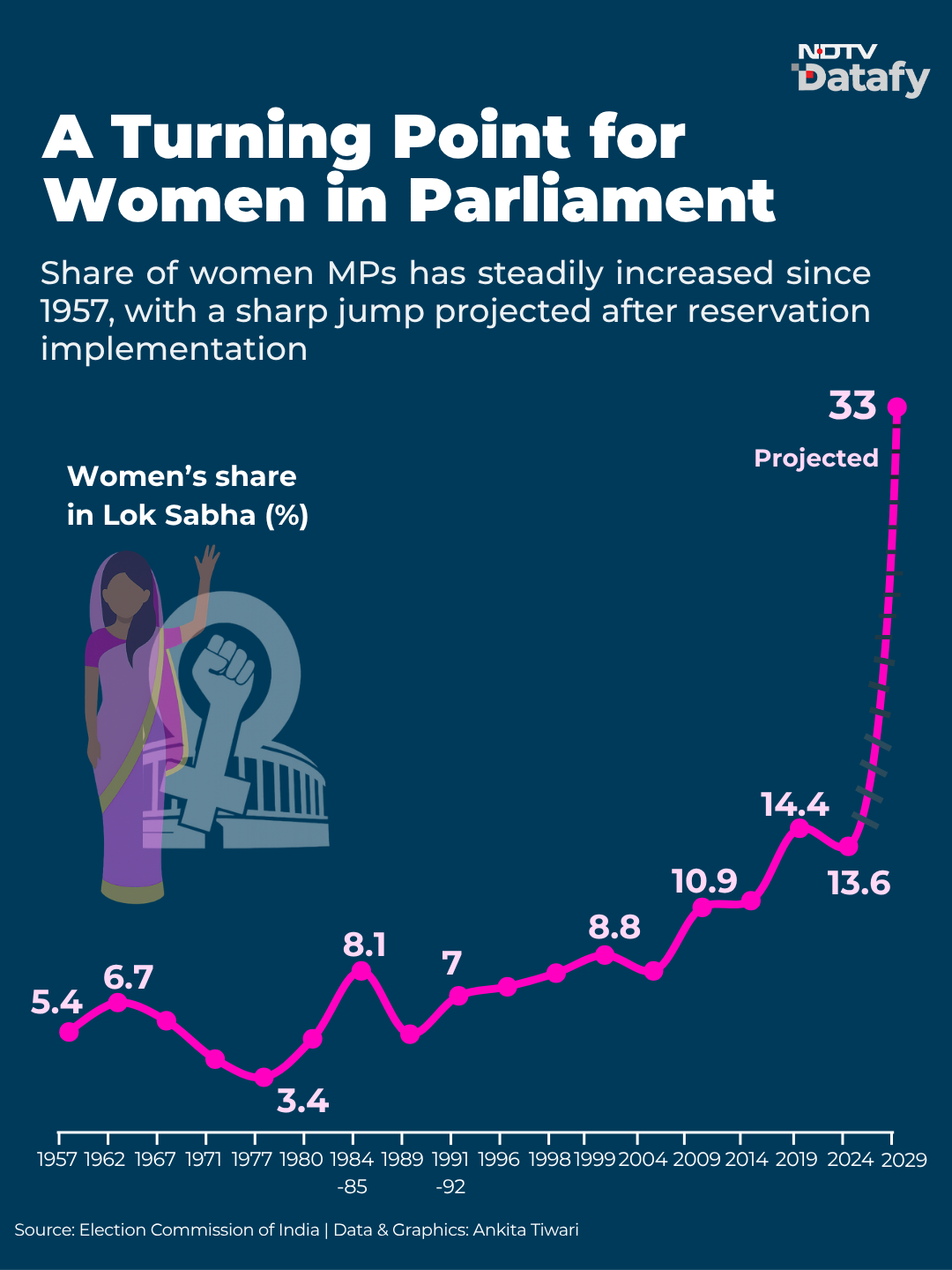
Women's presence in the Lok Sabha has increased steadily, rising from 5.4 per cent in 1957 to 13.6 per cent in 2024. Despite the improvement, India still has fewer than one in seven women MPs. Even at the peak of their representation in 2019, women accounted for 14.4 per cent of the House, far below the proposed one-third mark in the reservation bill.
Contesting More Does Not Mean Winning More
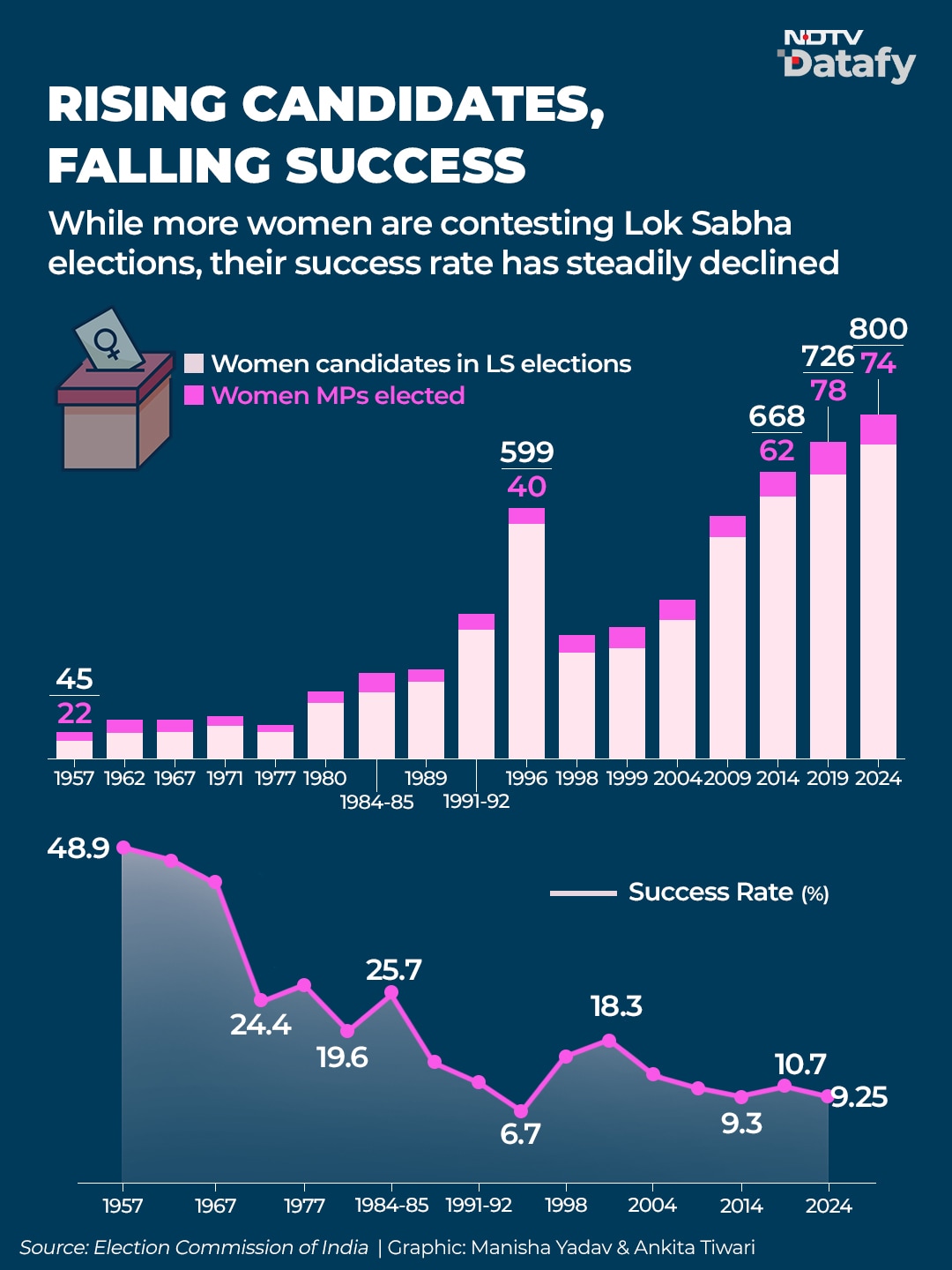
The gap becomes sharper when the contest and success rates data are analysed. In 2019, 726 women contested the Lok Sabha elections, and 78 were elected, yielding a success rate of 10.7 per cent. In 2024, the number of women candidates rose to 800, but only 74 were elected, pushing the success rate below 10 per cent. This shows that more women are entering the electoral fray, but their participation is not getting converted into victories.
Party Representation
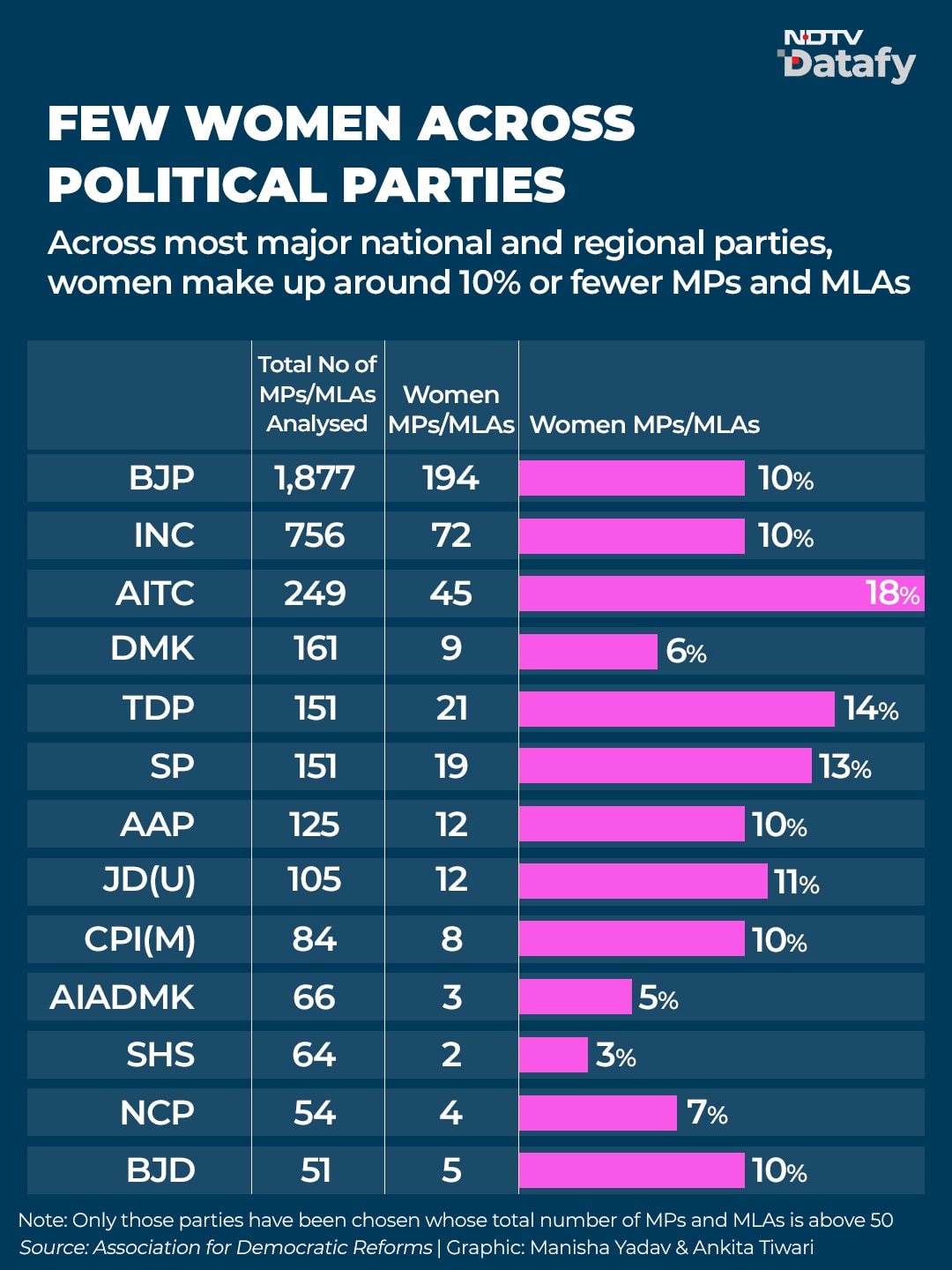
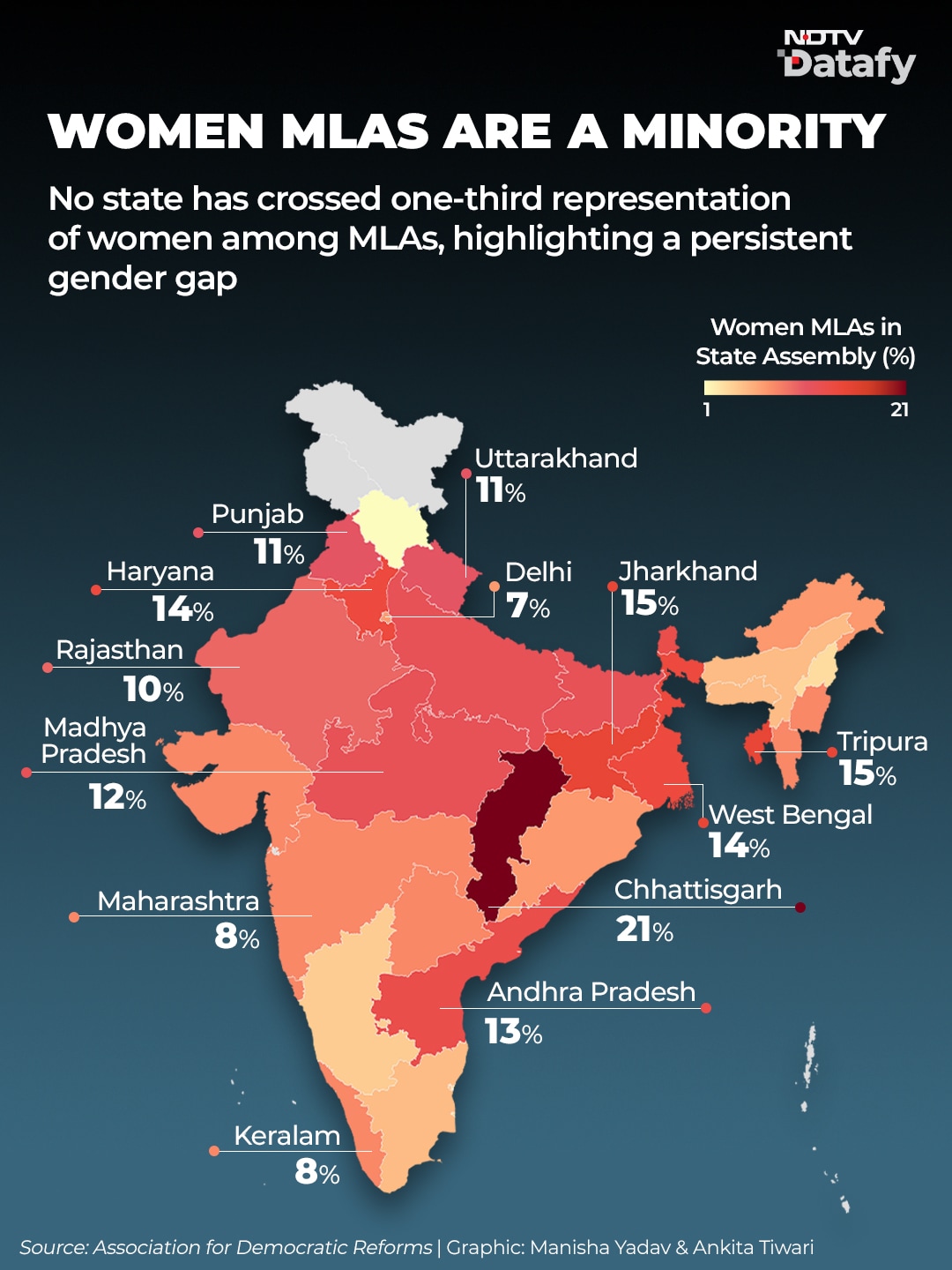
In data compiled by the Association for Democratic Reforms (ADR), women's representation was analysed only among political parties with a combined strength of at least 50 MPs and MLAs. Even within this limited group, the differences were striking.
The BJP, with 1,877 MPs and MLAs, has 194 women legislators, making up nearly 10 per cent of the total. The Congress shows a similar pattern, with 72 women among 756 legislators, which is also around 10 per cent.
Others lag behind: the DMK has just nine women out of 161 legislators (6 per cent), AIADMK has three out of 66 (5 per cent), and the Shiv Sena only two women among 64 legislators (3 per cent).
The Trinamool Congress (AITC), on the other hand, has 45 women lawmakers out of 249, translating to 18 per cent, which is the highest among major parties.
How India Compares Globally
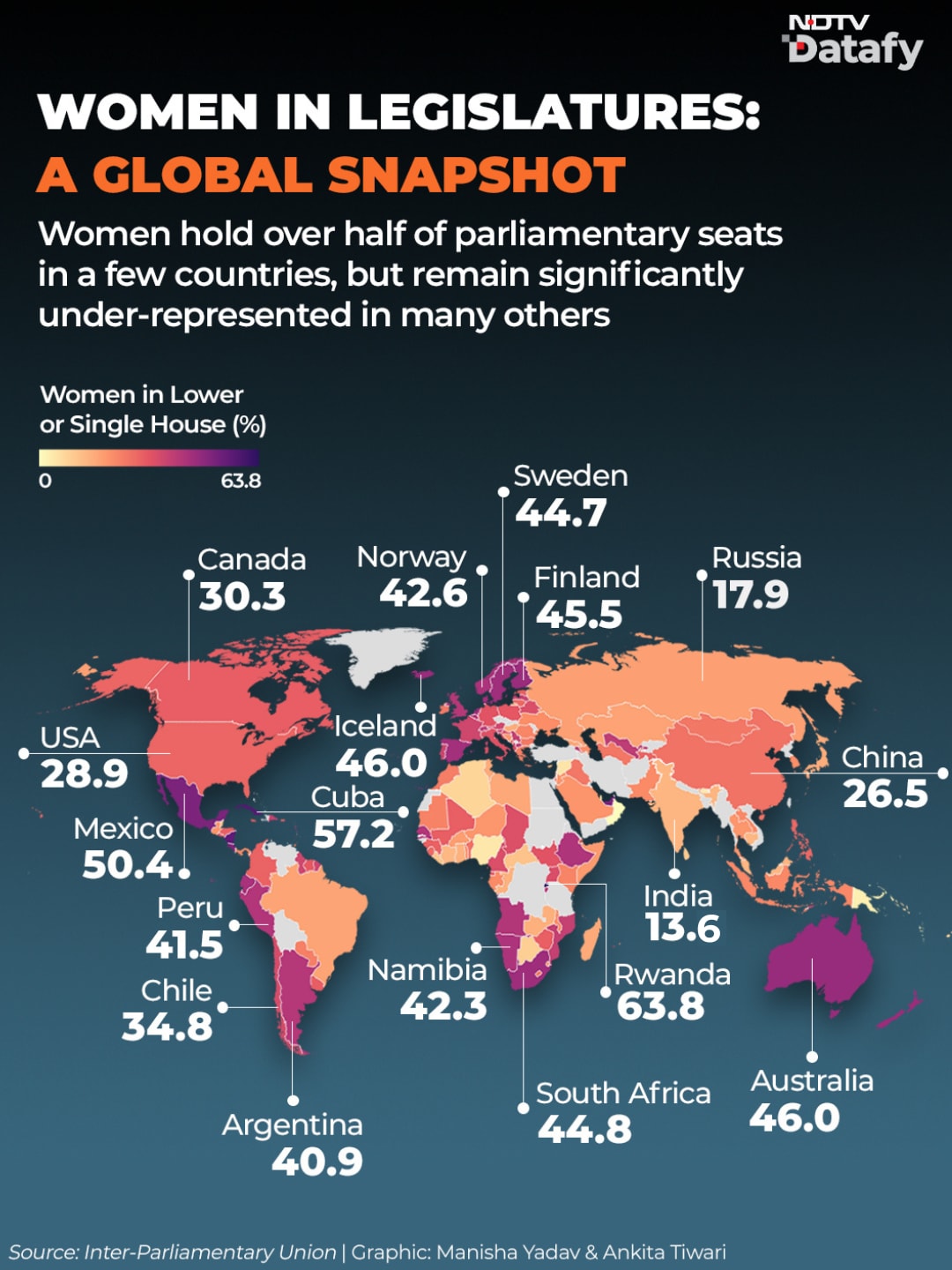
India is not an exception in terms of low women's participation, but it lags behind the global average. Worldwide, women hold about 27 per cent of the seats in national parliaments. Rwanda, at 63.8 per cent, Cuba, at 57.2 per cent, and Mexico, at 50.4 per cent, top the global rankings. India's current share of 13.6 per cent places it well below not only these leaders but also behind much of Europe, the Americas, and parts of Africa, showing that growth without mandated quotas is often slow.
Voter Turnouts Tell A Different Story
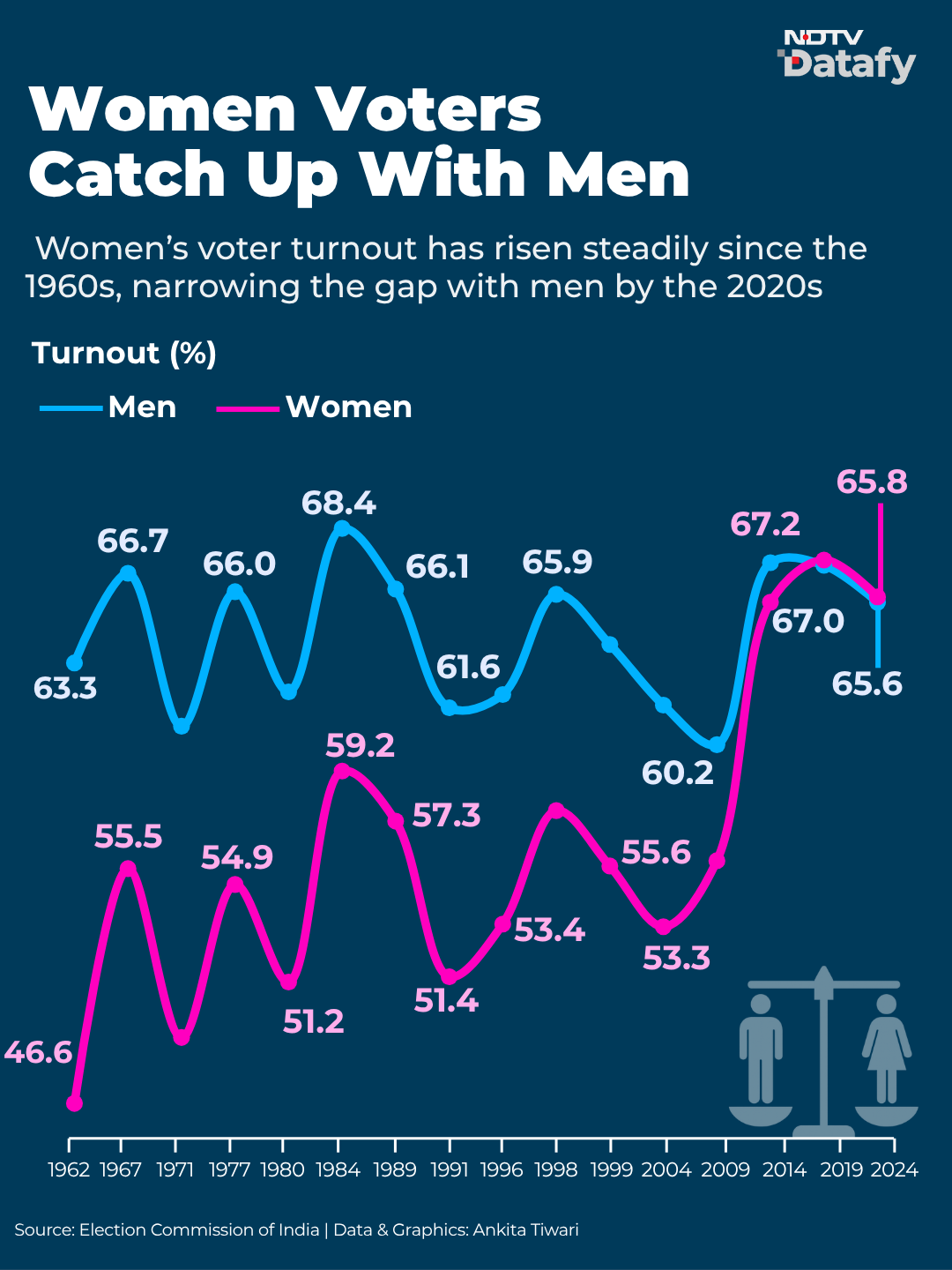
While women remain under-represented in legislatures, their participation as voters has been strong and continues to rise. Women's voter turnout increased from about 47 per cent in 1962 to over 65 per cent in 2014, and reached 67.2 per cent in 2019, slightly higher than the men's turnout of 67 per cent. In 2024, women again matched men with a 65.8 per cent turnout, showing sustained electoral engagement.
Measuring Public Interest
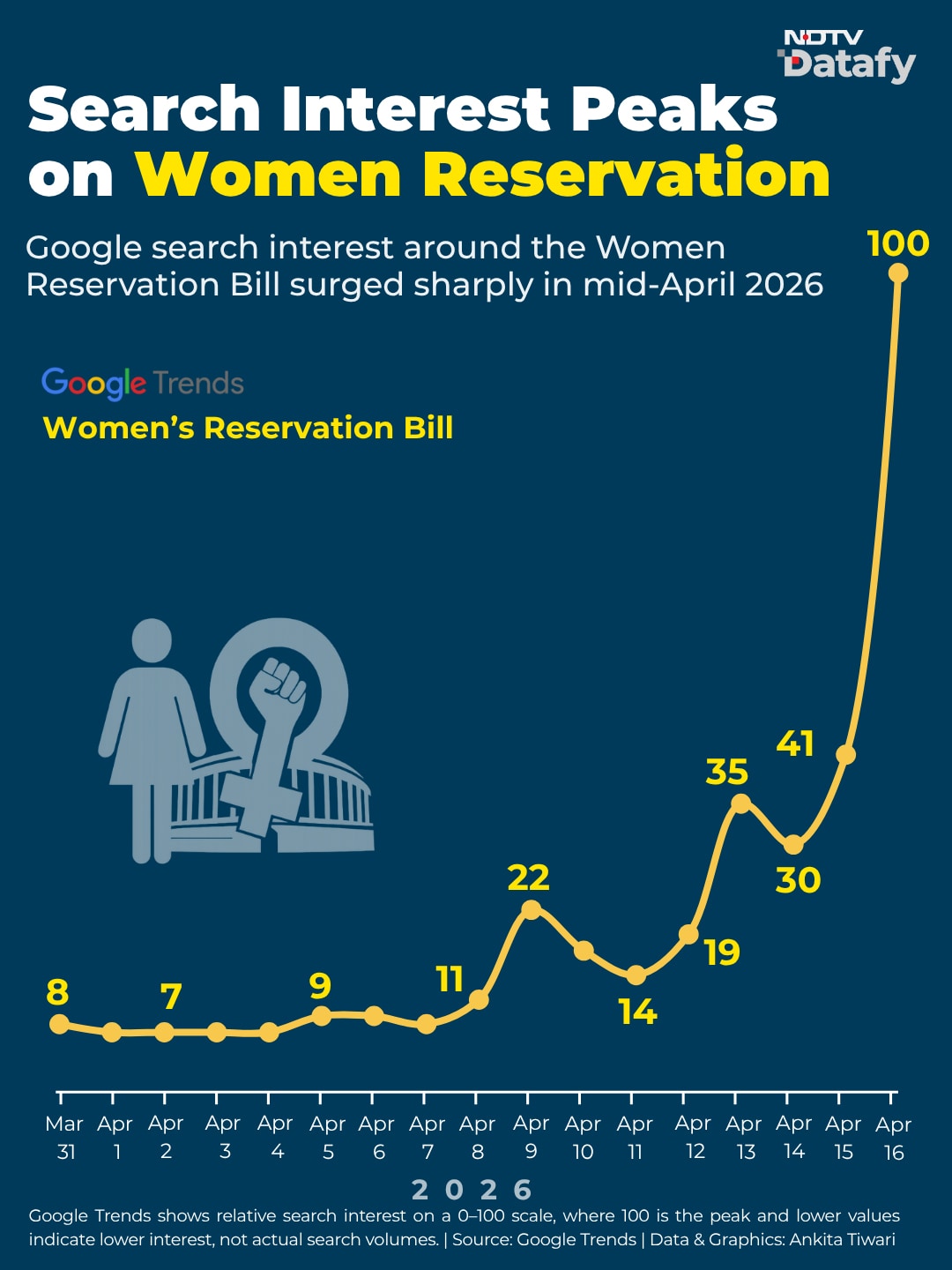
Beyond the Parliament and party positions, public curiosity around the Women's Reservation Bill has been visible online. Google Trends data for the term "women's reservation" shows a sharp rise in search interest in early April 2026, coinciding with the announcement of the special parliamentary session and the tabling of amendments to operationalise the quota from 2029. On Friday, the Google Trends index for the term touched 100, which represents the highest point of interest.
Where The Interest Is Coming From
Google Trends does not provide absolute search counts, but it ranks states by relative search interest. Between April 1 and April 16, 2026, search interest for the term "women reservation" was highest in the Northeast, indicating comparatively greater online attention from the region. Arunachal Pradesh recorded the highest relative interest, followed by Nagaland.
Among larger states and urban centres, Delhi ranked next, while Mizoram also featured among the top states in relative search interest.
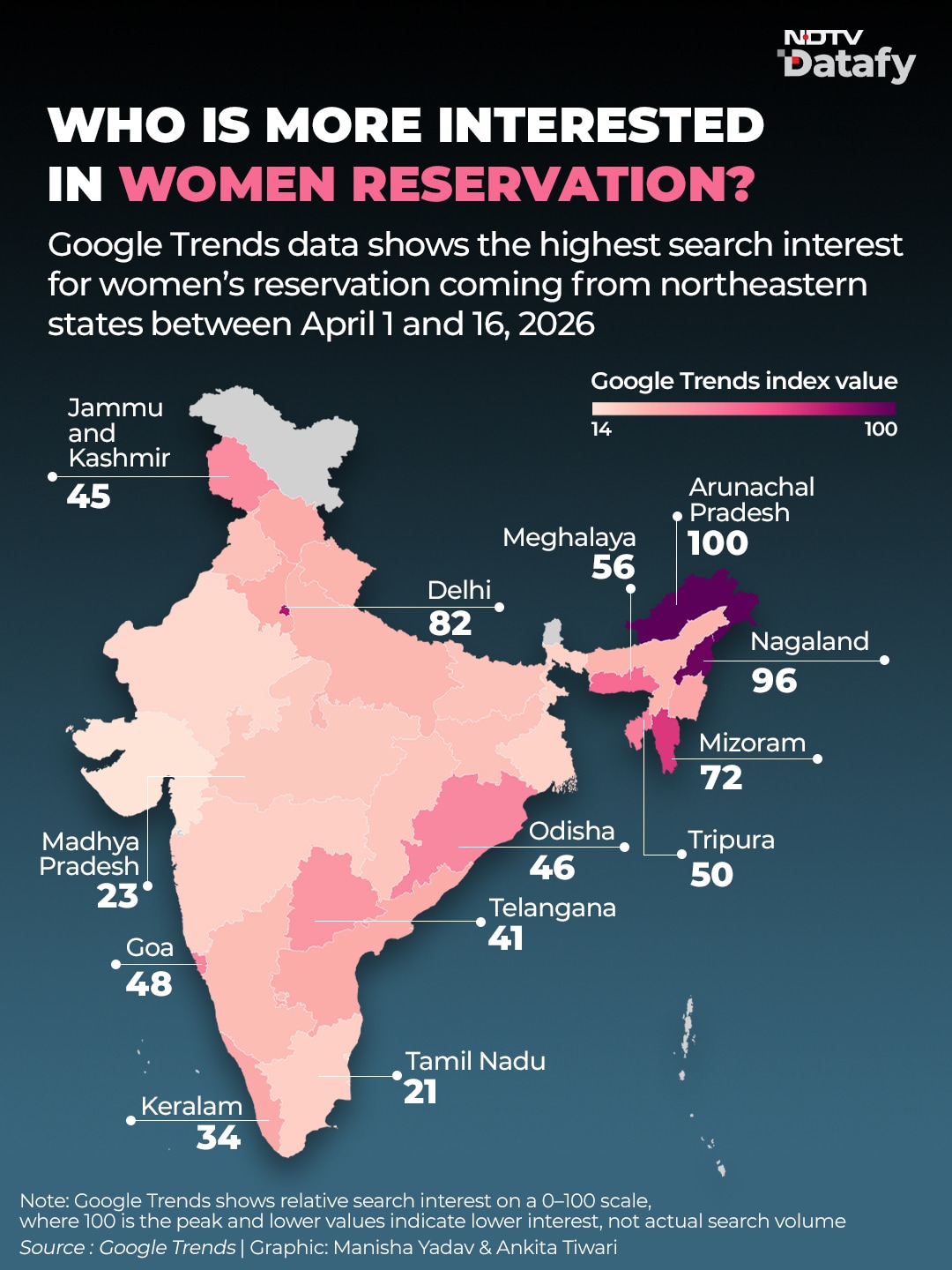
These rankings reflect where searches were proportionally highest during the period, not the total number of searches conducted.
Track Latest News Live on NDTV.com and get news updates from India and around the world

