




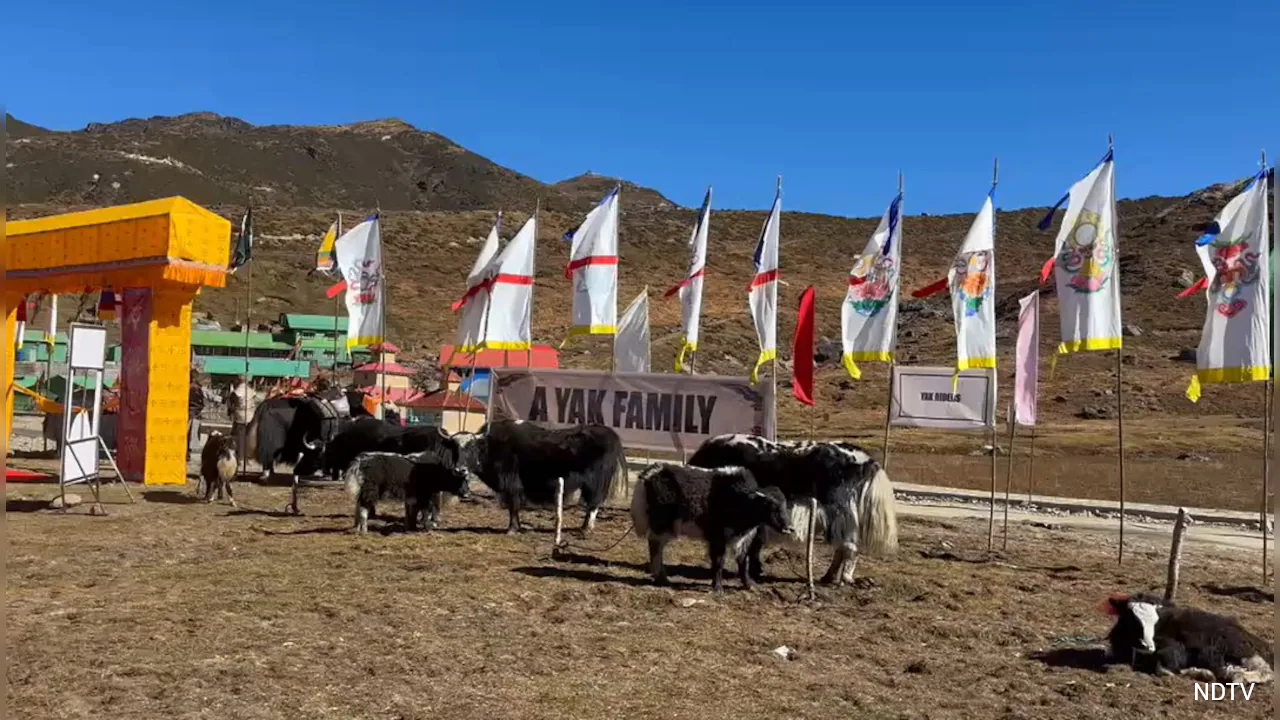
Gnathang, a remote village in eastern Sikkim located close to the India-China border, recently brought together yak herders from across the Himalayas for the state's first Yak Festival. Held at an altitude of around 13,500 feet, the gathering focused on the challenges facing traditional yak rearing, an occupation that has sustained mountain communities for generations.
Herders from Sikkim, Arunachal Pradesh and Ladakh attended the festival, where discussions centred on shrinking grazing grounds, changing weather patterns, conservation concerns and the declining interest of younger generations in continuing the traditional occupation.
Why Government Chose A Border Village For Yak Festival
The decision to hold the festival in Gnathang is also linked to the Centre's efforts to boost economic activity in remote villages along the India-China border.
Through the Vibrant Villages Programme, the government aims to improve infrastructure, promote tourism and create livelihood opportunities in settlements close to the international boundary.
The idea is to encourage people to continue living in these villages by improving local economic opportunities rather than allowing migration to weaken settlements in strategically important border areas.
Organising cultural events such as the Yak Festival is one way of drawing visitors to these locations while showcasing traditional occupations and local products.
The promotion of yak milk, dairy products and fibre is also expected to provide additional income opportunities for herding families.
For many of those attending the festival, however, the immediate concern was the future of yak rearing itself.
Thupden Lachungpa, president of the Yak Association of Sikkim, said the gathering had given herders an opportunity to bring their concerns to a wider audience.
"The fact that our voices are being heard makes me feel really good," Lachungpa said.
Describing yaks as "ecological machines", he said the animals played an important role in the mountain ecosystem and were closely connected to the region's grasslands and wildlife.
Although yak numbers have shown some improvement, Lachungpa said the overall population remained low and required sustained conservation efforts.
For Gnawang Phuntsok, a yak herder from Gnathang, the occupation is a family legacy spanning five generations.
"The yak I have today is not something I bought. It has come down to me from my great-grandfather. We have been rearing yaks for five generations," Phuntsok said.
He said changing weather conditions had made the traditional grazing cycle increasingly difficult to follow. Herders generally move their animals between pastures according to seasonal patterns, but sudden snowfall and untimely rainfall often disrupt their plans.
"We know which month we have to take the yaks to a particular grazing area. But sometimes the weather changes unexpectedly. If heavy snowfall occurs suddenly or the rains arrive at the wrong time, we face difficulties in moving the animals," he said.
Phuntsok said the festival could help more people understand the importance of yak rearing and the products obtained from the animals. He also acknowledged annual vaccination drives and other assistance provided to herders.
Gnathang-Machong MLA Pamin Lepcha said protecting yak rearing was important for communities living in Sikkim's high-altitude areas, where harsh weather and difficult terrain continue to shape everyday life.
"The conditions are very harsh, and the people living in these areas face many challenges," Lepcha said.
Around 400-500 yaks were brought to the festival, while stalls displayed yak-based products and traditional practices. Lepcha said she hoped the inaugural event would receive a positive response and eventually become an annual gathering.
"This is the first festival, so we will have to see how people respond. I hope the response is good and that it becomes a recurring event, allowing us to celebrate our traditions and promote yak rearing in the years to come," she said.
The need for cooperation among Himalayan regions also emerged during discussions. Representatives said conservation efforts would have limited impact if individual states and regions continued working independently.
Lobzang Dadul, representing the Yak Herders Association of Ladakh and the Indian Yak Federation, called for a coordinated effort involving Sikkim, Arunachal Pradesh, Himachal Pradesh and Ladakh.
"Sikkim, Arunachal Pradesh, Himachal Pradesh and Ladakh need to work together on yak conservation and the promotion of yak-based products. If each region works in isolation, the results will be limited," Dadul said.
He also proposed bringing Nepal and Bhutan into a wider Himalayan yak federation to encourage the exchange of knowledge and joint initiatives.
Dadul said better processing and marketing of yak milk, dairy products and fibre could help herders secure better prices for their products and improve their earnings.
Officials at the festival pointed to the deterioration of natural grasslands and the movement of younger people towards other professions as two major challenges facing the traditional occupation.
Passang Tshering Bhutia, Assistant Director in Sikkim's Animal Husbandry Department, said he had been working with yak herders since 1988 and had witnessed significant changes in the sector.
He estimated that nearly 40 per cent of the grasslands had been lost or affected, raising concerns over the availability of natural pastures for grazing.
Yak rearing has traditionally been a major livelihood for high-altitude communities, particularly in North Sikkim. Bhutia said yaks had long been associated with survival in the harsh Himalayan environment, but fewer young people were now interested in continuing the practice.
He said improved access to education had encouraged younger generations to pursue other professions and sources of income, leaving traditional herding with a shrinking workforce.
Bhutia called for better pasture management, scientific research and the development of higher-value products from yak milk and fibre. He said making the occupation financially viable would be important to attract younger people back to the sector.
The first Yak Festival in Gnathang brought together herders, officials and representatives from different Himalayan regions at a time when traditional yak rearing is facing pressure from environmental changes and shifting livelihood choices.
While the government sees tourism and local enterprise as ways to support remote border settlements, herders say the future of their occupation will depend on protecting grazing grounds, improving earnings and ensuring that the next generation is willing to continue the family tradition.
(With Inputs From Pankaj Dhungel In Gnathang, Sikkim)
Track Latest News Live on NDTV.com and get news updates from India and around the world

