





If you are planning to buy your dream car but falling short of budget and considering a vehicle loan, you are not alone. Car buyers have become aspirational and vehicle loans are witnessing robust growth. The twist is that the used car market is going premium and attracting buyers even with a vehicle loan.
Surge in Vehicle Loans
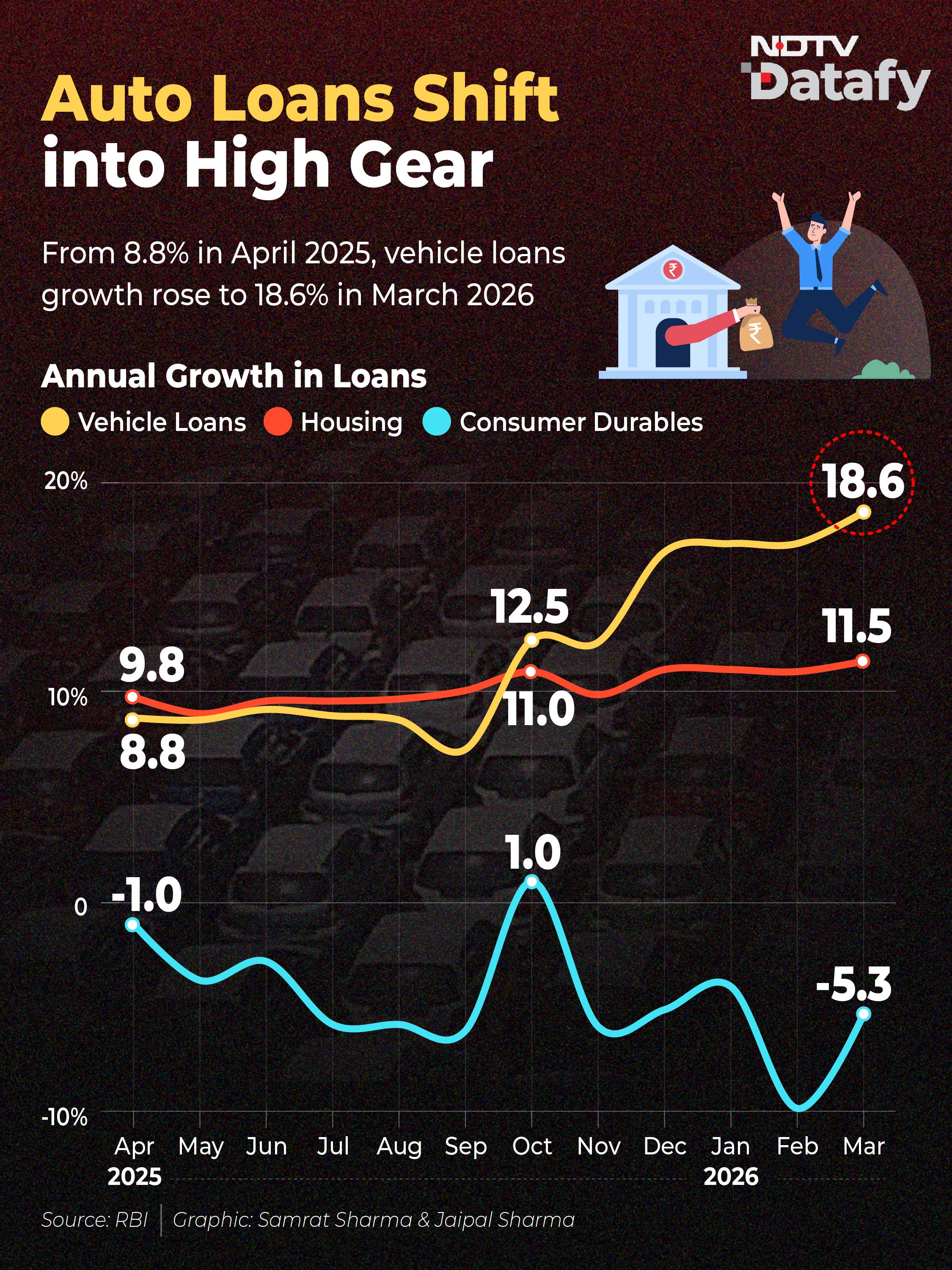
Vehicle loans by Scheduled Commercial Banks soared from Rs 2.85 lakh crore in FY19 to Rs 7.39 lakh crore in FY26, according to the RBI Database of Indian Economy. Vehicle loans' growth rate in April 2025 was 8.8 per cent, which rose to 18.6 per cent in March 2026. In the same duration, the growth rates of housing loans grew from 9.8 per cent to 11.5 per cent and that for consumer durables shrank further from -1 per cent to -5.3 per cent, according to RBI.
NBFCs and Used Cars at Forefront of Vehicle Loans
A huge portion of vehicle loans is governed by non-banking financial companies, NBFCs. Assets under management of vehicle loans of NBFCs will grow to nearly Rs 11 lakh crore by March 31, 2027, supported by policy measures and macroeconomic tailwinds, according to Crisil Ratings.
"Growth of used vehicle loans is expected to outpace that of new vehicle loans for most of the large NBFCs. Our analysis indicates that their used vehicle loan AUM has clocked a compound annual growth rate of nearly 15 per cent between fiscals 2020 and 2025, compared with nearly 11 per cent for new vehicle loans," said Malvika Bhotika, Director, Crisil Ratings.
This growth trend is expected to sustain over the medium term as unit economics of owning a used vehicle is lower and financing of used vehicles provides better risk-adjusted returns, she added.
While vehicle loans in the used car market were earlier driven by commercial vehicles, customers using vehicle loans to buy passenger cars are increasing.
Used Cars Market is Turning Premium
Many customers today want their aspirational cars, irrespective of it being first-hand or second-hand. Also, new car buyers are selling their cars early, pushing a relatively newer car in the used car market. However, this has made the used car market premium as second-hand buyers are getting cars with lesser kilometers driven but at a higher price. And, this higher price is being afforded by the vehicle loan.
Sample these numbers by Indian Blue Book 2025:
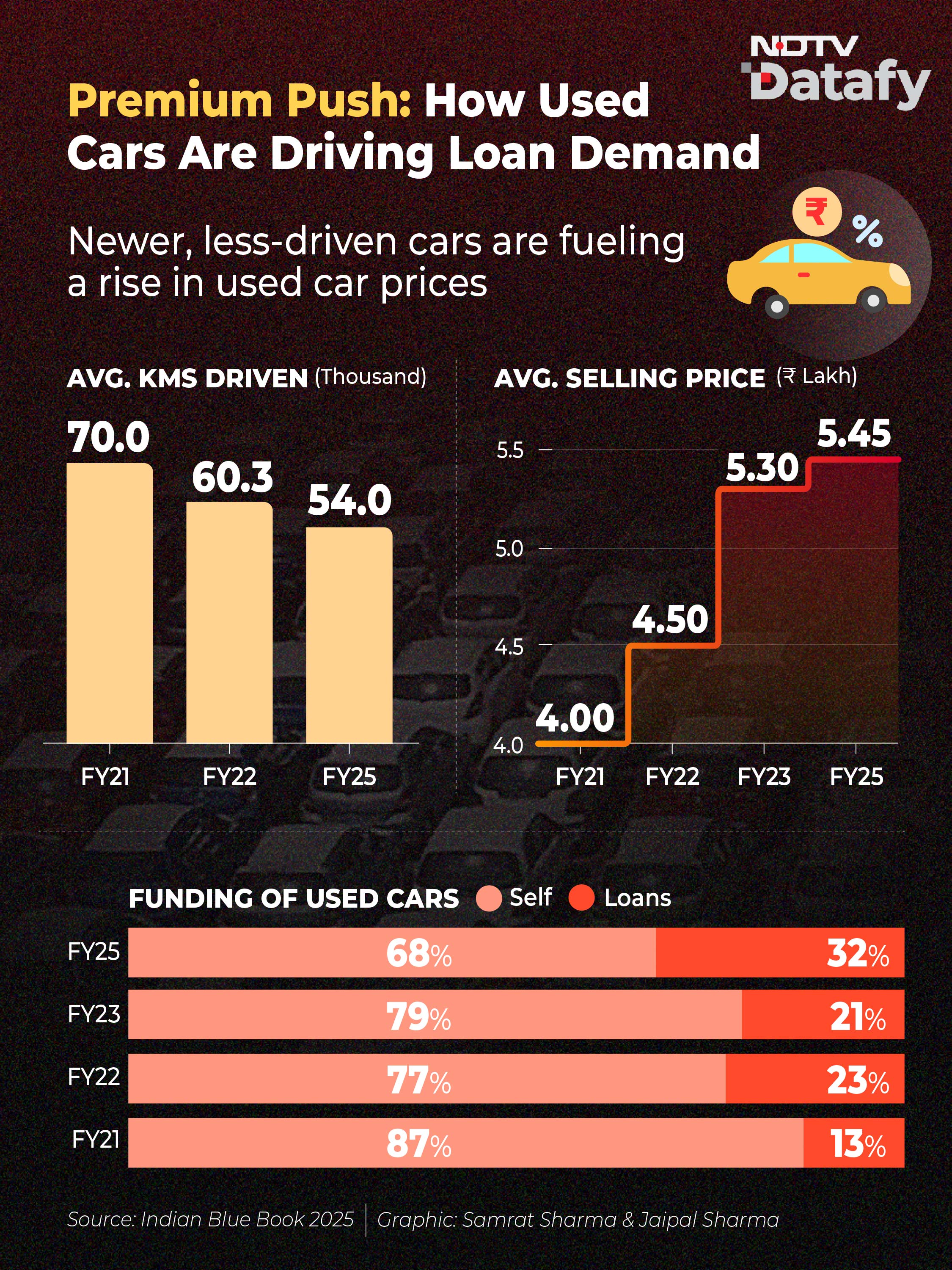
Average no. of kms driven in used car reduced from 70,000 km in FY21 to 54,000 km in FY25
Average selling price of used cars rose from Rs 4 lakh in FY21 to Rs 5.45 lakh in FY25
This means the average selling price increased by 36 per cent between FY21 and FY25
The increased price and the availability of premium cars have eventually led to a rise of vehicle loans in the used car market. While only 13 per cent of the used cars buyers considered vehicle loans in FY21, 32 per cent of the used cars buyers financed cars through loans in FY25.
How Big is India's Used Cars Market
There is a significant upsurge in the used cars market. India's pre-owned car market reached 5.9 million units in FY25 and is projected to grow at an annual average of 10 per cent, reaching 9.5 million units by 2030, according to the 7th edition of the Indian Blue Book.
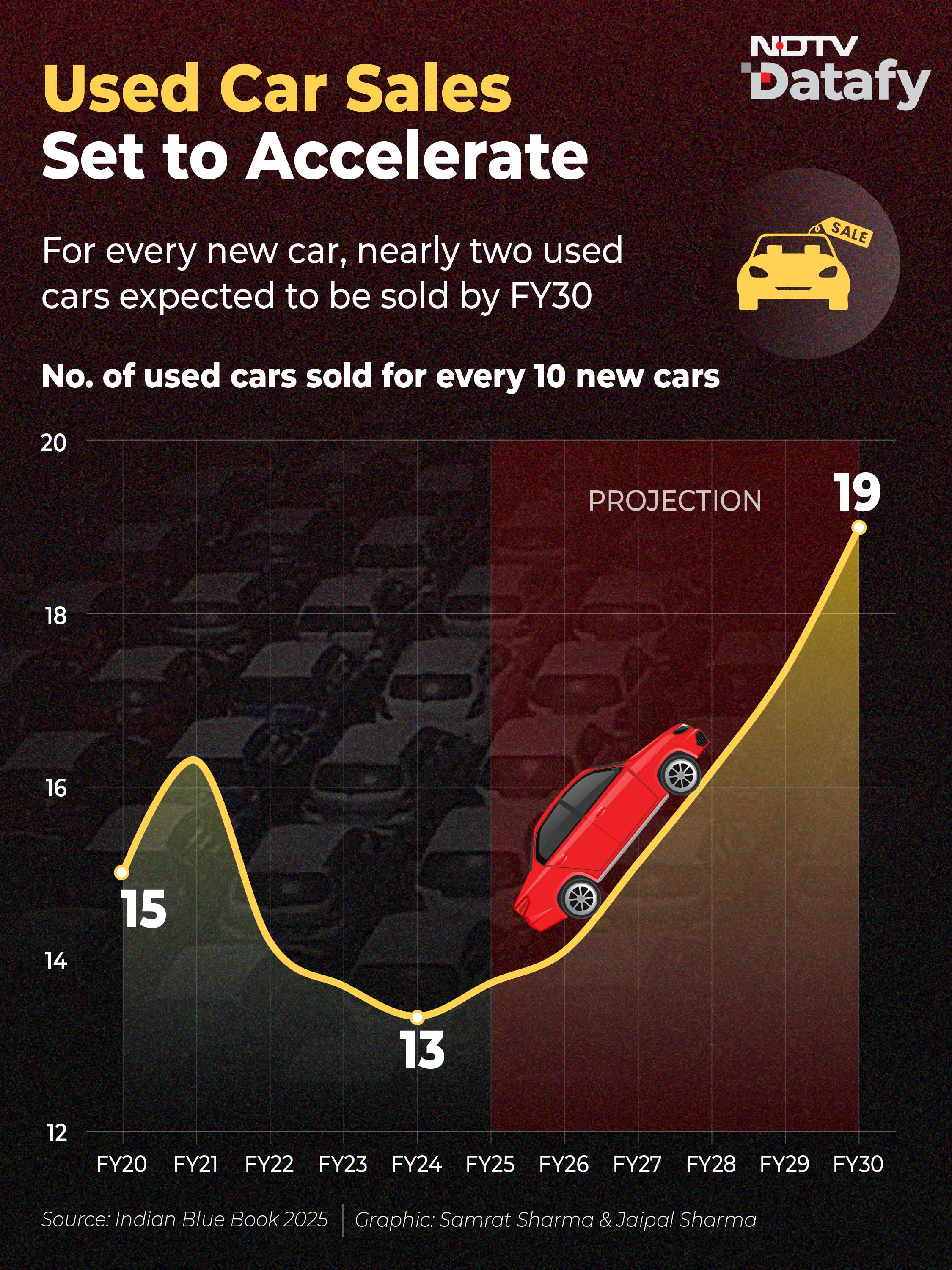
The ratio of used-cars to new-cars is expected to rise from 1.37 in FY25 to 1.9 in FY 30. This means that for every 10 new cars sold in FY 30, 19 used cars will be sold.
One of the significant reasons for the growth of used car market is quickly changing emission and fuel norms in India. India's used car market saw a significant uptick after BS VI norms was launched.
"Given the huge investment that car manufacturers have undertaken to meet the new emission norms, BS VI-compliant cars are invariably more expensive than BS IV ones, an average of 10-12 percent uptick in prices. In that perspective, the used cars have come across a viable option for those looking for cost efficient personal mobility alternatives," according to AU Small Finance Bank.
Nevertheless, the ratio will still be below developed markets such as the US (2.5), UK (4.0), Germany (2.6), and France (3.0). The gap is less a weakness than an indicator of enormous headroom for growth, the report added. Consequently, this is also expected to boost the vehicle loans market further.
Track Latest News Live on NDTV.com and get news updates from India and around the world

