





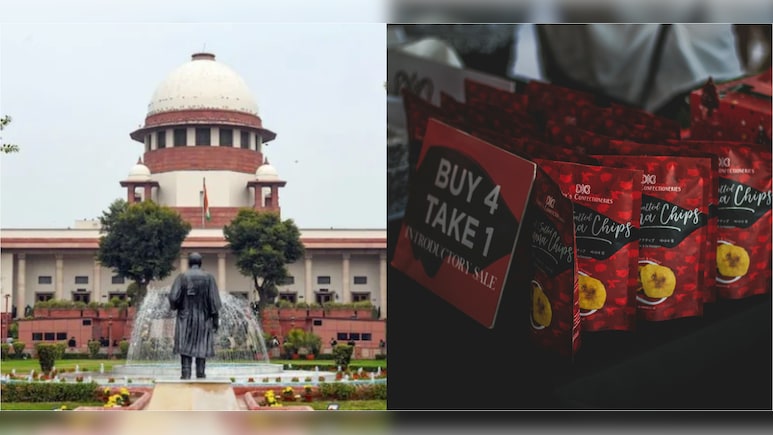
The Supreme Court on Thursday rejected a public interest litigation (PIL) seeking the adoption of World Health Organization (WHO) standards for permissible levels of certain cancer-causing chemicals in packaged food and drinking water, with the court making strong remarks on what it described as an "urbanised phobia of the rich."
The PIL had challenged the Food Safety and Standards Authority of India (FSSAI) norms permitting certain levels of antimony and DEHP, chemicals that can leach from plastic water bottles and food packaging, and sought directions to replace them with WHO standards.
During the hearing, Chief Justice of India Surya Kant urged the petitioner to understand ground realities in the country. "Ask him to travel to parts of India then you will understand what India is. People don't have access to water," the CJI told the petitioner.
Referring to Mahatma Gandhi, the Chief Justice said, "When Gandhi came to India, he travelled to all poor parts. Ask the petitioner to travel to the poor parts where there is a challenge to even get water, then he will understand what India is."
The PIL argued that the current FSSAI standards prescribing permissible levels of antimony and DEHP in food items were ultra vires the law. It sought directions to ensure that while setting fresh standards, international norms were considered as mandated under Section 18 of the Food Safety and Standards Act, 2006.
Antimony can pose a public health concern when it is found in water and commercially produced food due to manufacturing flaws or leaching from packaging materials. DEHP, or di(2-ethylhexyl) phthalate, is a manufactured chemical commonly added to plastics to make them flexible. Exposure to DEHP may increase the risk of cancer and can also harm the male reproductive system.
The petition sought directions that, pending the revision of standards by FSSAI, WHO norms for permissible limits of antimony and DEHP should be followed. It also challenged standards introduced by the Bureau of Indian Standards (BIS) in 2022 governing the migration of DEHP into plastic packaging.
The PIL further sought directions that, until BIS revised its standards in accordance with law, WHO standards on the migration of DEHP should be applied. It also asked authorities to inform the general public about the health risks posed by antimony and DEHP and to undertake a risk assessment based on available scientific evidence in an independent, transparent and objective manner, keeping in mind the cumulative toxic effects of the chemicals on the human body.
Track Latest News Live on NDTV.com and get news updates from India and around the world

