





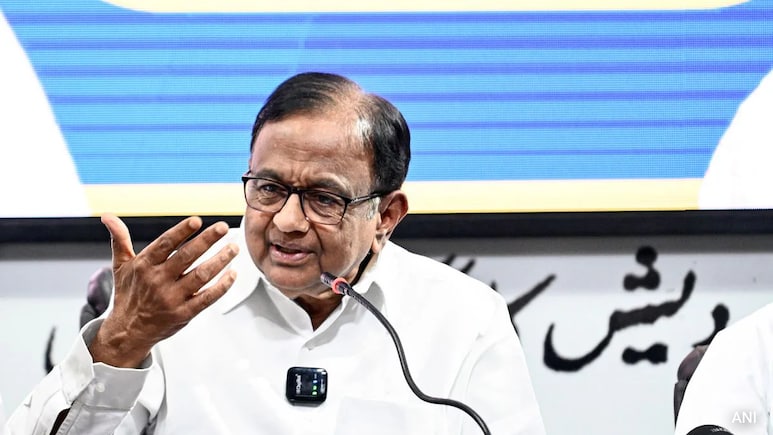
Congress MP P Chidambaram was blunt in his review of the 2026 union budget - tabled by Finance Minister Nirmala Sitharaman - and said he had been left "astonished" by a speech that did not answer questions arising from economic challenges, including tariffs imposed by United States President Donald Trump, and gave a poor account of the government's management of finances in FY2025/26.
The budget, he said, "failed the test of economic strategy (and) economic statesmanship", with the fiscal deficit projection for FY27 - down 0.1 per cent - described as "meagre". "It is certainly not a bold exercise in fiscal prudence and consolidation..." Chidambaram said.
Chidambaram picked out 10 "major challenges" he said had been flagged by the Economic Survey but were not addressed by Nirmala Sitharaman. "I am not sure if the Finance Minister read the Economic Survey... if they had, it appears they have decided to discard it completely and fall back on their favourite pastime of throwing words - usually acronyms - at the people."
"I accept a budget is more than a statement of revenue and expenditure. But, in the current circumstances, it must lay out a narrative that addresses major challenges outlined in the Economic Survey..." the Congress leader and ex-Finance Minister, from 2012 to 2014, said.
पूर्व केंद्रीय वित्त मंत्री श्री @PChidambaram_IN द्वारा बजट 2026-27 पर जारी बयान 👇
— Congress (@INCIndia) February 1, 2026
हर बजट-पूर्व टिप्पणीकार और लेखक, तथा अर्थशास्त्र का हर छात्र, आज संसद में वित्त मंत्री के भाषण में जो कुछ उसने सुना, उससे अवश्य ही स्तब्ध रह गया होगा।
मैं मानता हूँ कि बजट केवल वार्षिक राजस्व…
Tariffs imposed by the US had "created stress for manufacturers, especially exporters" and this, as well as "protracted trade conflicts" will continue to weigh on investment, he warned.
Chidambaram also warned the government about a growing trade deficit, especially with China, and an uncertain outlook for the flow of FDI, or foreign direct investment, as well as the persistent outflow of FPI, or foreign portfolio investment, over the past several months.
FDIs refer to an investment (of 10 per cent or more voting power) made by a foreign entity in a domestic company. FPIs, meanwhile, involve foreign entities purchasing securities - like stocks and bonds - in another country's markets without gaining direct ownership or control.
MUST READ | Leather Goods To TVs, What Gets Cheaper And Costlier?
"The agonisingly slow pace of fiscal consolidation and the continued high fiscal and revenue deficit, contrary to the FRBM (i.e., the Fiscal Responsibility and Budget Management Act)."
Chidambaram also criticised "the persistent gap between officially announced inflation numbers and the ground realities in terms of bills for household expenditure..." and also called out the precarious situation of lakhs of MSMEs, or micro, small, and medium enterprises.
"None of this was addressed by the Finance Minister... it was, therefore, not surprising the applause was perfunctory and most of the audience tuned out in quick time..."
Lastly, on Part B of the speech. Months after the passing of the Income Tax Act, 2026, which will come into force on 1 April, 2026, the Finance Minister has tinkered with some rates.
— Congress (@INCIndia) February 1, 2026
While the impact of the numerous minor changes has to be examined carefully, it must be… pic.twitter.com/9KXuzgUgJv
"Even by an accountant's standards, it was a poor account of the management of the finances in 2025/26. Revenue receipts were short by Rs 78,086 crore... total expenditure was short by Rs 1,00,503 crore... revenue expenditure was short by Rs 75,168 crore... capital expenditure was cut by Rs 1,44,376 crore... not a word was said to explain this miserable performance."
"Actually, capex has fallen from 3.2 per cent of GDP in 2024-25 to 3.1 per cent in 2025-26."
Cuts in expenditure, the Congress leader pointed out, had been made in crucial sectors and programmes, including the government's own Jal Jeevan Mission to provide safe drinking water.
Track Latest News Live on NDTV.com and get news updates from India and around the world

