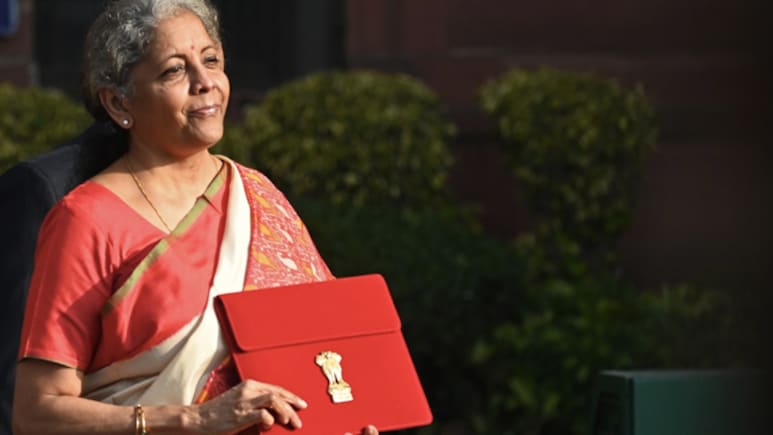

New Delhi: The Union Budget 2026-27 has increased the allocation for education to Rs 1.39 lakh crore, up from Rs 1.28 lakh crore last year-an exact year-on-year rise of 8.27 per cent.
While the increase signals continued policy attention to the sector, experts note that the rise remains modest when adjusted for inflation and measured against long-standing funding commitments.
This is the highest-ever allocation for education, but overall spending still falls short of the National Education Policy (NEP) target of 6 per cent of GDP, a gap that remains unaddressed this year as well.
Higher Education Gets a Noticeable Boost
Higher education has emerged as the biggest beneficiary in this year's budget. Allocations for universities, technical institutions, and research-linked programmes have increased by around 11% compared to last year.
Five university townships have been proposed along major industrial and logistics corridors, integrating universities, research centres, residential facilities, and industry partnerships.
The Budget also proposes setting up a new National Institute of Design (NID) in eastern India to strengthen design education and innovation in the region.
To improve access and retention of female students, the Finance Minister announced the establishment of one girls' hostel in every district across the country.
The government has further indicated steps to ease financial pressure on students pursuing education abroad, including revisions to the tax collection at source (TCS) on overseas remittances.
School Education Still Holds the Largest Share
School education continues to account for the largest portion of the education budget, although its growth rate is lower than that of higher education. Funding for the school sector has increased modestly, with continued support for flagship schemes related to integrated school development, nutrition, and model schools.
However, educationists note that the Budget largely maintains existing programmes instead of introducing targeted interventions to address challenges such as learning outcomes, teacher shortages, and regional disparities.
What's New?
New measures introduced this year focus on improving access and inclusion. These include expanded student hostel facilities and policy changes to reduce financial strain on students studying abroad.
To align education with the creative economy, the Budget introduces content creation labs focused on animation, visual effects, gaming, and comics (AVGC). These labs will be established in 15,000 schools and 500 colleges across the country.
Digital infrastructure also remains a priority, with expanded broadband connectivity for schools and additional support for technology-enabled learning environments.
Greater Emphasis on Skilling, Innovation, and Research
Compared to last year, Budget 2026 places stronger emphasis on skilling and future-ready education. Focus areas include vocational training, digital learning infrastructure, STEM facilities, and teacher capacity building.
A Centre of Excellence in Artificial Intelligence in Education will be established to support AI-driven learning tools, adaptive platforms, and virtual labs across schools and higher education institutes.
What's Still Missing?
Despite the positive measures, several expectations remain unmet. Education spending as a share of GDP has not seen a structural increase, and there is limited direct focus on strengthening foundational learning, teacher recruitment, and rural education infrastructure-areas widely regarded as critical for long-term improvement.
While the Budget marks progress in terms of funding, it stops short of delivering a fundamental shift in policy direction.
