





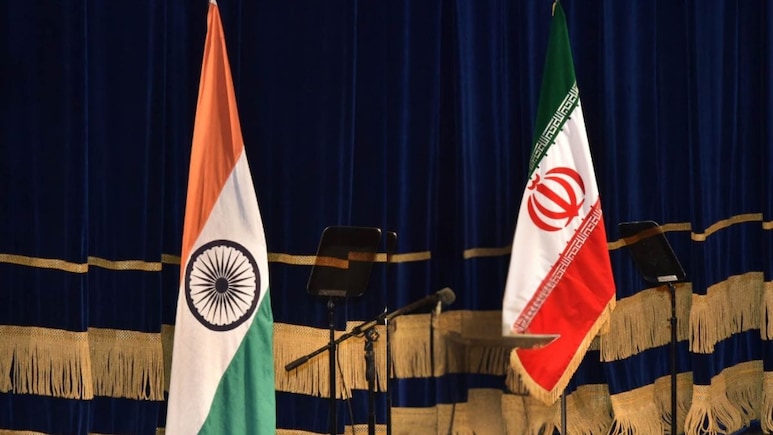
- The lands that are today India and Iran have long moved along intertwined paths
- The Indus Valley civilisation maintained links with Iran and Mesopotamia through trade routes.
- Linguistic evidence suggests that Indians and Iranians were once part of an Indo-Iranian community.
“Few people have been more closely related in origin and throughout history than the people of India and the people of Iran.”
- Jawaharlal Nehru, first Prime Minister of India.
From the earliest movements of wandering tribes to the rise of organised kingdoms, the lands that are today India and Iran have long moved along intertwined paths. Their people carried echoes of the same languages, shared rituals around fire and sky, exchanged goods across deserts and seas, and at times stood within the same political orbit. Over centuries, these crossings shaped both societies in lasting ways.
The roots of this relationship go back to prehistoric times. Evidence from archaeology, linguistic research, religious texts, and historical records suggests that these regions were once part of the same Indo-Iranian cultural space.
"Few people have been more closely related in origin and throughout history than the people of India and the people of Iran"- Jawaharlal Nehru pic.twitter.com/cckYN9MtPt
— Iran in India (@Iran_in_India) August 2, 2018
Early Cultural Links
Scholars believe that before 2000-3000 BCE, populations living in parts of present-day Iran, Iraq and north-western India shared common origins. Archaeological findings suggest cultural contact between early communities across these regions.
The Indus Valley civilisation maintained links with Iran and Mesopotamia through trade routes across the Persian Gulf and Arabian Sea. Seals from Indus cities have been discovered in sites such as Susa and Ur. This showed that merchants from the Indian subcontinent were active in long-distance trade.
Ancient India imported metals and stones such as silver, copper and turquoise from Persia and Afghanistan, while goods like ivory travelled westwards from India.
Indo-Iranian Roots
Linguistic evidence suggests that Indians and Iranians were once part of an Indo-Iranian community that lived in Central Asia. Around 2000 BCE, these groups began migrating southward.
One branch moved into the Iranian plateau, while another entered the Indian subcontinent. Before separating, they shared language, customs and religious traditions. They worshipped sky gods, used horses and chariots and followed similar social systems.
Language And Religion
Ancient Sanskrit and Avestan, the language of early Zoroastrian texts, share strong similarities because they reportedly developed from the same Indo-Iranian linguistic tradition. Words for concepts such as sacrifice, mind, father and river appear in both languages with similar forms.
The sacred texts of the two traditions also show similarities. The Vedas of India and the Avesta of Iran describe similar rituals centred on fire. The Vedic sacred drink soma corresponds to the Iranian haoma.
Over time, though, religious traditions diverged. In India, the devas became the main gods, while in Iranian religion, the daevas came to be seen as evil spirits and Ahura Mazda was known as the supreme deity.
Political, Trade And Cultural Contact
Direct political contact intensified during the Achaemenid Empire founded by Cyrus the Great.
Under Darius I in the 6th century BCE, parts of north-western India, including Gandhara and Punjab, came under Persian rule. According to Herodotus, India was among the richest provinces of the empire and paid large tributes in gold. Indian soldiers also fought in the Persian armies during the reign of Xerxes I.
The Persian administration influenced northern India. The Persian term “satrap” later appeared in India as “kshatrapa”, referring to provincial governors.
Contact continued for centuries through trade and cultural exchange. During the Sassanian period in Iran and the Gupta era in India, embassies and merchants moved between the two regions.
Indian physicians worked in Persian centres such as Jundishapur, and Indian texts like the Panchatantra were translated into Persian and Arabic.
Ideas also travelled through Central Asia. Buddhism spread through regions connected with Iran, while Indian goods such as spices and textiles moved along major trade routes linking South Asia with West Asia.
Track Latest News Live on NDTV.com and get news updates from India and around the world

