





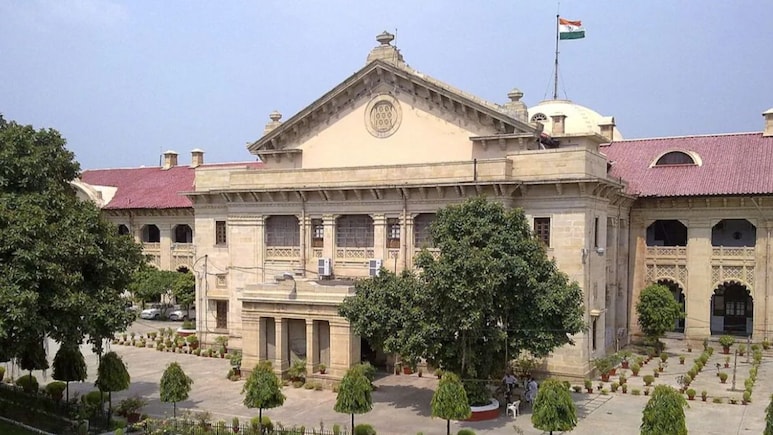
- An Allahabad HC judge cited a 1993 film dialogue on judicial delays during a hearing
- Justice Deshwal said judges are not solely responsible for delays in the justice system
- He highlighted police non-cooperation, staff shortages, and faulty forensic reports as causes
An iconic dialogue from a 1993 film, often quoted over the years to highlight delays in the judicial process, found a mention during an Allahabad High court hearing when the judge tried to explain that factors outside courtrooms are key factors.
In an order passed on May 7, Justice Arun Kumar Singh Deshwal said the "tareekh pe tareekh" dialogue, delivered famously by actor Sunny Deol, might be about delays in the justice system, but judges alone are not responsible for the same.
He was referring to the dialogue "tareekh pe tareekh milti rahi hai, lekin insaaf nahi milta, My Lord. Mili hai toh sirf tareekh", which translates to "dates are after dates are given, but justice is not delivered, My Lord. All that is delivered are more dates".
"It is not the judicial officer alone, but the state and its police, as a judicial officer can't decide the cases without sufficient staff and the cooperation of police to ensure the presence of the accused, witnesses and a proper FSL (forensic) report, etc," Justice Deshwal said, highlighting that reasons for delays in delivering decisions can't be attributed to the court alone.
Justice Deshwal observed that judicial officers in Uttar Pradesh are frustrated because they are unable to perform their duties due to insufficient staff, non-cooperation by the police, faulty investigations, and improper forensic reports. "On many occasions, criminals gave open threats to judicial officers, even in courts, during their convictions. Sometimes, when judicial officers visit the market place or a public place outside the court, they are indirectly intimidated through veiled threat or otherwise by the criminals. But judicial officers, in the absence of a personal security officer (PSO), ignore it to avoid conflict and also to save themselves from being highlighted in the media. This also affects the judicial function of district court judges, especially the issuance of conviction orders against hardcore criminals," he noted.
Drawing comparisons between the safety of judicial officers in Punjab and Haryana with that in Uttar Pradesh, Justice Deshwal said that PSOs are provided in UP only to senior judges, whereas in the former two states, all judicial officers are given protection.
The court added that a judicial system that depends on the state government for execution of the court process is destined to become like a government department struggling for basic infrastructure. "Many young judicial officers, who joined the judiciary though very honest and hardworking, having a motto to dispense justice after entering judicial service, found themselves unable to perform because of insufficient staff, non-cooperation by the police in the execution of court processe, and faulty investigation and improper forensic reports. Consequently, they became frustrated and looked to the high court for remedial measures, but the high court itself cannot do anything, as it is the state government that must provide basic infrastructure, staff, the forensic report, and police cooperation," the Bench said.
Amid the pendency in cases, Justice Deshwal said, many criminals were becoming lawmakers in the state. "Because of taking advantage of the pendency of criminal cases, many criminals kept on repeating the offences again and again without any fear, and many of them also became MLAs, MPs, and even ministers. As per the Association for Democratic Reform's report, as of the date, 49 per cent of Ministers in the UP Government are involved in criminal cases, of which 44 per cent are involved in serious criminal cases," he stated.
The observations were made when the court was hearing a bail plea in a murder case, with the judge noting that the functioning of forensic labs and police negligence in UP being key factors. Justice Deshwal said that district police chiefs were not attending the monthly monitoring cell meetings. The court directed all the district police chiefs, including the commissioners of police, to personally attend the meetings so that issues regarding the non-execution of court processes and faulty police investigations can be discussed.
"Therefore, main reason for pendency of cases in district courts is not the capability of the judicial officers but because of shortage of staff, non-execution of court's process by the police and delay as well as incomplete FSL Report, Therefore, it is the State Government as well as Police who are mainly responsible for pendency of criminal cases in district courts even then district judiciary is blamed by the social media and other common persons for non disposal of their cases," the Bench said.
With inputs from Deepak Gambhir
Track Latest News Live on NDTV.com and get news updates from India and around the world

