





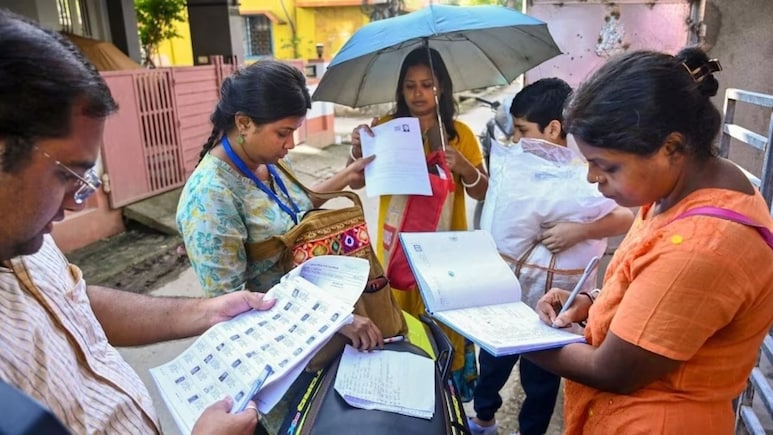
The second phase of the Special Intensive Revision (SIR) has concluded, with Uttar Pradesh logging 13.4 crore electors -- the highest in the country. Addressing a press conference, Chief Electoral Officer (CEO) of Uttar Pradesh, Navdeep Rinwa, stated that the SIR exercise in the state took nearly six months to complete, following multiple extensions.
With the conclusion of Phase 2 across 9 states and 3 Union Territories, a total of 7,36,16,631 electors have been deleted from the rolls. Uttar Pradesh recorded the highest deletions at 2.89 crore, followed by Tamil Nadu with 97 lakh and West Bengal with 90.8 lakh electors removed.
This phase of SIR is being described as the world's largest-ever electoral roll revision exercise. The exercise covered more people than the combined population of North America, which includes the United States, Canada, and Mexico. In another comparison, the number of deleted electors is nearly equivalent to the combined population of the United Kingdom and Ireland.
SIR Phase 2 also took significantly longer than the Bihar SIR, which was completed in just three months. Beyond the extended timeline, the exercise witnessed intense political and legal battles. The governments of West Bengal, Kerala, and Tamil Nadu approached the Supreme Court, challenging aspects of the process. While the revision exercise has now concluded, the matter remains under judicial consideration.
Unlike the Bihar SIR, this phase did not require every elector to resubmit documents. Documentation was sought only in cases where names were missing or where parental details did not match records from the 2003 SIR. However, a key addition this time was the concept of “logical discrepancy,” which contributed to the longer duration of the process.
According to Election Commission sources, around 5 crore hearing notices were issued out of nearly 60 crore electors, approximately 8.3%. These notices were sent to individuals with discrepancies or mismatches in their records. Electors were required to submit valid documents to the Electoral Registration Officer (ERO), following which verification determined their inclusion in the voter list. A senior EC officer said that the scale of participation reflected public trust, with crores of electors responding to notices and completing the verification process.
The SIR exercise also triggered strong political reactions, particularly from opposition-ruled states. West Bengal Chief Minister Mamata Banerjee alleged that the revision process could lead to the exclusion of genuine voters, calling it an attempt to “manipulate electoral rolls". The Congress echoed similar concerns, questioning the transparency of the process and alleging that large-scale deletions could impact fair representation. They demanded greater clarity from the Election Commission and stronger safeguards against wrongful exclusions.
The political significance of SIR Phase 2 becomes even more pronounced with the upcoming electoral contests. States like West Bengal and Tamil Nadu, which have witnessed high deletion numbers, are scheduled to vote on 23rd and 29th April.
The Election Commission is expected to announce the dates for Phase 3 SIR soon.
Track Latest News Live on NDTV.com and get news updates from India and around the world

