





Pakistan Navy runs an extensive calendar of exercises every year.
Its multinational AMAN drills bring together naval forces from across the world, while exercises such as SEASPARK are designed to test operational coordination and combat readiness.
But the missile attack on a commercial vessel in the Bab al-Mandeb Strait on August 11 has raised a different question: how prepared is Pakistan to respond when its own citizens are caught in a maritime conflict far from home?
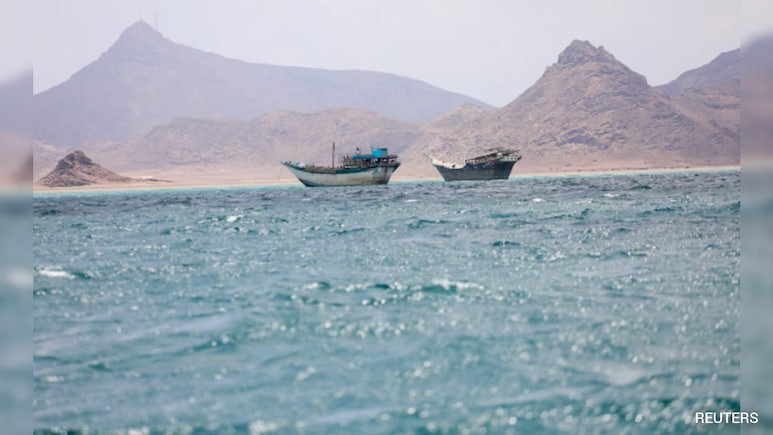
The attack on the Tihamah killed six people, including three Pakistani crew members and one Indonesian crew member, while two Yemeni rescuers were also killed, according to Yemeni authorities and media reports. The vessel was struck three times by ballistic missiles, while another missile was reportedly fired as rescue teams attempted to reach the crew.
The incident exposed a difficult distinction between general naval readiness and preparedness for a very specific kind of threat: protecting Pakistani nationals aboard commercial ships operating through an active conflict zone.
What AMAN And SEASPARK Are Designed For
AMAN, Pakistan Navy's flagship multinational exercise, has been held every two years since 2007. Its sea phase has included anti-piracy, counterterrorism, gunnery and search-and-rescue drills, as well as exercises aimed at improving interoperability between participating navies.
SEASPARK has a different focus but is similarly centred on conventional naval preparedness. Previous editions have included live anti-ship missile firings and exercises intended to sharpen operational coordination.
Such exercises provide valuable experience. They allow naval forces to work together, test procedures and practise responses to a range of maritime contingencies.
But the scenario that unfolded in the Bab al-Mandeb was considerably more complicated.
The Tihamah was struck by ballistic missiles, caught fire and was reportedly attacked again while a rescue operation was underway. The incident combined a missile threat, a burning commercial vessel and rescue personnel operating in an active conflict zone.
Publicly available information on Pakistan Navy exercises does not show a drill specifically designed around protecting a Pakistani-crewed commercial vessel from a missile attack in the Red Sea or Bab al-Mandeb.
General Readiness Is Not The Same As Mission Readiness
The distinction matters.
A navy can regularly practise boarding operations, search and rescue and anti-ship warfare without necessarily having a dedicated mission structure for responding to a missile attack on a commercial ship in a distant conflict zone.
Such a mission could require a combination of surveillance, early warning, rapid-response forces, air and missile-defence capabilities, communications with commercial shipping and the ability to conduct rescue operations under fire.
The Houthi campaign against commercial shipping has demonstrated how quickly a maritime security incident can turn into a complex rescue operation.
The question for Pakistan is therefore not simply whether its navy can fight at sea.
It is whether the country has a mechanism to identify a threat to Pakistani nationals aboard commercial vessels, assess it in real time and, where necessary, deploy the appropriate military or civilian response.
A Modernising Fleet, But For What Mission?
The question comes at a time when the Pakistan Navy is undergoing a major modernisation programme.
The fleet has been strengthened with Chinese-built Type 054A/P frigates, while the Hangor-class submarines are expected to further expand Pakistan's underwater warfare capabilities. Pakistan has also invested in maritime surveillance and patrol platforms designed to improve its ability to monitor waters beyond its immediate coastline.
The navy's growing fleet and exercises such as AMAN have also projected a broader regional role. AMAN, in particular, gives Pakistan a platform to work with foreign navies and demonstrate its ability to coordinate multinational maritime operations.
But a larger fleet does not automatically translate into preparedness for every maritime contingency.
A submarine designed primarily for underwater warfare does not provide direct protection to a merchant vessel under missile attack. A frigate with air-defence capabilities, meanwhile, would require an appropriate operational mandate, location, intelligence and rules of engagement to protect a commercial ship thousands of kilometres from Pakistan.
Pakistan's publicly available defence budget documents also do not indicate a dedicated allocation for readiness in the Red Sea or Bab al-Mandeb region. Naval exercises are funded within broader operational allocations rather than through a publicly identified programme focused on protecting Pakistani nationals operating in distant high-risk shipping corridors.
Thousands of Pakistani nationals work aboard commercial vessels operating on international shipping routes. Some routes pass through areas where maritime security risks can change rapidly. The August 11 attack showed the consequences when a commercial vessel is caught in such an environment.
Pakistan responded diplomatically after the attack. Deputy Prime Minister and Foreign Minister Ishaq Dar condemned the strike, and Pakistan subsequently facilitated the return of injured Pakistani sailors and the repatriation of the remains of Pakistani victims. Six injured Pakistani sailors returned to Pakistan, while the remains of two Pakistani sailors were also repatriated, according to Dar.
Pakistan Navy's exercise programme continues to provide diplomatic value, operational experience and conventional military preparedness.
AMAN strengthens ties with foreign navies. SEASPARK and other exercises allow Pakistani forces to test weapons, tactics and coordination.
But the Bab al-Mandeb attack has raised a question that goes beyond the number of ships in Pakistan's fleet or the number of countries participating in its exercises.
What happens when a Pakistani citizen is attacked aboard a commercial vessel in a distant maritime conflict zone?
The answer may involve the navy, the foreign ministry, maritime authorities, shipping companies and international partners rather than the navy alone.
Track Latest News Live on NDTV.com and get news updates from India and around the world

