





Chief of the Army Staff General Dhiraj Seth has said technology is certainly shortening battles but it is not necessarily shortening wars, and that land victory is the only indisputable marker of war victory. He made the comments for the first time at the NDTV Defence Summit today, highlighting why even in the era of tech warfare a tangible victory with boots on the ground will remain relevant.
"We see salvo after salvo in today's social media covering warfare across the globe, where information narratives and warfare are being fired to fog the real battle picture, creating uncertainty and confusion...
"However, I strongly feel, through all this clutter, one reality that does not change: land will always be the one and only tangible and useful factor of success. Victory was, is, and will always be measured in territorial terms and that territory will be occupied, secured, and defended only by the force," he said.
According to General Seth, "yotha" or the warrior, is at the heart of capability development.
"Every capability must address one question: how does it help that soldier who puts his boots or tracks on the ground? That is why I would place him at the heart of the capability development that you're looking at..."
He recalled a photograph taken on December 16, 1971 at the end of the war in Bangladesh that showed the Pakistanis surrendering.

"The reason I allude to this today is because that photo gave us a very defining moment, because that was the precise moment when the war came to an end. But there is no demarcating moment, there is no termination point which indicates an end to the hostilities," the Indian Army chief said.
"Conflict timelines are becoming increasingly indefinite, with intermittent spikes of intense fighting. Technology is certainly shortening the battles but it is not necessarily shortening the war. These millennium wars can best be described as wars with pause. Pause, in fact, is becoming a part of military strategy, with the pause representing not the domination of conflict but merely a change in its intensity and manifestation."
General Seth said this trend is too glaring to lose sight of and underscores one key lesson: there is no substitute for self-reliance because when crisis becomes prolonged, being atmanirbhar (self-reliant) will be the winning factor which will make the difference between the victor and the vanquished.
"Atmanirbharata must be about ensuring that we have the capability to endure without being constrained by what others can or cannot provide. That gives us a good reason to take a hard look at the very pathways of our indigenous capability," he said.
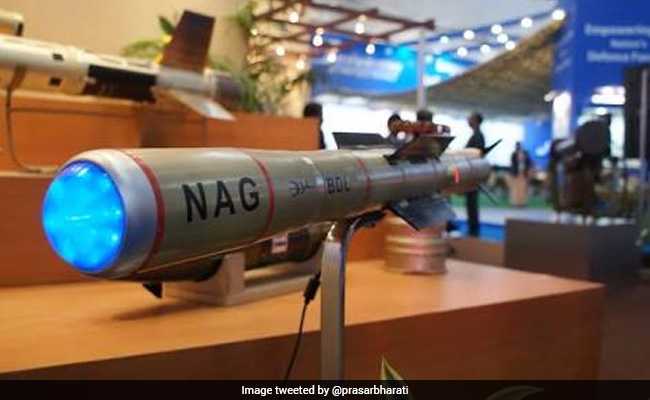
But the capability clock is slower than the technology clock, he added, and asked how do we build capabilities that remain relevant when the battlefield itself is changing faster than ever?
"The challenge is not just to reduce dependencies on others but also to ensure that what we develop indigenously does not become outdated by the time it is dumped. I would like to term it as indigenous obsolescence or that kind of a trap that can get created," he said.
The value of indigenous defence production increased from Rs 46,429 crore in 2014-15 to a record Rs 1.78 lakh crore in 2025-26, the government has said. Twelve years ago, 'Make in India' was launched with the ambition of becoming a global hub for manufacturing, design and innovation. Today, the initiative focuses on 27 sectors, which include 15 in manufacturing and 12 in services.
Track Latest News Live on NDTV.com and get news updates from India and around the world

