





- The protests in Delhi highlight the role of public demonstrations in democracy
- IMF states social unrest disrupts economic activity by lowering investor sentiment
- Unrest risk rises if a country or neighbor had major events in the last six months
The ongoing Cockroach Janta Party (CJP) protests in Delhi have drawn thousands onto the streets, putting public demonstrations back in focus. While protests are an essential part of democratic expression, economists say periods of heightened social unrest can influence growth, investment decisions and market sentiment.
According to the International Monetary Fund (IMF), social unrest can disrupt economic activity directly and indirectly by affecting consumer confidence, business sentiment and investor behaviour. Over time, it can also influence policy decisions with implications for economic and financial market outcomes.
Repeat Effect and Regional Spillover
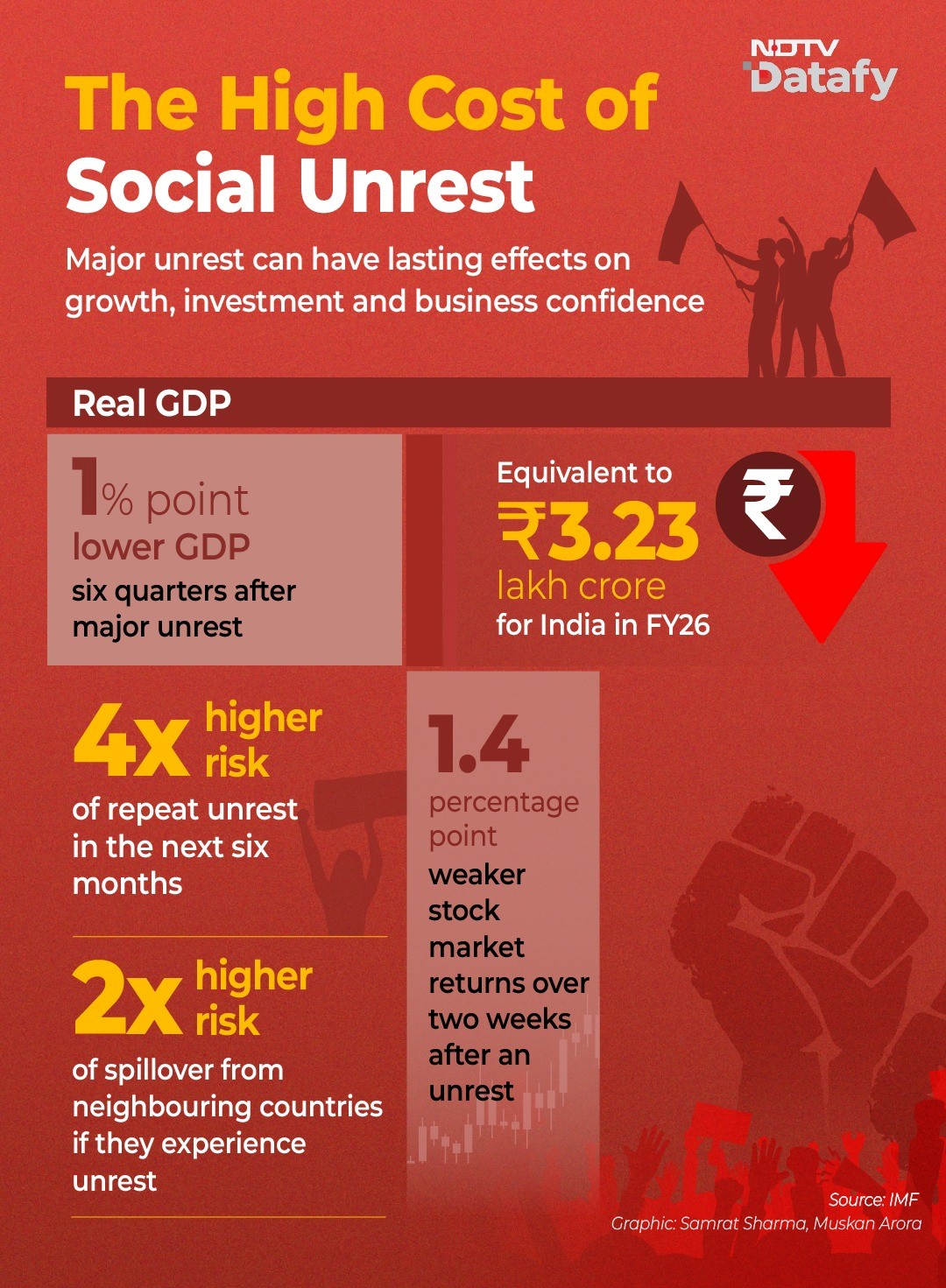
Major unrest episodes are relatively uncommon, but they tend to cluster. An IMF study covering 130 countries between 1985 and 2021 found that the probability of a major unrest event in any given month is about one per cent.
However, the risk rises sharply under certain conditions:
- The likelihood is four times higher if a country experienced a major unrest event in the previous six months.
- The risk doubles when a neighbouring country experiences a similar event.
The findings suggest that unrest can have persistence and spillover effects beyond national borders.
Impact on Growth
The IMF study found that major unrest events are typically followed by a decline in economic activity, with GDP averaging one percentage point lower six quarters later.
The impact is especially pronounced when demonstrations are driven by socioeconomic concerns such as employment, inflation, or living costs. Events linked to both economic and political issues tend to have the strongest effect on growth.
In India's case, one per cent of FY26 real GDP equals roughly Rs 3.23 lakh crore, providing a sense of the scale involved.
Impact on Stock Markets
Financial markets also react to prolonged instability. An IMF analysis of 156 unrest events across 72 countries found that stock market returns decline by an average 1.4 percentage points following major unrest episodes.
The study observed that in a more authoritarian regime:
- Stock returns fall about two per cent within three days of a major unrest event.
- Losses widen to roughly four per cent over the following month.
- The impact is generally smaller in countries with stronger democratic institutions and more open political systems.
Demonstrations in India
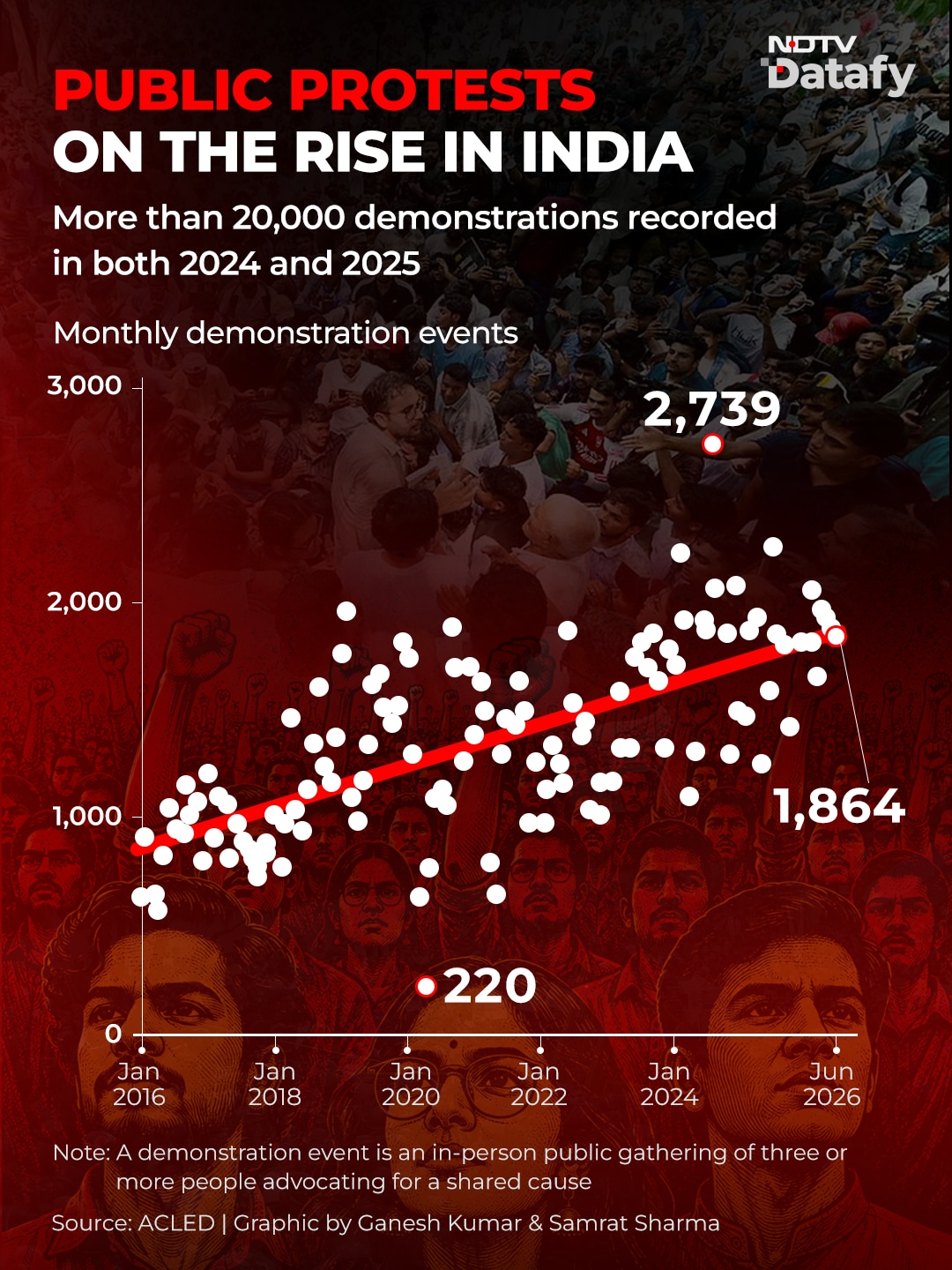
ACLED defines a demonstration event as an in-person public gathering of three or more people advocating a shared cause.
Data from the conflict-tracking organisation shows that public demonstrations in India have risen over the past decade. The country recorded more than 20,000 demonstration events in both 2024 and 2025, reflecting the growing use of public mobilisation to raise social, economic and political concerns.
Public examinations and higher education reforms have emerged as key protest themes in recent years.
According to an ACLED analysis, opposition parties, student groups and civil society organisations have frequently raised concerns over examination irregularities and structural issues in higher education. The organisation recorded more than 300 protests across India on these issues in the past year alone.
Track Latest News Live on NDTV.com and get news updates from India and around the world

