





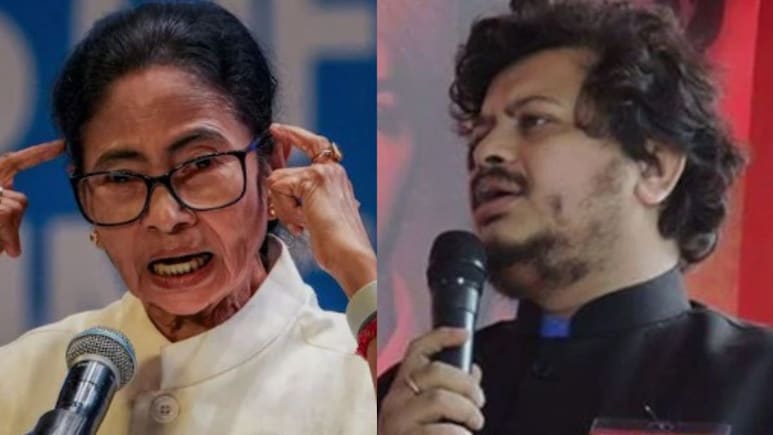
The Election Commission's decision to hold a bypoll in Nandigram has brought the Trinamool Congress' increasingly bitter battle over the party's identity, name and election symbol into sharper focus.
The Nandigram Assembly seat will go to the polls on October 6, with counting scheduled for October 9. The seat fell vacant after BJP leader Suvendu Adhikari, who won both Nandigram and Bhabanipur in the 2026 West Bengal Assembly election, retained Bhabanipur and resigned from Nandigram.
-

-
 'AI Scares Me': Kriti Sanon On Personality Rights And Need For Laws
 -
 'This Time I Wanted Gold': Savita Punia Reflects On Historic Asiad Success
 -
 Neeru Dhanda Carried Homemade Churma To Asiad, Returned With Two Gold Medals
 -
 Inside The Mind Of Archer Kumkum Mohod, Who Dared To Challenge South Korea
 -
 "High Inflation Is Like Tax On Everyone": RBI Governor At NDTV World Summit
 -
 Ashwini Vaishnaw Explains Semiconductor Complexity: 'Everything On This Tiny Nail'
 -
 Indian-Branded Mobile Phones By October 23, 2028, Says Ashwini Vaishnaw
 -
 AI Law In India Soon? What Ashwini Vaishnaw Said At NDTV World Summit
 -
 World's 1st AI Actor Tilly Norwood Was Asked If She Knew Hindi. A Conversation Followed
 -
 Iran's Supreme Leader's Representative Says India Can Play 'Big Role' In Middle East Peace
The timing is significant for the TMC. The party is facing an unprecedented organisational confrontation between the faction led by Mamata Banerjee and the rebel camp headed by Ritabrata Banerjee, with both sides claiming to represent the "real" Trinamool Congress. The dispute has already reached the Election Commission, with rival factions submitting competing organisational claims.
At stake is much more than the right to run the party organisation. The contest could ultimately determine who controls the TMC's recognised identity and its iconic twin-flower-on-grass symbol.
Disputes over a recognised political party's name and symbol are governed principally by the Election Symbols (Reservation and Allotment) Order, 1968. Paragraph 15 gives the Election Commission the authority to decide which faction of a divided party is entitled to the recognised party's name and reserved symbol.
The Commission does not decide the dispute on the basis of which faction claims to represent the party's ideology or legacy. Instead, it examines evidence of organisational control and legislative support.
That can include party membership records, delegate lists, resolutions, minutes of meetings, affidavits and evidence concerning organisational elections and appointments. The Commission also examines the support enjoyed by rival factions among MPs and MLAs.
Former Chief Election Commissioner SY Quraishi told NDTV that, in a symbol dispute, factions are required to demonstrate their numbers and establish why they should be regarded as the real party.
The Supreme Court's 1972 judgment in Sadiq Ali v Election Commission of India also upheld the Commission's authority to adjudicate such disputes under Paragraph 15.
The TMC confrontation has already moved beyond rhetoric. The Ritabrata Banerjee-led faction has claimed that it commands substantial support among elected representatives and has submitted organisational documents to the Election Commission. The Mamata Banerjee camp, meanwhile, has submitted its own National Working Committee details and insists that it remains the legitimate leadership of the All India Trinamool Congress.
The rival claims mean that the Commission could ultimately be asked to examine precisely the questions that have determined the outcome of earlier party splits: Who controls the organisation? Which faction has the stronger legislative backing? Were internal organisational procedures followed? And which side can establish a legitimate chain of authority under the party constitution?
The stakes are particularly high because a recognised election symbol is not simply a campaign logo. Symbols were originally intended to help voters identify candidates, including voters who could not read, but over decades they have acquired considerable political value and become closely associated with parties and their leaders
The bypoll also carries a political significance independent of the symbol dispute.
Nandigram has been one of the defining constituencies in Mamata Banerjee's political career. Adhikari defeated Banerjee there in 2021, and he again won the seat in the 2026 Assembly election before vacating it. The fresh contest therefore offers the BJP an opportunity to defend a constituency that has become synonymous with the political rivalry between Banerjee and Adhikari.
For the TMC, meanwhile, the constituency could become a test of whether the party can convert its organisational claims into electoral support.
If the symbol dispute remains unresolved as the election approaches, the Commission has mechanisms for dealing with such situations. As outlined in the NDTV explainer, where a final decision cannot be reached before an election, the recognised symbol can be frozen and rival factions can be asked to contest under separate names and symbols on an interim basis.
That possibility makes the Nandigram timetable particularly important. The bypoll notification is due on September 9, nominations close on September 16, polling is on October 6 and counting on October 9.
For the TMC, therefore, Nandigram is shaping up as a contest on two fronts: the immediate electoral battle for a strategically important Assembly seat, and the larger institutional battle over who gets to speak, organise and ultimately contest elections as the Trinamool Congress.
The Election Commission's eventual decision on the party dispute, if it formally comes under Paragraph 15, will be determined by evidence of organisational control and legislative strength-not simply by competing claims to Mamata Banerjee's political legacy or the party's history.
Track Latest News Live on NDTV.com and get news updates from India and around the world

