



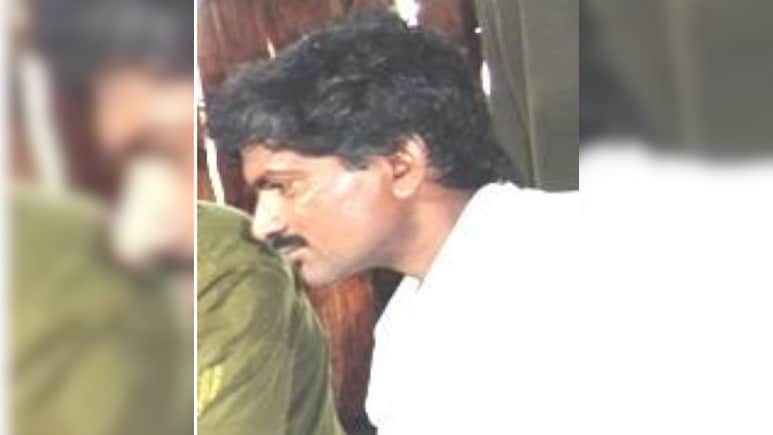
- Thippiri Tirupati, aka Devji, surrendered to Telangana Police after nearly 40 years underground
- Devji was a key Maoist leader and strategist with a Rs 1.5 crore bounty in Chhattisgarh alone
- He began as a student activist and became the Maoists' military commander and General Secretary
For decades, he was a whisper in the forests. A shadow in intelligence files. A name spoken in coded radio chatter. Thippiri Tirupati. Kuma Dada. Devji.Chetan. Sanjeev.Sudarshan and Ramesh. On February Sunday, the man who lived behind those seven names stepped out of the jungle and surrendered before Telangana Police.
At 65, carrying the weight of nearly four decades of insurgency, Devji once the General Secretary and Politburo member of the CPI Maoist laid down arms in Mulugu district. Security officials are calling it one of the biggest breakthroughs in recent years. In Chhattisgarh alone, he carried a bounty of around Rs 1.5 crore. Combined rewards across states reportedly ran into crores.
But Devji's story did not begin in a war zone. It began in a classroom.
From Radical Student to Red Commander
The story traces back to 1981-82, when the Rythu Kulli Sangam organised what was then considered a historic mass gathering. It was Tirupati who organised it. The event marked his emergence as a mobilizer capable of drawing crowds and shaping narrative.
By 1982, he was studying intermediate in Korutla in Jagtial district of Telangana. He was drawn to the Radical Students Union. In 1983, he formally joined the CPI ML People's War Group. Soon after, the party sent him to Dandakaranya in 1983-84 a decision that would shape the course of his life.
From Karimnagar town to the Sironcha region, Tirupati worked as a Maoist party organiser. He spent nearly 15 years in Gadchiroli, rising through the ranks and serving as a member of the divisional committee there. By 1993-94, he was elected to the Dandakaranya Special Zonal Committee, solidifying his role in the organisation's core leadership in central India.
Through the 1980s and early 1990s, he focused on building the party network. But by the mid-1990s, the ideologue shifted to the gun.
A Dalit youth from Ambedkar Nagar, son of Venkat Narsaiah, he would go on to become one of the most feared strategists in the Maoist military structure.
By the mid 1990s, the ideologue had transformed into a military mind.
In 1996, when the Maoists formed their first platoon in Dandakaranya, Tirupati became its first commander. He later rose to the Central Committee and the Central Military Commission. Always armed with an AK-47, he became a permanent presence in the armed wing.
After the merger of People's War with Maoists in 2004, he retained his place at the top table. When Basava Raju became General Secretary in 2018, Devji was already among the inner circle. After Basava Raju's encounter in May 2025, Devji himself was elevated as General Secretary.
By then, his fingerprints were on some of the bloodiest chapters of India's internal conflict.
Ranibodli - The Night Of Fire
March 15, 2007. Three days after Holi. At midnight, in Ranibodli village of Bijapur, 55 CRPF personnel were asleep inside their camp. What followed was one of the deadliest Maoist attacks in history.
Three groups surrounded the camp. Gunfire and explosions tore through the darkness for nearly four hours. By dawn, the camp was reduced to a charred graveyard.
Though executed by a female commander, official sources have long maintained that the mastermind behind the planning and strategy was Devji. The attack was seen as a brutal message to the state during the peak of Salwa Judum operations, when tribals were recruited as Special Police Officers to fight Maoists. Intelligence officers say Devji studied the terrain, advised on formation, and shaped the tactical blueprint.
Tadmetla - The Ambush That Shook the Nation
April 6, 2010. Tadmetla forest, Dantewada. Around 150 security personnel were returning from patrol. Hidden in the dense forest, nearly a thousand Maoists lay in wait. The explosion came first. Then relentless gunfire. The exchange lasted hours.
When reinforcements arrived, 76 soldiers were dead.
Investigators later described the ambush as a textbook example of guerrilla warfare. According to security sources, Devji oversaw planning and operational design. Field execution was carried out by other commanders, but the strategy bore his signature.
From idea to implementation, officials claim Devji was central to planning attacks intended to intimidate state forces and cripple morale.
The Strategist of the South Bastar Belt
Devji operated across Telangana, Chhattisgarh, Maharashtra, and the Dandakaranya region. He spent nearly 15 years working in Gadchiroli, later becoming a member of the Dandakaranya Special Zonal Committee in the early 1990s.
He shifted from party building to full-time military leadership. He trained cadres. Structured units. Designed ambushes. Intelligence agencies counted him among the five or six key figures involved in strategic decisions behind major Maoist offensives.
Even government dossiers describe him as a core Central Military Commission member who shaped combat doctrine.
For decades, he lived underground. Rarely photographed. Always moving. Until February 22.
His surrender comes just weeks before the March 31 deadline publicly announced by Union Home Minister Amit Shah for decisive action against Maoism. Security agencies view this development as a psychological and structural blow to the Maoist network.
Police officials say Devji surrendered in the presence of the Special Intelligence Branch and district authorities. Several long-associated cadres from the South Bastar Telangana border region also surrendered.
For the Maoist organisation, losing a General Secretary so soon after the encounter of Basava Raju signals instability at the top.
Devji was once one of the youngest members of the Central Committee. He rose from a student activist to the head of a banned insurgent organisation. For years, he remained an architect of guerrilla war. Today, he stands not as a commander in fatigues but as a surrendered insurgent facing interrogation.
Track Latest News Live on NDTV.com and get news updates from India and around the world

