





Space and atomic energy technology are closely guarded, and in the past Indo-US relations have swung like a pendulum in both these sectors, but now the world's oldest democracy and the world's largest democracy are showing signs of tangoing together in a new Indo-US strategic and commercial embrace.
In a new milestone, the nuclear energy sector was opened up for American companies on December 18, but interestingly, the immediate fallout is possibly being witnessed in another strategic area: the space sector.
An American communications satellite initially slated for launch on December 15 was delayed and is now being launched on December 24, 2025, soon after the enabling legislation that opens the door for private companies to invest in atomic energy was rushed through the Parliament.
India has finally unlocked its hitherto highly regulated and secretive nuclear energy sector by enacting a new act, the Sustainable Harnessing and Advancement of Nuclear Energy for Transforming India Bill, 2025 - or SHANTI Act – on February 18, 2025. This enabling legislation could play out in the Indo-US trade deal that is still being negotiated. But even as that happens, for the very first time a US company has decided to launch its heavy communications satellite on a dedicated rocket mission from India, which could well be the most lucrative contract the Indian space agency has ever earned.
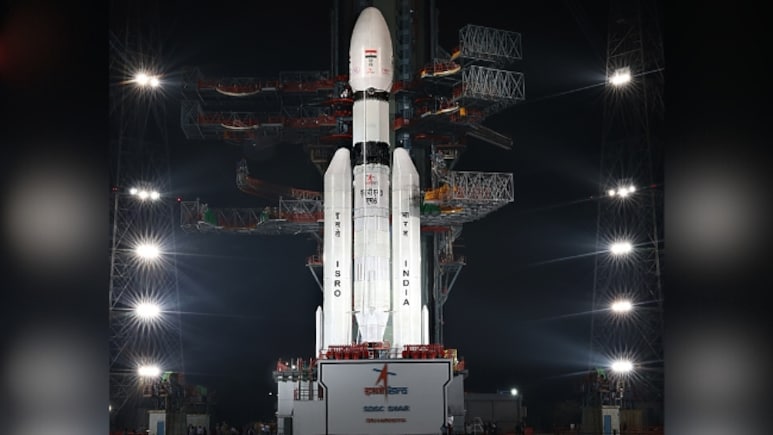
This Christmas Eve could mark a historic milestone in global connectivity as India's most powerful rocket, the Launch Vehicle Mark-3 (LVM3), popularly known as Baahubali, prepares for its eighth flight – and its third dedicated commercial mission.
The mission will carry BlueBird 6, a next-generation communications satellite built by AST SpaceMobile, an American company pioneering space-based cellular broadband that connects directly to everyday smartphones.
LVM3: India's Heavy-Lift Champion
The LVM-3, developed by the Indian Space Research Organisation (ISRO), is India's heaviest and most capable launch vehicle.
Standing 43.5 metres tall and weighing 640 tonnes, it has a payload capacity of 4,200 kg to Geosynchronous Transfer Orbit (GTO) and even more to Low Earth Orbit (LEO). This rocket has a 100% success record across all its seven previous missions, including the high-profile Chandrayaan-3 lunar mission that successfully landed near the Moon's south pole in 2023.
🚀 LVM3-M6 Mission Launch Scheduled
— ISRO (@isro) December 19, 2025
The launch of LVM3-M6 is scheduled on 24 December 2025 at 08:54 hrs IST from the Second Launch Pad (SLP), SDSC SHAR, Sriharikota.
👀 The public can witness the launch from the Launch View Gallery, SDSC SHAR by registering online:
👉… pic.twitter.com/DXJ9JsFAhM
The upcoming flight, designated LVM3-M6, will be the sixth operational mission and the eighth overall flight of this workhorse. It underscores India's growing stature in the global commercial launch market, as it carries the largest and heaviest commercial communications satellite ever launched from Indian soil.
BlueBird 6: A Giant Leap For Satellite Communications
The payload for this mission is BlueBird 6, the first in AST SpaceMobile's next-generation series of satellites. What makes BlueBird 6 extraordinary?
Size And Power:
It boasts a phased array antenna of nearly 2200 square metres, or 2,400 square feet, making it the largest commercial phased array ever deployed in LEO. This is 3.5 times larger than previous BlueBird satellites and delivers 10 times the data capacity.
Weight:
At nearly 6,100 kilograms, BlueBird 6 will be the heaviest payload ever launched by LVM3.
Technology:
Unlike traditional satellite internet providers like Starlink or OneWeb, which require specialised terminals or antennas, AST SpaceMobile's technology connects directly to standard mobile phones. No extra hardware, no special handsets – just your everyday smartphone. Incidentally, this service is not licensed in India.
This innovation could revolutionise connectivity, especially in remote regions, disaster zones, and areas where terrestrial networks fail.
AST SpaceMobile: Bridging Global Digital Divide
Headquartered in Texas, AST SpaceMobile is on a mission to close the global connectivity gap. The company aims to provide affordable 5G broadband from space, enabling billions of people to access the internet without relying on ground-based infrastructure.
Constellation Plan:
AST SpaceMobile is accelerating production, with 40 satellites expected to be ready by early 2026. The company plans five launches by Q1 2026, followed by launches every one to two months, targeting 45-60 satellites by the end of 2026. This constellation will ensure continuous coverage across the United States and select global markets.
Infrastructure:
The company operates nearly 46,451.52 square metres, or 5,00,000 square feet, of manufacturing and operations facilities worldwide, including 37,161 square metres, or 4,00,000 square feet, in the US, and employs 1,800 people, the majority based in America.
Vision:
"Our next-generation satellites will soon enable ubiquitous cellular broadband coverage direct to everyday smartphones from space," said Abel Avellan, Founder, Chairman, and CEO of AST SpaceMobile. "As an American company, we are proud to demonstrate US leadership in space innovation while pioneering the next era of global connectivity."
India's Role And Regulatory Hurdles
While this launch is a major commercial win for ISRO and its commercial arm, New Space India Limited (NSIL), it also raises important regulatory questions. India currently does not permit satellite-based internet services, and such technology remains unlicensed in the country. This means that even though the satellite will orbit from India, its services cannot be offered to Indian consumers – at least not yet.
The Indian government has been cautious about allowing foreign satellite internet providers, citing concerns over national security, spectrum allocation, and regulatory compliance. Companies like Starlink have faced similar hurdles in the past. Whether AST SpaceMobile's breakthrough technology will eventually gain approval in India remains to be seen.
Why This Launch Matters
First-Of-Its-Kind
This is the first time an American company is launching a massive communications satellite from India on a dedicated Indian rocket. Until now, India had only launched smaller U.S. satellites as secondary payloads or jointly made satellites like NISAR.
Boost For ISRO
The mission reinforces global confidence in India's launch capabilities. LVM3's proven track record, including Chandrayaan-3 and two successful OneWeb launches, positions ISRO as a reliable partner for heavy commercial payloads.
Game-Changer For Connectivity
AST SpaceMobile's approach differs from competitors like Starlink and OneWeb, which rely on thousands of small satellites. By deploying fewer, larger satellites with massive antennas, AST SpaceMobile aims to deliver high-capacity broadband with minimal infrastructure.
The Antenna Advantage
The phased array antenna on BlueBird 6 is a technological marvel. At 64 square metres per satellite, these antennas will enable direct-to-mobile communication, eliminating the need for intermediary ground stations or specialised equipment. This design is key to AST SpaceMobile's promise of seamless connectivity anywhere on Earth, from urban centres to remote villages.
Looking Ahead
If successful, the Christmas Eve launch will not only mark a milestone for AST SpaceMobile and ISRO but could also usher in a new era of space-based mobile connectivity. For now, the service will roll out in markets where regulatory approvals exist, primarily in the U.S. and other partner countries. But the technology's potential is global – and transformative.
As the countdown begins at Sriharikota, all eyes will be on Bahuballi, India's mighty LVM3, as it lifts off with BlueBird 6. This mission is more than a commercial launch; it's a glimpse into the future – a future where your smartphone could connect to space, bridging digital divides and redefining how the world stays connected.
Track Latest News Live on NDTV.com and get news updates from India and around the world

