






The Middle East war has sent shockwaves across the oil markets and India is feeling the heat too. Whether it's LPG, PNG, petrol, or diesel, the concern is real, and the shortage is evident. While the energy sector is in turmoil, the power sector remains immune so far, thanks to over one billion tonnes of coal that India produces annually. India's power sector is getting self-reliant with the rise in coal production and green energy diversification.
India's Dependence On Coal
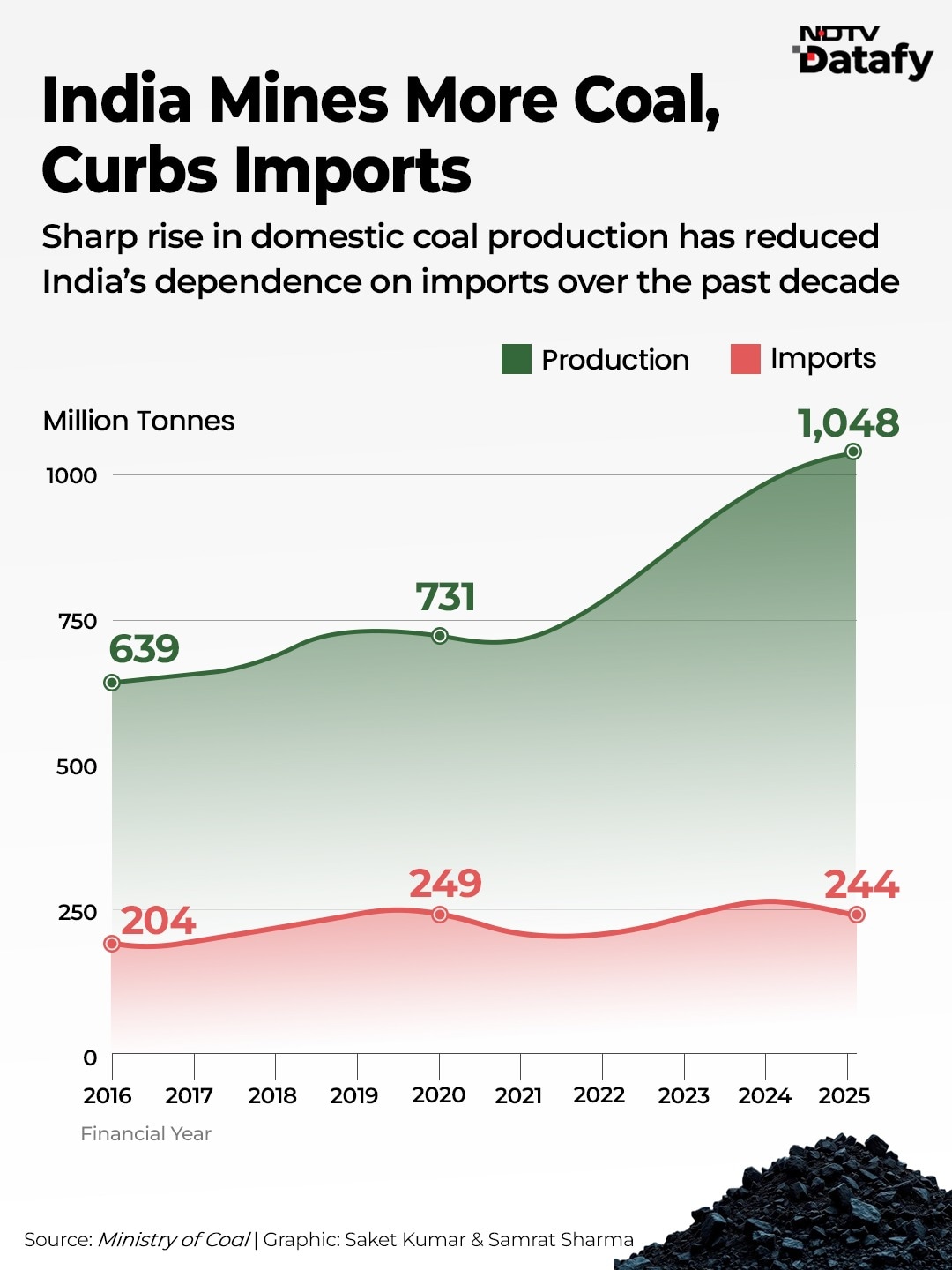
Coal is a very efficient fuel, and therefore nearly three-fourths of India's power generation still comes from it. With rising power demand, the coal requirement has gone up. However, India has ramped up the production to catch up with the rise in demand. In the meantime, imports have remained constant.
India produced 639 MT and imported 204 MT coal in the financial year 2016. This means the import was 32 per cent of production. In the financial year 2020, the production rose to 731 MT and imports were 34 per cent of the production - 249 MT. However, in the financial year 2025, production crossed one billion MT and import remained only 23 per cent of the production - 244 MT.
"With the sustained and coordinated efforts across the coal sector and the invaluable contribution of all stakeholders, the country has successfully achieved the landmark of 1 billion tonne (BT) coal production on 20.03.2026 for the second year in a row," said the Ministry of Coal.
Middle East's Aapda Me Awsar for India's Green Energy
The disruption caused by the ongoing war is so severe that the International Energy Agency has also called it 'unprecedented'.
"The conflict in the Middle East has triggered an unprecedented disruption to global fuel markets, tightening supply and placing significant pressure on consumers and economies worldwide," IEA said on March 26, 2026.
This creates a significant opportunity and need to lower dependence on non-renewable sources and boost green energy as much as possible. India has already made great strides towards green energy transition; however, there are still miles to go.
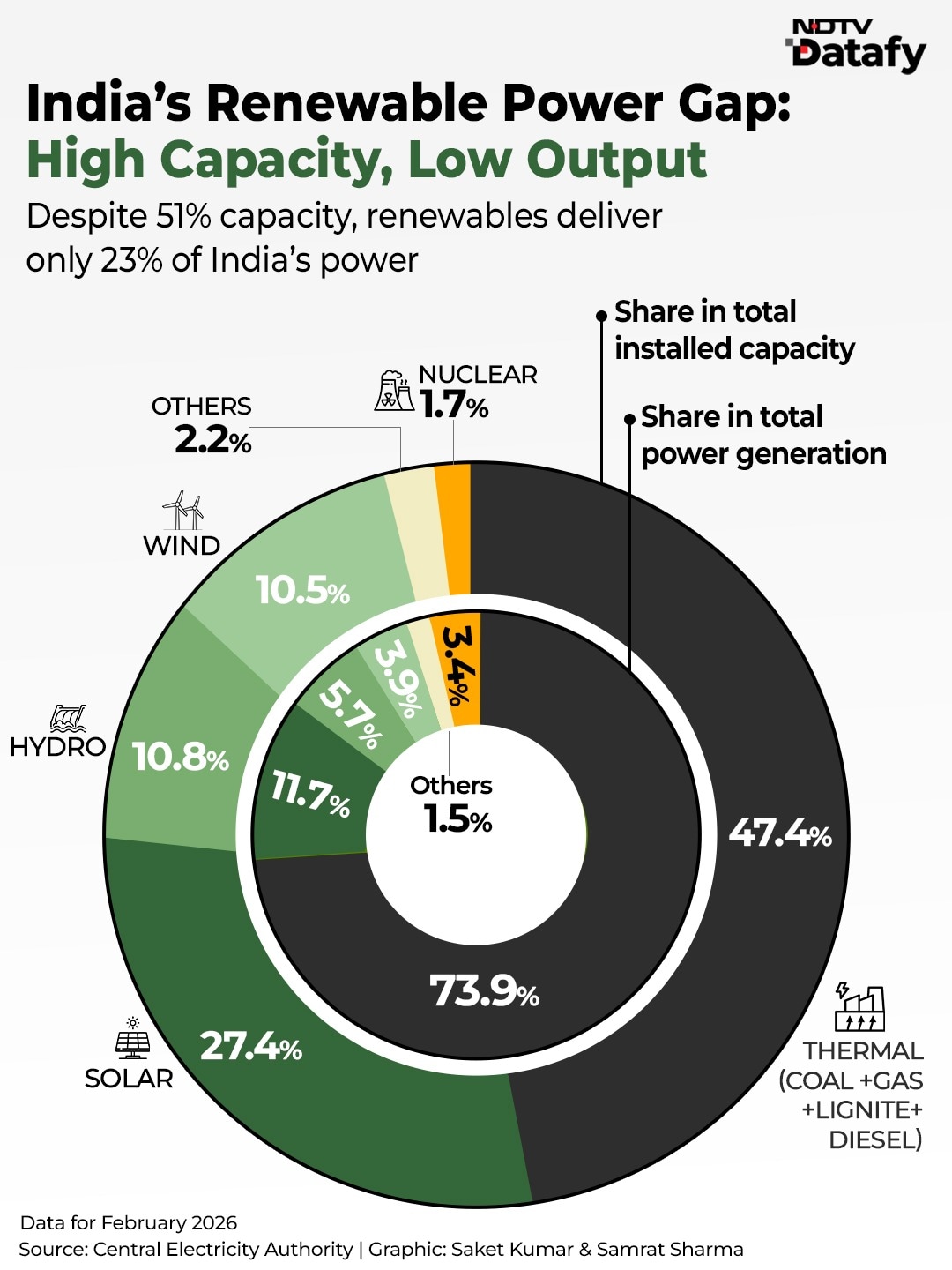
Thermal sources, including coal, gas, lignite, and diesel, accounted for 47.4 per cent of India's installed capacity, but they contributed nearly 74 per cent of India's power generation in February 2026. In contrast, renewable sources accounted for nearly 51 per cent of installed capacity but generated around 23 per cent of India's power in the month, according to the Central Electricity Authority.
"The reason for green energy's low generation in comparison to the installed capacity is the intermittent nature of renewable power. "Solar and wind power generation depends on the availability of natural resources," Vinay Rustagi, Chief Business Officer at Premier Energies Ltd told NDTV.
For instance, a solar plant operates near its rated capacity mainly during mid‑day in summer, with output falling at other times and seasons due to lower or absent solar radiation, he added.
How India's Green Energy Stacks Up Against Asian Peers
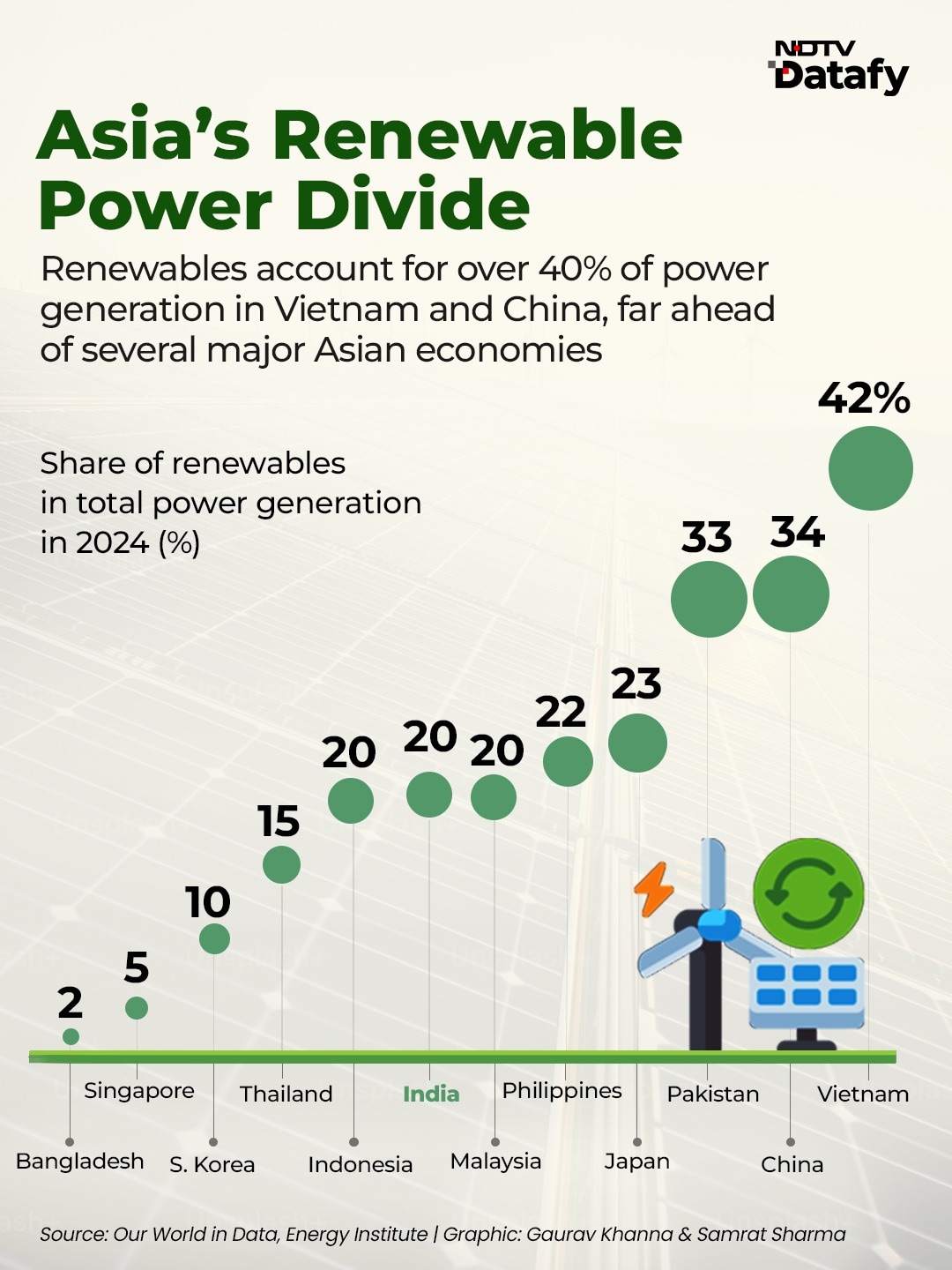
Besides some of the limitations that green energies come with, the transition is for a greater good, and the world is aligning quickly to go green. Some of India's Asian peers, such as Vietnam and China are far ahead, with green energy accounting for 42.3 per cent and 33.7 percent, respectively, in their overall power generation. In contrast, South Korea, Singapore and Bangladesh have less than 10 per cent of green energy contribution.
Meanwhile, Prime Minister Narendra Modi on Sunday highlighted the rapid expansion of solar energy adoption across India and urged citizens to join the clean power movement.
Track Latest News Live on NDTV.com and get news updates from India and around the world

