





- In the first quarter of 2026 alone, Argentina has shipped about 50,000 tonnes of LPG to India
- What makes this even more notable is that Argentina had not supplied LPG to India before 2024
- Alongside Argentina, the United States has also emerged as a major fallback supplier
Diversification is the name of the game. While India has already turned to Russia for its crude oil needs amidst the disruption in the Middle East, a South American friend has stepped in to fill the gap in our LPG supply.
In the first quarter of 2026 alone, Argentina has shipped about 50,000 tonnes of LPG to India. This is more than double the 22,000 tonnes it supplied in the whole of 2025. The dramatic increase in supply comes after the ongoing Iran war disrupted the critical Strait of Hormuz route, choking India's cooking gas supply line.
Of the total, 39,000 tonnes had already sailed out from the port of Bahía Blanca before the conflict intensified. Another 11,000 tonnes left on March 5 as the crisis deepened.
What makes this even more notable is that Argentina had not supplied LPG to India before 2024. In less than two years, it has moved from being a non-player to an emergency supplier.
Relief For Indian Households
Argentina's supply is particularly significant as nearly 60 per cent of India's LPG imports pass through the Strait of Hormuz. As shipping slowed and insurance risks surged due to the war, cargo arrivals dropped sharply. As per industry estimates, LPG imports in March may fall by nearly 46 per cent compared to the previous month.
This could have led to a shortage scenario as over half the cooking gas demand is met through imports, added industry experts. Any disruption quickly ripples through the system -- from bottling plants to delivery trucks to kitchen cylinders.
To prevent shortages:
- Indian refineries have increased LPG output
- Supplies to some industrial users have been curtailed
- Households are being nudged toward piped natural gas (PNG) where available
- Authorities have urged people to avoid panic booking of cylinders
The 20,000-km Gas Route: Is It Financially Viable?
The voyage from Bahía Blanca to Dahej in Gujarat is close to 20,000 kilometres, among the longest energy shipping routes India now relies on.
This means:
- Higher freight costs
- Longer delivery cycles
- Weather and routing risks across oceans
Yet, in a crisis, reliability has trumped distance. Energy ties between the two countries have been quietly expanding.
- ONGC Videsh Limited signed cooperation agreements in 2023 with YPF.
- India's state-run mineral arm secured lithium exploration blocks in Argentina in 2024.
- Bilateral trade crossed $6 billion in 2025, with edible oils, minerals and hydrocarbons forming key pillars.
Argentina's large natural gas reserves and relatively small domestic demand make it export-ready, a useful trait at a time when India is trying to spread its energy bets across more than 40 countries.
The US Factor
Alongside Argentina, the United States has also emerged as a major fallback supplier. Indian oil companies have lined up long-term LPG purchases of 2.2 million tonnes from the US for 2026, and imports in the first two months alone have already touched 480,000 tonnes.
Together, the US and Argentina are helping India reduce immediate dependence on Gulf routes.
Import Cost Dynamics: Middle East vs US/Argentina
1. Traditional Middle East LPG: Lowest Freight Advantage
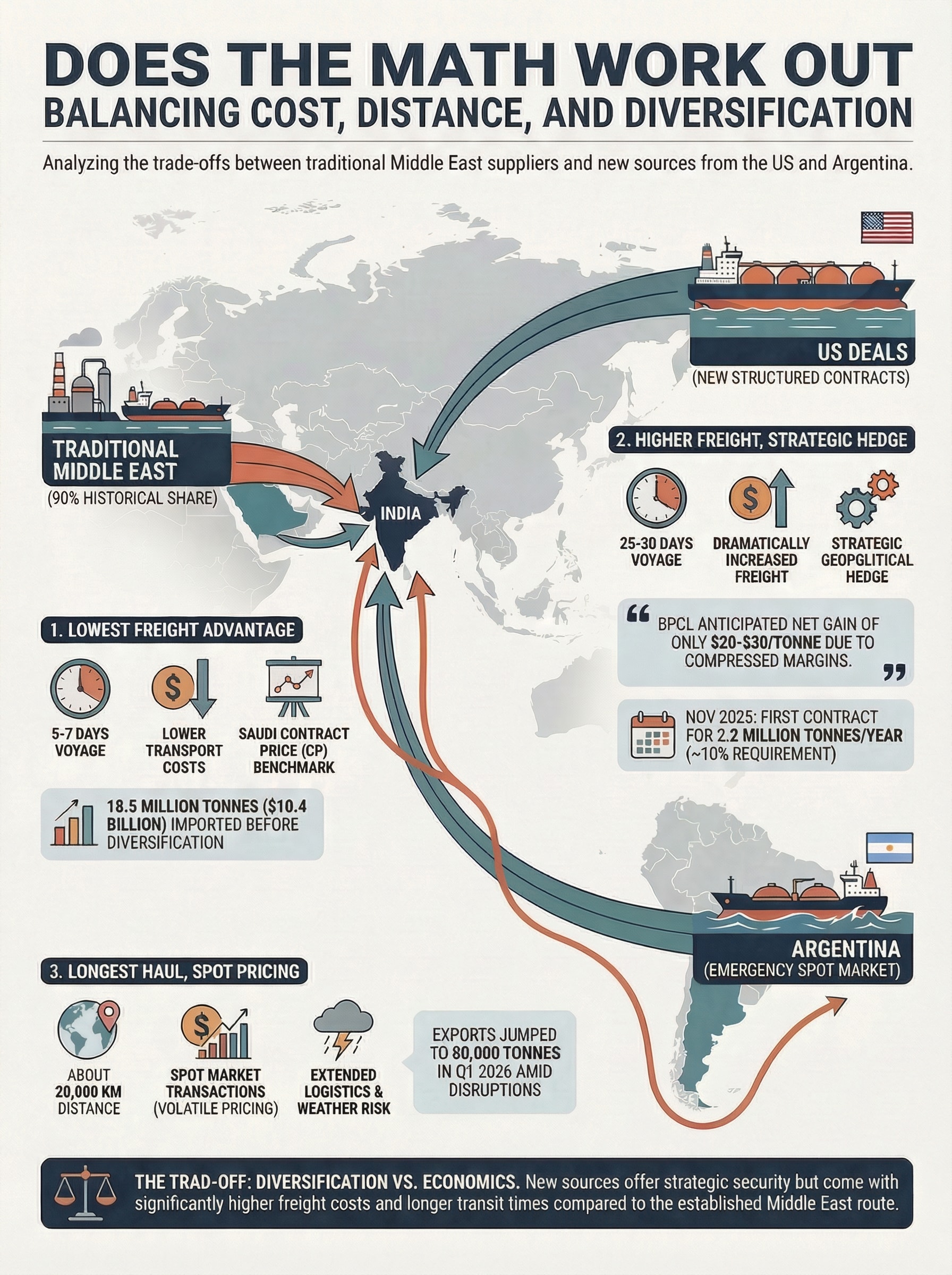
- India's LPG import portfolio has historically been dominated by Middle Eastern suppliers, accounting for around 90 per cent of imports. This long-standing preference is not just geographical, it reflects lower transport costs and shorter voyage times (typically 5-7 days) from Gulf producers to Indian ports.
- Middle Eastern LPG prices track the Saudi Contract Price (CP) benchmark, a widely accepted regional pricing mechanism. This relatively stable benchmark, combined with short freight distances, translates to a comparatively lower landed cost for LPG arriving at Indian ports.
- According to a Reuters report and government sources, India imported most of its LPG at this competitive clip -- for example, 18.5 million tonnes worth $10.4 billion, mostly from Gulf producers -- before diversification began.
2. US LPG Deals: Higher Freight and Longer Routes
- In November 2025, India sealed its first structured LPG import contract with the United States for 2.2 million tonnes per year, roughly 10 per cent of its annual LPG requirement.
- US LPG offers a strategic hedge against geopolitical risk, but the economics differ sharply:
- Freight and delivered cost: Cargoes from the US Gulf Coast take roughly 25-30 days to reach India. This dramatically increases freight outlays, altering the final landed cost.
- Real-world trading negotiations reflect this gap: BPCL - one of India's state refineries - anticipated a net gain of only $20-$30 per tonne by swapping Middle East LPG with US supplies, showing how freight and blending costs compress margins.
3. Argentina LPG: Longest Haul, Spot Market Pricing
- Argentina's LPG exports to India have jumped sharply -- from negligible volumes before 2024 to 50,000 tonnes in the first quarter of 2026 -- as part of emergency diversification amid West Asia disruptions.
- However, like the US, Argentina is far away -- about 20,000 km from India -- which places it at a considerable freight disadvantage. The longer voyage not only raises transport costs but also exposes cargoes to extended port and logistics charges as well as weather risk.
- Unlike the US deal, shipments from Argentina have so far been spot market transactions rather than structured long-term contracts, meaning pricing dynamics vary with global LPG trends and cargo availability.
Strategic Shift For Energy Security
What looks like a temporary supply adjustment may actually signal a deeper shift. For years, LPG sourcing was geographically concentrated because it was cheaper and faster. The Strait of Hormuz crisis has exposed the risk of that comfort. Sourcing LPG from 20,000 km away is expensive. But it is also insurance. For India, Argentina and US are part of the country's emergency energy map.
Track Latest News Live on NDTV.com and get news updates from India and around the world

