





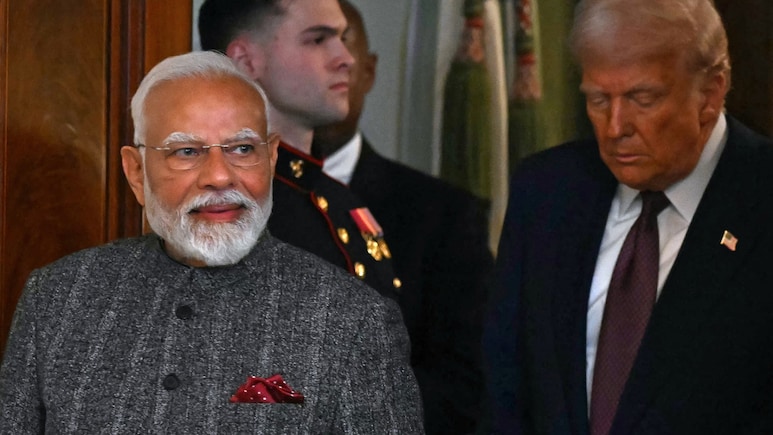
- India remains engaged with the US on proposed tariffs for alleged forced labour violations
- US tariffs proposed range from 10% to 12.5% on imports from 60 trading partners including India
- Public hearings on the tariffs will be held on 7 July 2026 with comments accepted until 6 July 2026
Reacting to the United States' plan to impose new tariffs on at least 60 trading partners for alleged failures to act against forced labour, India has said that it remained engaged with the US on the matter.
"As per the report, the proposed tariffs are not yet final and stakeholders can submit requests to participate in public hearings by 22 June 2026. Written comments can be submitted until 6 July 2026. Public hearings will be held on 7 July 2026. The USTR will consider the comments and testimony received before taking a final decision on the proposed measures. India remains engaged with the U.S. on the matter as a part of Section 301 proceedings," a government release said.
The tariffs, proposed by the US Trade Representative (USTR), range from 10 per cent to 12.5 per cent, according to a government filing.
According to the USTR report released early Wednesday, Canada, Mexico, Taiwan and the United Kingdom would face 10 per cent tariffs for allegedly failing to enforce a forced labour import ban. A 12.5 per cent additional tariff would be imposed on China, Japan, India, South Korea, Brazil and Switzerland, among other nations.
Read | US Trade Team In Delhi, Trump Plans New Tariffs On India Over "Forced Labour"
The new tariffs would not take effect immediately. They are subject to public comment and review. But if implemented, the move would enable US President Donald Trump to skirt limits on his tariffs imposed by the Supreme Court.
The government release added that "products covered under Section 232 tariffs and certain other products are excluded from these tariff proposals. A special mechanism has also been proposed for textile and apparel products that could allow a certain volume of imports from selected economies to enter the U.S. at lower tariff rates."
The Trump administration's move comes months after Washington launched investigations into trading partners under Section 301 (b)(1) of the Trade Act of 1974, seeking to see whether they took action against the import of goods made with forced labour and if this impacted US commerce.
On Tuesday, the USTR said that 54 of the economies "failed to impose and effectively enforce a forced labour import prohibition".
This group includes China, India, Bangladesh, Vietnam, Taiwan, Iraq, Israel, Japan, Qatar, Russia, Saudi Arabia, Singapore, the United Arab Emirates (UAE) and the United Kingdom (UK), among others. Six other economies -- Canada, Ecuador, the EU, Indonesia, Mexico and Pakistan -- were deemed not to have effectively enforced such prohibitions.
New Delhi on Wednesday added that India is also parallelly engaged with the US for finalisation of a framework agreement as was announced on 2nd February 2026 and in accordance with the joint statement released on 7th February 2026.
On US-India trade deal, US Ambassador to India Sergio Gor on Wednesday stated: "We are 99% there, the last 1% we are working on. We are very optimistic that this will get done. It will be a win-win situation for both the US and India."
Track Latest News Live on NDTV.com and get news updates from India and around the world

