





- India will keep buying Russian crude amid US-Israel-Iran war, ensuring energy supply stability, sources said
- Petrol prices in India are stable due to government negotiations and controlled crude supply, sources said
- India holds sufficient strategic oil reserves in case of supply disruptions
India will purchase crude oil from Russia, government sources told NDTV Friday morning, providing much-needed assurances on energy supply volatility amid the US-Israel-Iran war. Sources also said efforts to stabilise petrol prices had 'paid off' thanks to 'continuous negotiation on multiple fronts' and stressed 'the crude oil situation is under control'.
Price of petroleum products in domestic markets won't rise, sources said.
The government, NDTV was further told, has sufficient reserves in case of supply disruptions arising not only from the war in Iran but military pressure on oil tankers passing through Tehran-controlled Strait of Hormuz, a narrow waterway connecting the Persian Gulf to the open ocean.
Iran shut the strait after warning that ships trying to pass would be 'set ablaze'.
That, coupled with attacks on at least two tankers off Oman's coast - strikes that also caused maritime insurance providers to withdraw - meant sea traffic through the Hormuz slowed to a crawl.
The Strait of Hormuz is one of the world's most critical energy chokepoints because a fifth of the world's oil trade, and over half of the natural gas trade, runs through this passageway.
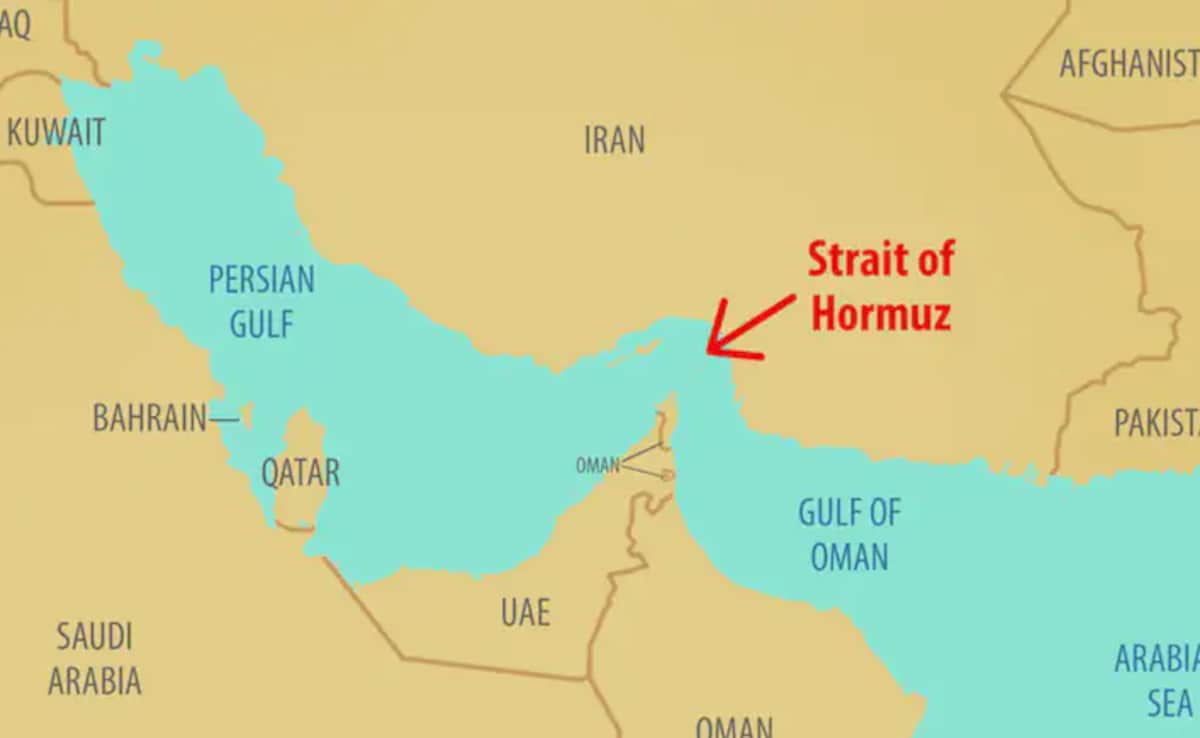
The Strait of Hormuz that is, de facto, controlled by Iran.
India's share of the Hormuz oil trade is between 2.5 and 2.7 million barrels per day. This is nearly half the six million bpd (based on end-2025 figures) the country consumes daily.
On Wednesday NDTV reported on the possibility of India increasing Russian crude purchases to offset any war-driven potential energy supply volatility. The only question then was - how might the United States react, given Washington had made reducing purchases from Moscow a key condition in the India-US interim tariff framework agreement announced in February.
Specifically, Washington agreed to waive a 25 per cent 'penalty' tariff on assurances Delhi will scale back Russian purchases and offset by buying from the US or Venezuela. Hours later the question was answered. US Treasury Secretary Scott Bessent announced a 30-day waiver - through to April 3, 2026 - so Indian refiners could purchase Russian oil.
President Trump's energy agenda has resulted in oil and gas production reaching the highest levels ever recorded.
— Treasury Secretary Scott Bessent (@SecScottBessent) March 6, 2026
To enable oil to keep flowing into the global market, the Treasury Department is issuing a temporary 30-day waiver to allow Indian refiners to purchase Russian oil.…
Apart from the Strait of Hormuz issue, oil production has been hit across the West Asia region amid Iranian strikes on major oilfields, including the large Ras Tanura refinery in Saudi Arabia.
Iraq's Rumaila oil field was also attacked.
Last month Petroleum Minister Hardeep Singh Puri told Parliament India's strategic reserves – which includes underground reservoirs in Andhra Pradesh and Karnataka, and a proposed third in Odisha, as well as reserves with oil marketing companies – can last between 74 and 90 days, depending on use levels.
READ | Will India Have Enough Oil If Iran War Escalates? Oil Reserves At A Glance
However, given the war in Iran and surrounding areas shows no sign of stopping at this time – US President Donald Trump told reporters of a four-week timeline – the government has begun planning 'what if' scenarios for the world's third largest oil user, behind only the US and China.
Analysts told Reuters India is seen as a vulnerable nation in this aspect.
This is particularly so since China has vastly larger reserves; Ajay Parmar, Director of Energy and Refining at ICIS, a commodities research group, said Beijing could draw on six months' stock.
For Asia as a whole, the risks are direct. Several major economies, including China, Japan, South Korea, and Taiwan rely heavily on oil from the Middle East. A hit to this supply could have knock-on effects on global supply chains, including the critical semiconductor industry.
Any prolonged disruption could affect production. Taiwan's factories produce most of the world's advanced chips, used in smartphones, electric vehicles and artificial intelligence systems. These facilities rely on stable electricity supplies. Backup generators are a short-term solution not designed for extended crises.
With input from agencies
NDTV is now available on WhatsApp channels. Click on the link to get all the latest updates from NDTV on your chat.
Track Latest News Live on NDTV.com and get news updates from India and around the world

