





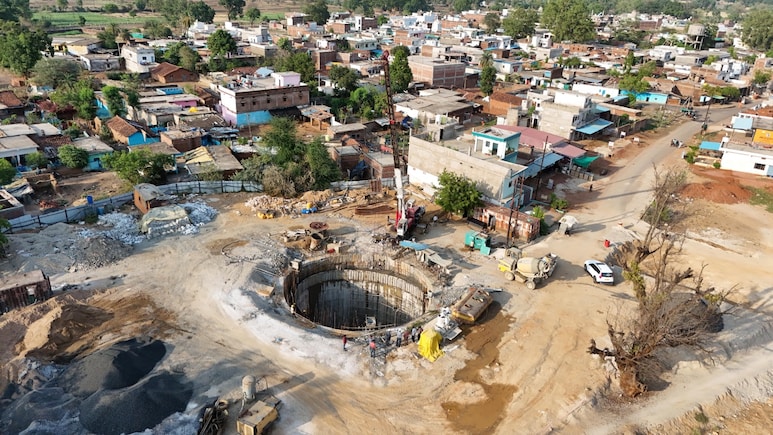
- The 11.95 km tunnel under the Vindhyas connects Narmada water to the Son basin by gravity flow
- Construction faced varied geology, groundwater flooding, and repeated machine damage over 17 years
- Two tunnel boring machines advanced from opposite ends to meet precisely inside the mountain
Legend has it that Narmada, the daughter of the Maikal hills, was destined to marry Sonbhadra. Before the wedding, she sent her companion Juhila to meet him and understand what lay in his heart. But Sonbhadra mistook Juhila for Narmada. When the misunderstanding reached Narmada, she was heartbroken. Humiliated and angry, she turned west. Sonbhadra tried to follow, but it was too late. He flowed eastward. One river eventually reached the Arabian Sea, the other joined the Ganga.
Folklore says the story that began in the Maikal hills was never completed. Though born from the same mountains, Narmada and Sonbhadra continued to flow in opposite directions. Between them stood the rocky ridges of the Vindhyas.
Centuries later, the greatest engineering challenge in carrying Narmada water towards the Son basin lay at this very geographical divide. The Vindhyan ridge separating the Narmada and Son valleys rises nearly 40 metres above the surrounding terrain. An open-cut or cut-and-cover method was not considered practical, as it would have required excavation of more than 40 million cubic metres of earth, cutting across an area hundreds of metres wide, while also confronting a high groundwater table.
Engineers therefore chose to go through the mountain.
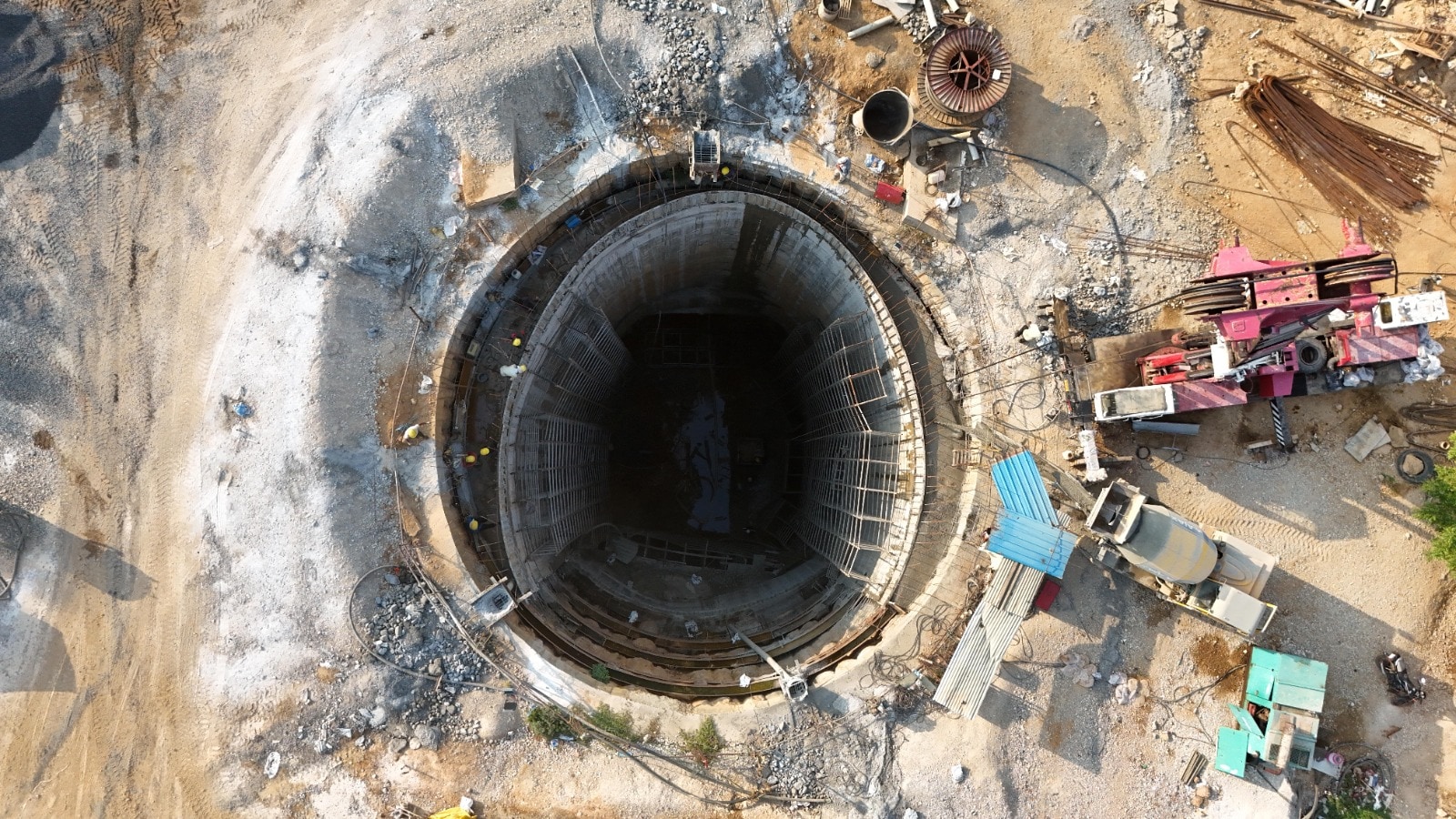
What followed was the construction of India's longest irrigation water tunnel, measuring 11.952 kilometres in length and 10.14 metres in diameter. Once water is released through it, the tunnel will carry Narmada water by natural gravitational flow, without the assistance of pumps.
One day, engineers arrived on the Sliemanabad plateau with survey maps. Hundreds of workers followed them. They did not come with shovels alone. Giant Tunnel Boring Machines were brought in. In front of them stood a mountain nearly 12 kilometres wide. Their task was to create a passage inside it through which Narmada water could move towards the Vindhyas and the catchment of the Son.
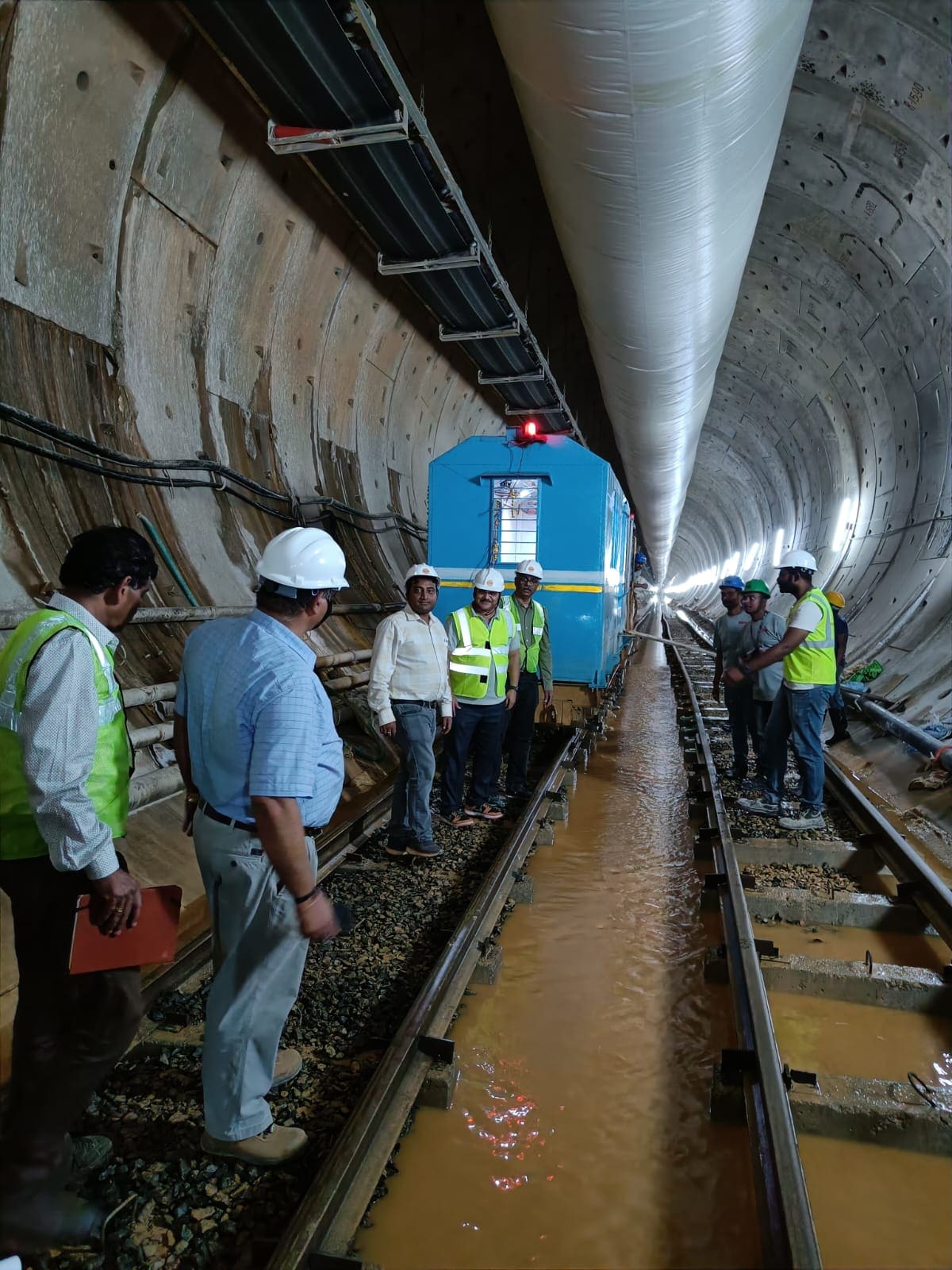
It was a modern engineering project, but its scale and difficulty made it resemble an ancient epic. On one side stood the mountain. On the other were fields waiting for water. Between them were engineers and workers tasked with opening a path for the river.
From kilometre 104 to kilometre 116 of the Right Bank Main Canal, every stretch posed a fresh challenge. The mountain changed its character repeatedly. Hard layers of marble and limestone gave way to fractured dolomite and thin sheets of slate. Soft residual soil appeared between sections of hard rock. In several places, the dissolution of limestone had created vast underground cavities.
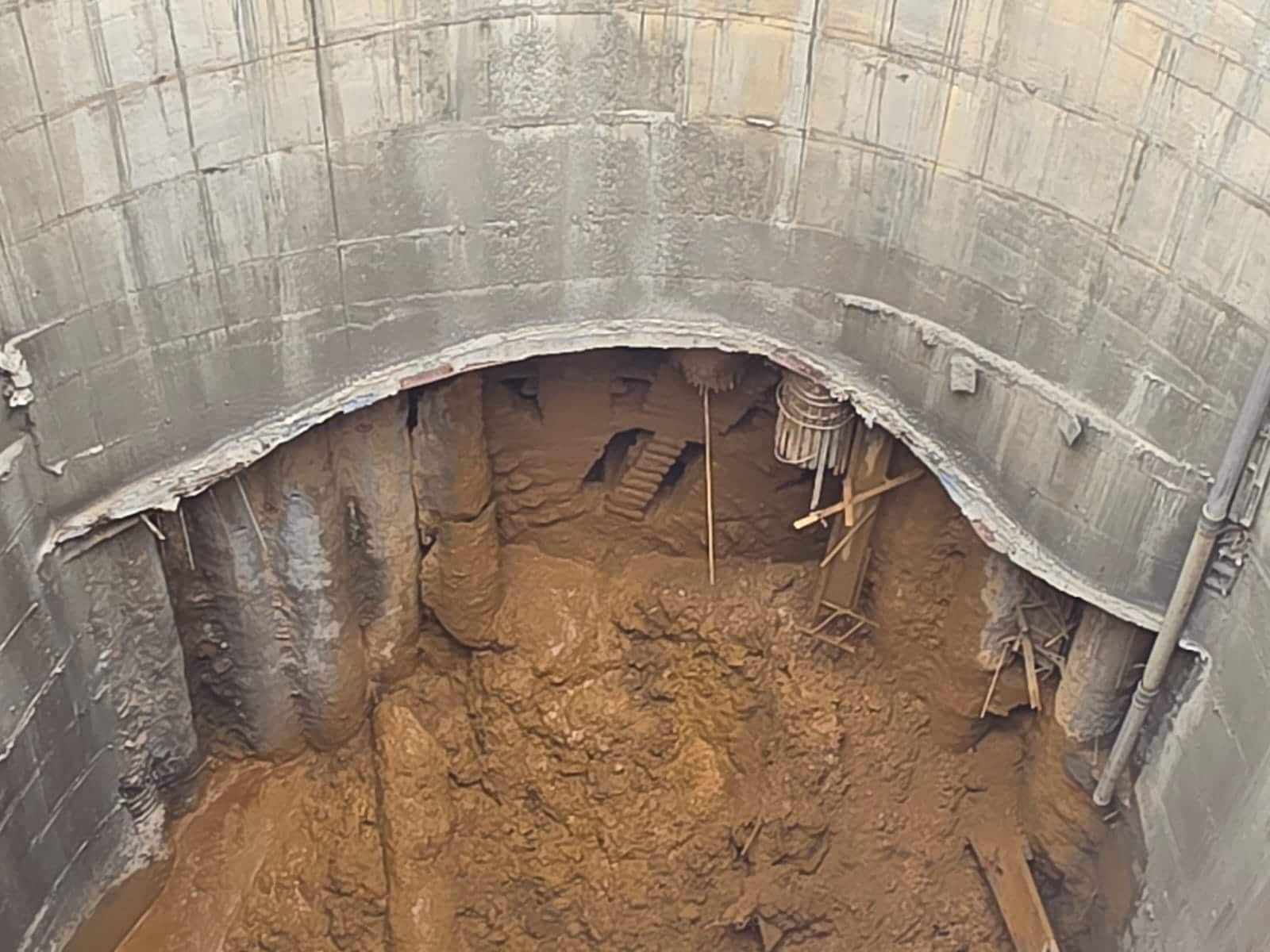
At times, groundwater entered the tunnel at a rate of 18,000 to 25,000 litres per minute. The groundwater level stood above the tunnel crown. The overburden ranged from 20 to 33 metres. Engineers faced the threat of sinkholes, air loss and liquefaction. Rock-face conditions changed every 10 to 15 metres, while transition zones stretched from 12 to 100 metres. Falling debris, extremely hard rock, carbon dioxide emissions and repeated damage to the cutter heads of the Tunnel Boring Machines made the excavation even more difficult.
It appeared as though Narmada, before moving towards the lands of Sonbhadra, was being made to confront every obstacle the Vindhyas could place in her path.
The flooding itself carried an irony. The tunnel was being created to carry the waters of the Narmada, but groundwater repeatedly stopped the workers. Pumps had to run continuously. Engineers studied each new rock formation. Workers drained water, cleared debris and prepared the ground for the machines to move ahead.
Inside the tunnel, there was no sunrise or sunset. Time was measured by shifts and clocks. Air quality was checked by machines. For workers operating several kilometres inside the mountain, the sky was visible only after they emerged at the end of their shift.
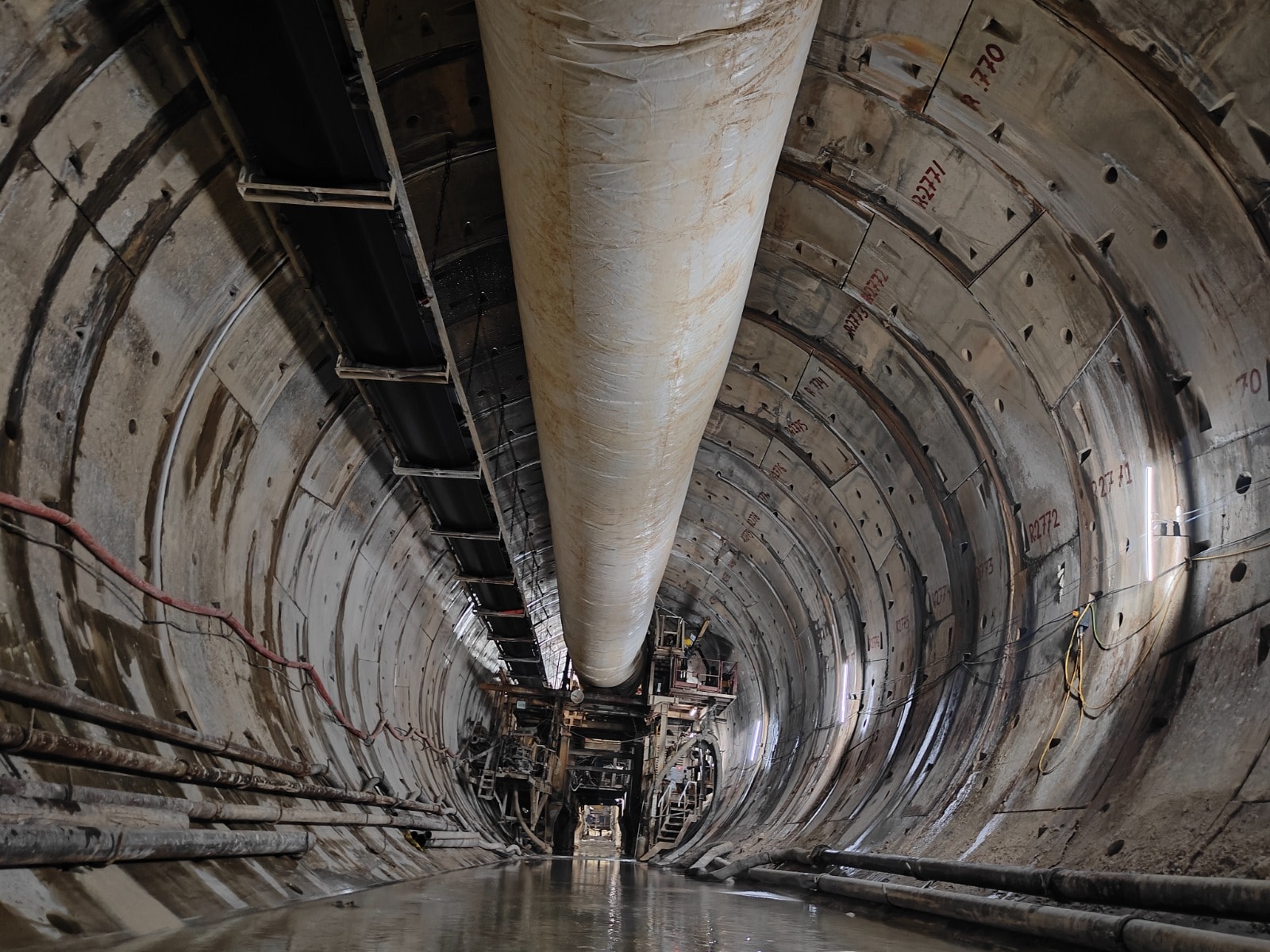
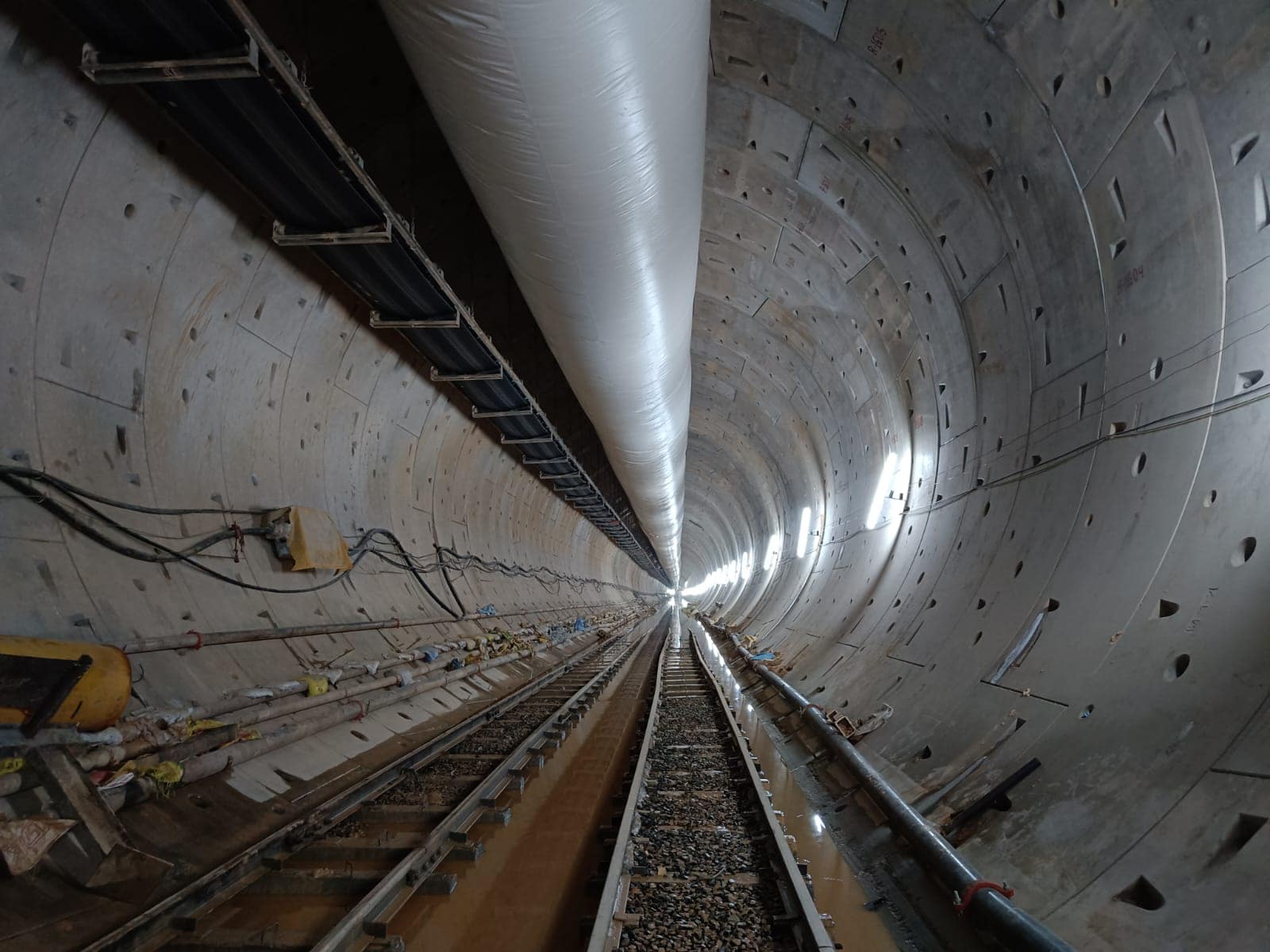
The mountain tested them repeatedly. On the upstream side, the American Robbins Tunnel Boring Machine became trapped several times in difficult rock formations. Important components were damaged. Work stopped. Repairs were undertaken. A new route through the same geology had to be found again and again.
When it became clear that one front would not be enough, engineers opened another from the downstream side. A German HK Tunnel Boring Machine was deployed. The mountain was now being cut from both directions.
One team advanced from upstream and the other from downstream. Kilometres of solid rock separated them. Neither team could see the other. Only maps, calculations, alignment data and machine readings showed that another group was moving towards the same invisible point.
The challenge was not merely to cut rock. The two tunnels had to meet at precisely the same point inside the mountain. Over a distance of nearly 12 kilometres, even a small deviation in direction could have pushed years of work off course. Engineers therefore measured gradient, depth and alignment every day. Tunnel alignment monitoring, core drilling and advanced surveys became their guide through the unseen interior of the Vindhyas.
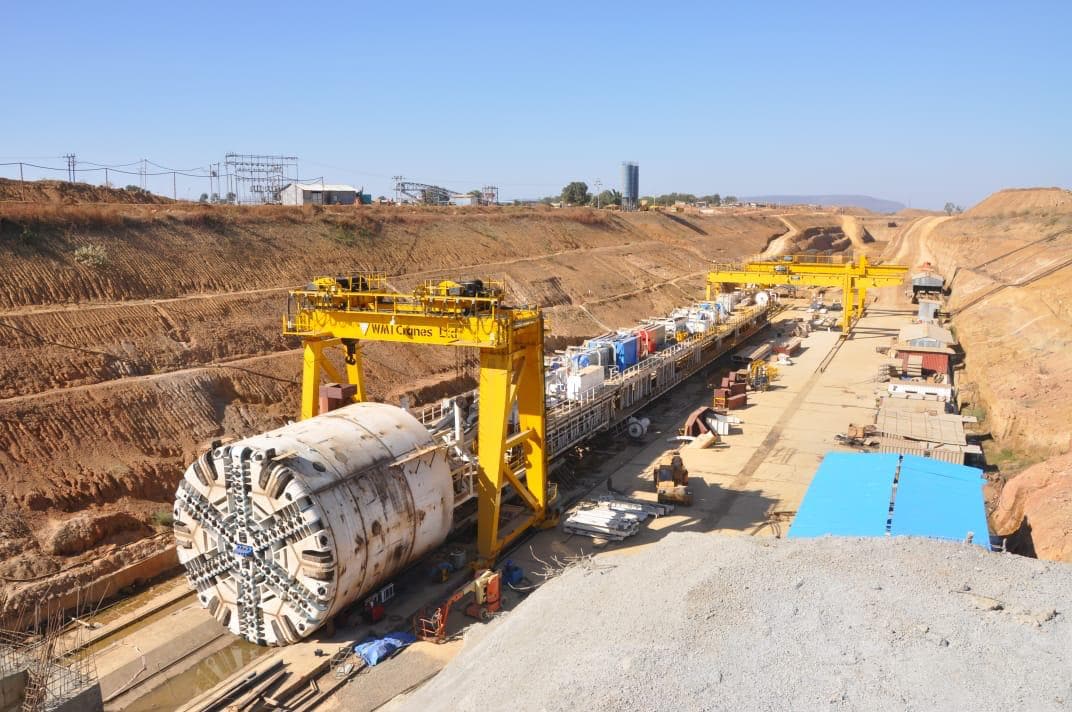
For the workers, however, it was as much a battle of faith as of engineering. They cleared broken rock, reinforced the tunnel walls, pumped out water and replaced damaged components. Each time the mountain blocked the way, they returned to work against it.
One year passed, then another. Eventually, 17 years went by.
Children born when the project began grew into adults. Workers who had joined the first shifts at the tunnel entrance grew older. Some colleagues did not live to see the breakthrough. Machines changed. Contractors changed. Officials changed. The work beneath the mountain continued.
Then came the day when only one metre of rock remained between the two tunnel faces.
On one side stood engineers and workers. On the other were colleagues they had known for years only through wireless communication, maps and calculations. Between them was no longer the full mountain, but just its final wall.
At exactly 3.30 pm on Tuesday, the cutter head struck that last barrier. The rock cracked. Dust rose. A narrow line of light appeared from the other side.
The 6.5-kilometre upstream tunnel had met the 5.4-kilometre downstream tunnel at Sliemanabad Junction. With that, the 11.95-kilometre-long tunnel became a single passage running through the Vindhyas.
Workers standing at one end saw their colleagues at the other for the first time. Applause echoed inside the tunnel. Dust-covered faces broke into smiles. Some touched the machine. Others touched the broken rock wall, perhaps to reassure themselves that the moment they had waited 17 years for had finally arrived.
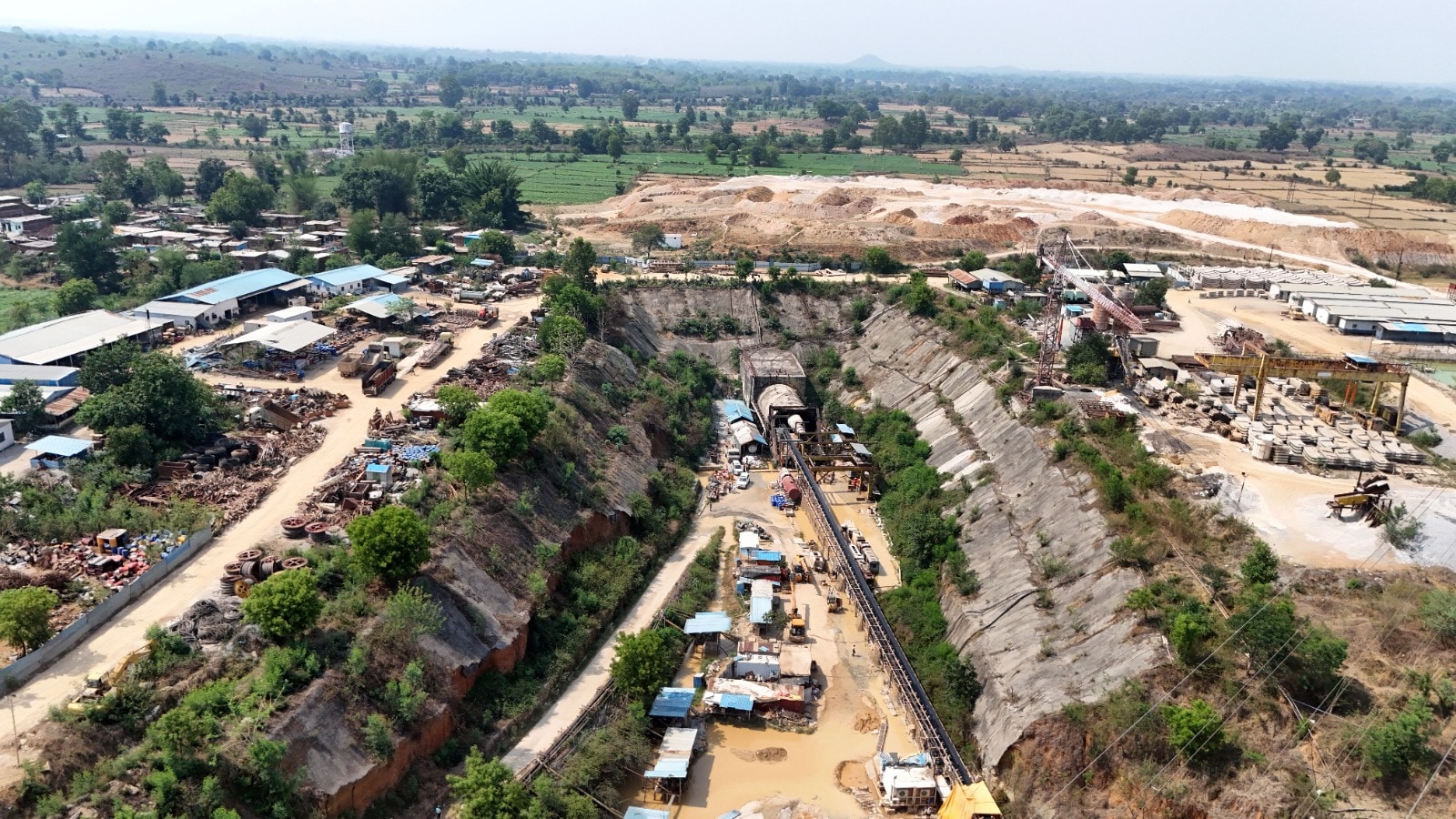
At that moment, the old legend seemed to return to the present.
Narmada still flows west. Sonbhadra still flows east. No river has changed its natural course. But inside the mountain that once separated their worlds, human effort has created a new path for water.
This is not a natural reunion of Narmada and Sonbhadra. Yet through the Bargi Diversion Project, the waters of the Narmada will move towards the thirsty lands of the Vindhyas and the Son basin. What folklore remembered as separation, engineering has converted into an irrigation route.
Thousands of farmers across the region have waited for this path. They are farmers who still look towards the sky before sowing. If the monsoon arrives on time, the fields turn green. If the rains fail, crops and hopes dry together.
The Bargi Diversion Project aims to benefit nearly 1,450 villages across Jabalpur, Katni, Maihar, Satna, Rewa and Panna. The larger project is designed to provide irrigation to nearly 245,000 hectares of land. The command area linked to the Sliemanabad tunnel covers about 185,000 hectares.
This includes 21,823 hectares in Katni, 54,227 hectares in Maihar, 104,970 hectares in Satna, 3,532 hectares in Rewa and 448 hectares in Panna.
The journey of the water is not complete yet. From the tunnel, Narmada water must travel through canals and eight aqueducts before reaching the last field. By March 2026, irrigation potential for 44,160 hectares had been created. The target is to raise this to 87,433 hectares by September 2026 and 154,693 hectares by December 2027.
The breaking of the final rock is therefore not the end of the story. It marks the beginning of the next chapter. The path through the mountain has been opened. The next task is to carry the water reliably to the final farmer.
When that water reaches the villages of the Vindhyas, it may change far more than the moisture in the soil. Cropping patterns could shift. Two or even three crops may become possible in areas where farmers were dependent on one. Pulses, oilseeds, vegetables and horticulture may expand. Livestock and rural industries may gain support. Migration in search of work may reduce.
The project also provides for drinking and industrial water supply to Jabalpur and Katni. The tunnel beneath the mountain is therefore expected to carry water not only to fields, but also to homes and industry.
In the old legend, misunderstanding and geography separated Narmada and Sonbhadra. In this new story, engineers and workers have carved a path through the same mountain.
The heroes of this story do not live in palaces. Their clothes carry dust and machine oil. Their hands hold drills, maps and engineering instruments. For 17 years, they worked in darkness so that water could one day reach the fields of the Vindhyas.
When the final rock broke at 3.30 pm, it was not merely two tunnels that met. On one side was the water of the Narmada. On the other were the thirsty lands stretching towards the Son basin. Between them, engineers and workers had opened, through 17 years of labour, a passage that the Vindhyas had blocked for centuries.

