






The head of the global nuclear watchdog, the International Atomic Energy Agency (IAEA), Director General Rafael M Grossi has strongly endorsed India's new Shanti Act and its ambitious plans to expand nuclear power, describing the country as a major global player in the atomic energy domain.
Speaking to NDTV in Vienna, Grossi's remarks mark his first public reaction to the new legislation, which seeks to reform India's nuclear liability framework and open the sector to wider participation.
Grossi's assessment comes at a time when India is looking to dramatically scale up its nuclear energy programme to meet long term energy needs while ensuring reliability and sustainability. The Shanti Act-2025 (The Sustainable Harnessing and Advancement of Nuclear Energy for Transforming India) is seen as a significant policy shift, aimed at creating a more industry friendly liability structure while balancing public concerns. By addressing long standing issues around liability, the new law is expected to enable greater private sector participation and accelerate the pace of nuclear development in the country.
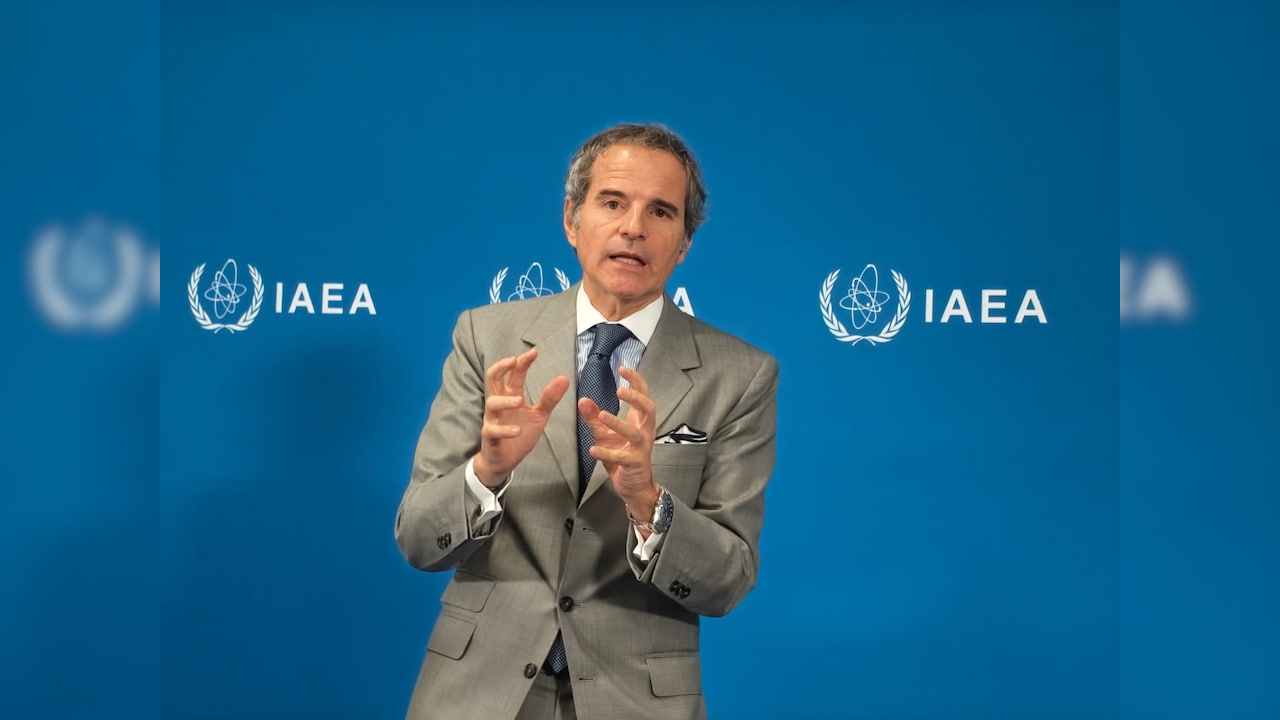
Responding to a question from NDTV, Grossi was unequivocal in his support. "Well, I think it is very positive. Why I say this? Because, naturally, India has been, traditionally, an important nuclear power consumer, user, developer, and now it has an energy policy, which is very well known, on which the nuclear factor is poised to increase quite importantly," he said.
His remarks underline India's evolving stature in the global nuclear ecosystem. Grossi indicated that the new policy framework and expansion plans would deepen engagement between India and the IAEA.
"This means that we are going to be working with India much more. I have been visiting India and I will return. So all of that, for us, is good news," he added.
Grossi emphasised that India's nuclear push is not just about increasing capacity but about strengthening the overall energy mix.
"And by the way, not because there is more nuclear. It's something that goes in the direction of diversifying the energy mix of the country, making it more reliable. So these are all very positive elements," he said.
India currently operates a fleet of nearly two dozen nuclear power plants that contribute to its electricity generation of about 8 GW, and the government has outlined plans to ramp up capacity significantly, targeting around 100 gigawatts of nuclear power by 2047. This expansion is expected to be a key pillar of India's long term energy security strategy, especially as the country seeks stable and clean sources of power.
The Shanti Act is viewed as central to achieving this vision. By moving towards a more industry aligned liability regime and opening doors for private investment, it aims to unlock capital and technology flows into the sector. Analysts see this as a critical step in enabling large scale nuclear deployment, which has so far faced constraints due to liability concerns.
At the same time, Grossi's comments come against the backdrop of increasing global concerns over the safety of nuclear installations in conflict zones. Recent incidents involving facilities such as Barakah, Bushehr and Zaporizhzhia have underscored the risks faced by civilian nuclear plants in volatile regions. These developments have raised questions about whether such threats could deter countries from investing in nuclear energy.
Grossi acknowledged these concerns but made it clear that the international community is taking them seriously.
"No, that is a very valid point and we have been addressing this. Of course, it worries us a lot. But it doesn't only worry us, we act on it, as you know," he said. He stressed the operational role played by the IAEA in mitigating risks on the ground.
"We don't just Tweet about something. We go to places like we have been doing for almost five years in Ukraine at the front line," Grossi said.
Referring to the broader issue of attacks on nuclear facilities, he described such incidents as deeply troubling and reiterated the principle that civilian plants must be protected.
While labelling these episodes as regrettable, he made it clear that they have not, so far, altered the direction of global nuclear expansion.
"That being said, we don't see, for now at least, direct influence between these episodes, which are highly regrettable, and medium and long term planning of many countries in the area of peaceful uses of nuclear energy," he said.
Grossi added that the global push for nuclear energy continues to be driven by fundamental factors such as energy security and technological considerations.
"There is a very strong trend which is driven by other factors which have to do with energy security, technological considerations, and so on," he said.
For countries exploring nuclear power, including newcomers, this means that recent attacks have not become a deterrent.
At a time when energy systems worldwide are under strain, Grossi's remarks highlight a dual reality. Nuclear infrastructure faces new security challenges in conflict zones, yet its role as a reliable and strategic energy source remains intact.
For India, his endorsement of the Shanti Act and its expansion plans signals strong international backing as it positions itself to emerge as a leading force in global nuclear energy.
Track Latest News Live on NDTV.com and get news updates from India and around the world

