





- Indian forces launched Operation Sindoor on May 7 following a terror attack in Pahalgam
- Indian Air Force and Army targeted terror camps in Pakistan and Pakistan-occupied Kashmir
- Some of these Indian Air Force officers shared their experiences with NDTV
On April 22 last year, 26 innocent civilians were killed in Kashmir Valley's Pahalgam, an area which terrorists had never struck. Within a day, a high-level meeting was conducted to explore military options. On May 5, the date and time for Operation Sindoor were fixed. On May 7, Indian forces dismantled Pakistan-nurtured terror installations in a measured military action.
The success of the high-precision Operation Sindoor can be attributed to the dedication and focus of the personnel of the Indian armed forces. The young men and women worked around the clock for several days to first strike down terror camps in Pakistan and Pakistan-occupied Kashmir and later to thwart Pakistan's attacks on Indian military and civilian areas.
Some of these Indian Air Force officers shared their experiences with NDTV.
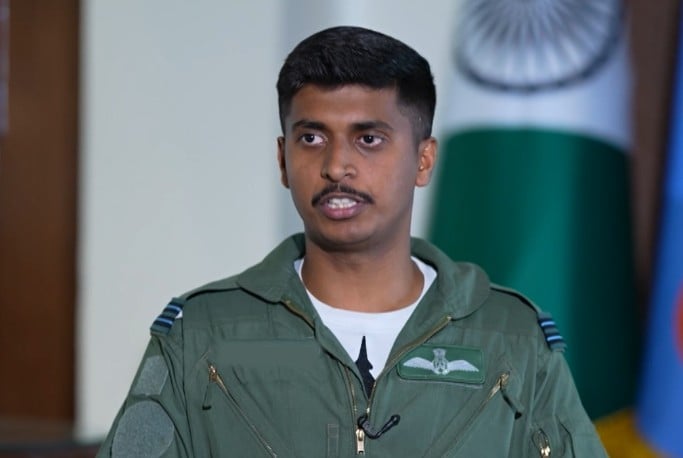
'Was Lucky To Be Part Of Operation Sindoor'
"As a squadron pilot, we were informed about it (Operation Sindoor), and we were well prepared for the operation which was about to be conducted. We were mission-ready, and our targets were already prepared. It was not only about the execution and planning of the mission, but it was also about the pre-operation things," a young pilot told NDTV.
Also read: India's "Reputation, Standing" Reply To China's "On-Site" Support To Pak
He said he was lucky to be a part of this operation.
"It is a once-in-a-lifetime moment that a pilot gets such an opportunity. That is what we train for day in and day out since our academy days. We have been trained that one day, when the time comes, you will be lucky to operate and fly in such missions," he added.
He said he was well-trained for the multi-tasking that is required to carry out such missions.
"As a pilot, we were trained to carry out multitasking in our cockpit, taking dynamic decisions in the cockpit, analysing the situation because at times, the tactical situation might change. So, in a cockpit as a pilot, you need to make dynamic decisions," he said.
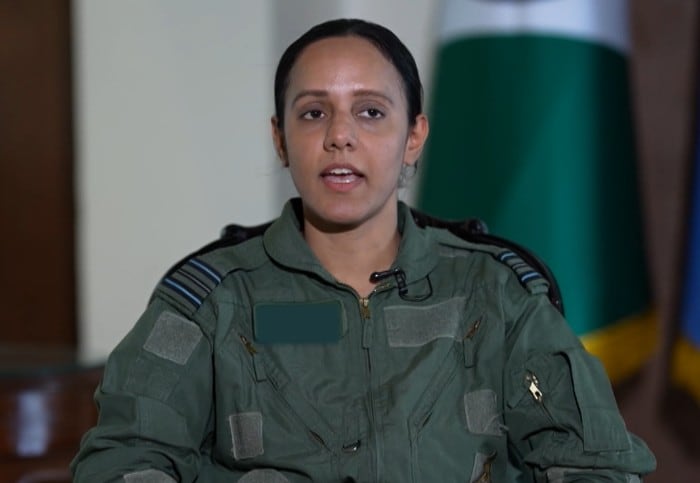
'Remained Calm'
Air traffic controllers played a crucial role in Operation Sindoor. An ATC officer spoke with NDTV and shared how she carried out her duty with valour and dedication.
"We were very proud of the fact that we were there, and we could be a part of whatever was about to happen. Of course, there were a lot of questions in mind -- what will happen, how will it happen? But I think the one feeling that I remember most about that time was pride," she said.
Also Read: Dominated Escalation Matrix On All 4 Days: Defence Chief On Op Sindoor
"As air traffic controllers, our role from day to day and in that operation was more or less the same. We look out for other aircraft, we look out for our own aircraft, we ensure that in case of any emergency, we are there to assist them, we ensure that they are well separated from each other and that they are safe," she said, describing her role in the operation.
She said she and her colleagues were more careful in monitoring the skies during Operation Sindoor.
"We were more careful. There were no civilian aircraft. So we knew that we had to be very careful that all the guys who are up in the air are ours, and no one's crossing over from the other side towards our side," she added.
She said she used to feel happy whenever the fighter jets landed home safely. However, she remained calm in all situations.
"It felt great. Whenever you work towards something, and then it comes to successful fruition, it is always a great feeling. And it was the same feeling that day. But that notwithstanding, our role is to be very calm and composed at all times, even in times of emergency. So no matter how ecstatic or how happy or how proud we are, we cannot sound like that. So we sound the same. We sound exactly like how I'm talking to you," she said.
What inspired her the most? She says, "I think the one thing that inspired me the most, which I talk about often, is how everyone came together. There were no complaints of lack of sleep, no complaints of lack of food. Everyone was together."
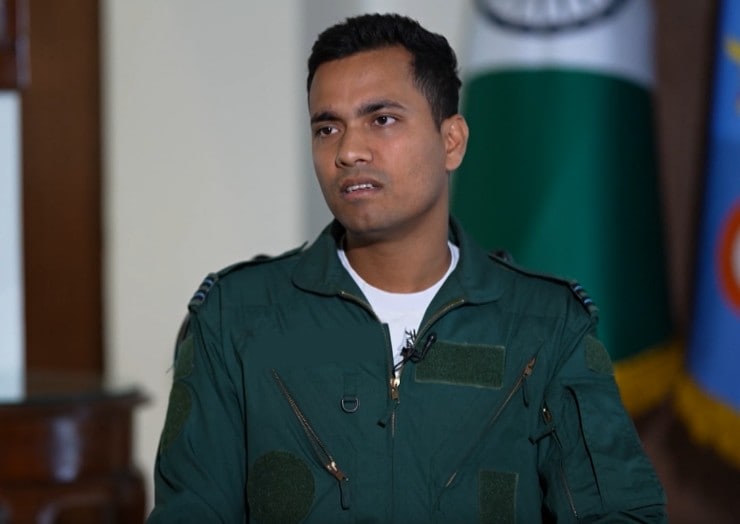
'Was Trained For Mental, Physical Fatigue'
An engineering officer of the IAF also talked about his experiences.
"This was the first time I had participated in a live operation. And I feel it was one of the best chances for me to prove my calibre as an Air Force officer. Not everyone gets this opportunity. And when I was told that I needed to participate in this operation, I was very, very glad and very, very thankful to the Indian Air Force that I was given such an opportunity and was entrusted with going to the mission and doing it independently," he said.
He highlighted that the operation took a mental and physical toll, but they were well-trained to cope with it.
"One thing was that we were operating 24/7 for more than a week. So it does induce some physical and mental fatigue. However, again, we are trained for it. We were ready, and we were prepared, and we did flawlessly," he added.
Did he feel a sense of achievement? He replied," There was one instance which I felt was like an achievement for me. I had gone to my men after the ceasefire was announced. And at that time, it had been more than a week since they were working. And even at that time, all my men were completely motivated, and they were ready to continue for even the next few months."
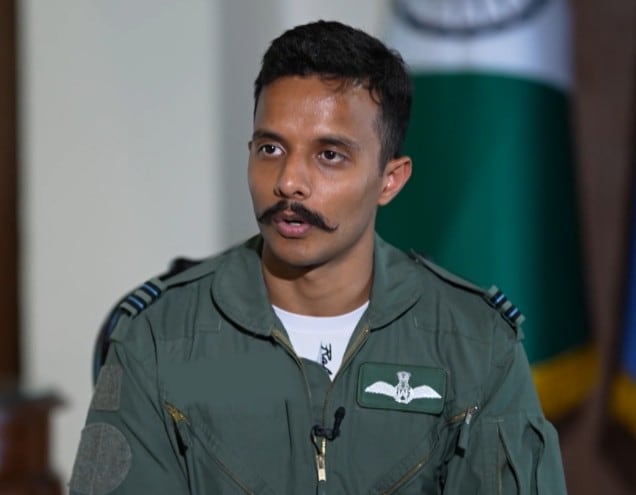
'Unwavering Josh'
Another pilot said he could see "unwavering josh" in the eyes of his colleagues.
"During the operation, I could see in everyone's eye that there was an unwavering josh (fervour). Everyone was charged up to go on a mission and ready to go on a mission. Junior, senior, everyone was aware of the mission. Everyone was thinking about what is next, what they are going to do. Even the pilots, those who were not there in the squadron then because they were in different commands or something, they were also joining the squadron within days," he said.
In Operation Sindoor, India struck nine terror targets. Seven were relatively shallow incursions by the army across the Line of Control. The Indian Air Force destroyed the Bahawalpur and Muridke camps, the headquarters of the Jaish-e-Mohammed and the Lashkar-e-Taiba.
Both sides came at each other with the intensity that was seen in the 1965, 1971 and Kargil wars. The operation demonstrated that limited conventional war between nuclear-armed states is possible.
India's conventional superiority forced Pakistan to seek a ceasefire. But the underlying tensions, terrorism, territorial disputes, and nuclear brinkmanship remain unresolved.
Track Latest News Live on NDTV.com and get news updates from India and around the world

