





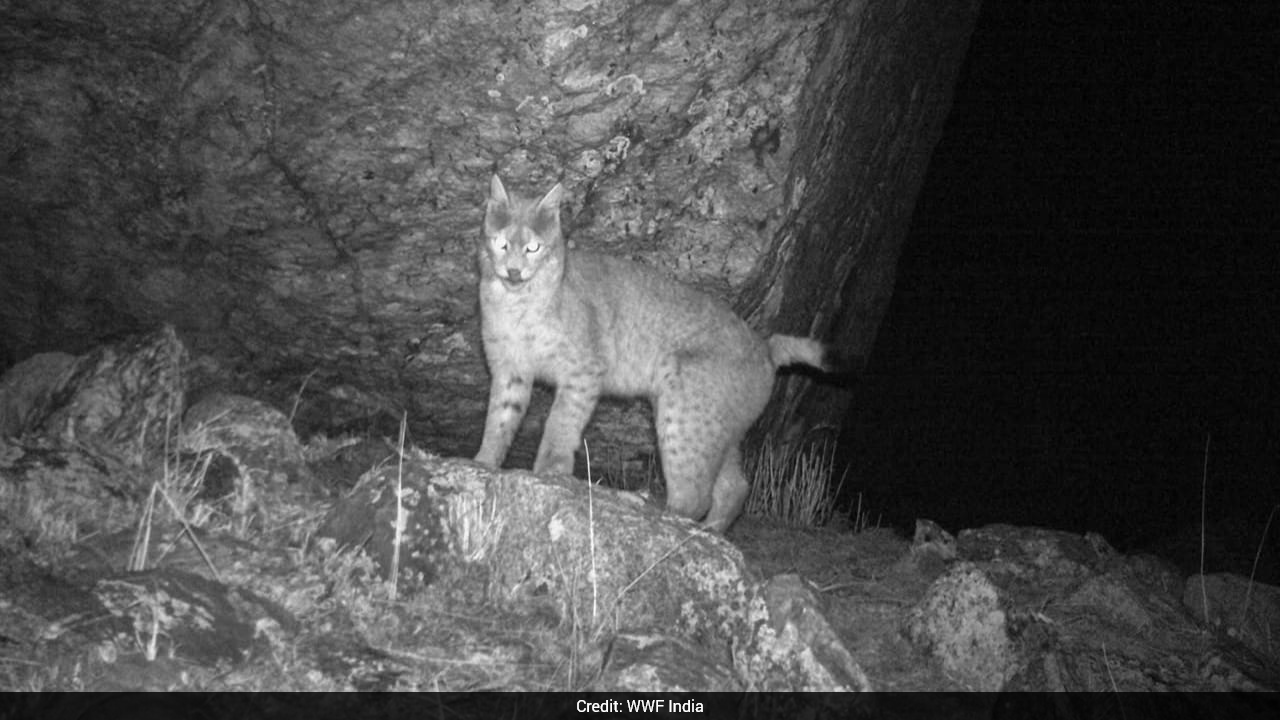
The elusive Eurasian lynx has been photographed for the first time in Sikkim, marking only the second confirmed photographic record of the species in the entire Eastern Himalayan region.
This comes just weeks after the successful sighting of the elusive Mishmi Takin (Budorcas taxicolor) in Sikkim. As one of the most mysterious creatures of the Himalayas, this large goat-antelope is incredibly understudied, making its documented presence in the state a landmark moment.
The Eurasian lynx, a rare wild cat, was captured by a camera trap in January 2026 at an altitude of 17,224 feet on the Tso Lhamo plateau in the Mangan district, providing the first definitive photographic evidence of the species' presence in the state. Although local herders and forest officials had reported sightings of the animal over the years, the latest image finally confirms that the Eurasian lynx continues to inhabit Sikkim's trans-Himalayan landscape.
The record was made during a long-term snow leopard and rangeland monitoring programme jointly undertaken by the Sikkim Forest and Environment Department and WWF-India. The programme, initiated after the state's first comprehensive snow leopard population assessment in 2022, is aimed at monitoring snow leopard populations, documenting associated wildlife, and assessing the ecological health of Sikkim's fragile high-altitude grasslands.
The discovery follows the first-ever photographic record of the Eurasian lynx in Arunachal Pradesh in 2025. Together, the two findings significantly expand scientific understanding of the species' distribution in the Eastern Himalayas, where it has remained largely undocumented.
Speaking about the discovery, Rohan Pandit, Associate Coordinator, Species and Habitats Conservation, Eastern Himalayas, WWF-India, said the camera trap had originally been installed to monitor snow leopards.
"The camera trap was set up on the Tso Lhamo plateau, close to Gurudongmar Lake, in a location that appeared suitable for snow leopards based on field signs and landscape features. Instead of just snow leopards, the camera recorded an extraordinary range of wildlife, including the Eurasian lynx," he said.
Pandit explained that researchers strategically place camera traps near rocky outcrops, mountain passes and locations showing animal signs, where carnivores are most likely to travel.
"Our primary objective has always been to understand snow leopard populations in Sikkim. After completing the state's first baseline snow leopard assessment in 2022, we initiated long-term monitoring not only for snow leopards but also for other carnivores, prey species and the overall ecosystem. This discovery is an unexpected but extremely significant outcome of that effort," he said.
Apart from the lynx and snow leopard, the survey documented an impressive assemblage of high-altitude wildlife, including Pallas's cat, Tibetan wolf, Tibetan sand fox, Tibetan gazelle, Tibetan argali, blue sheep and southern kiang, highlighting the exceptional biodiversity of the Tso Lhamo plateau.
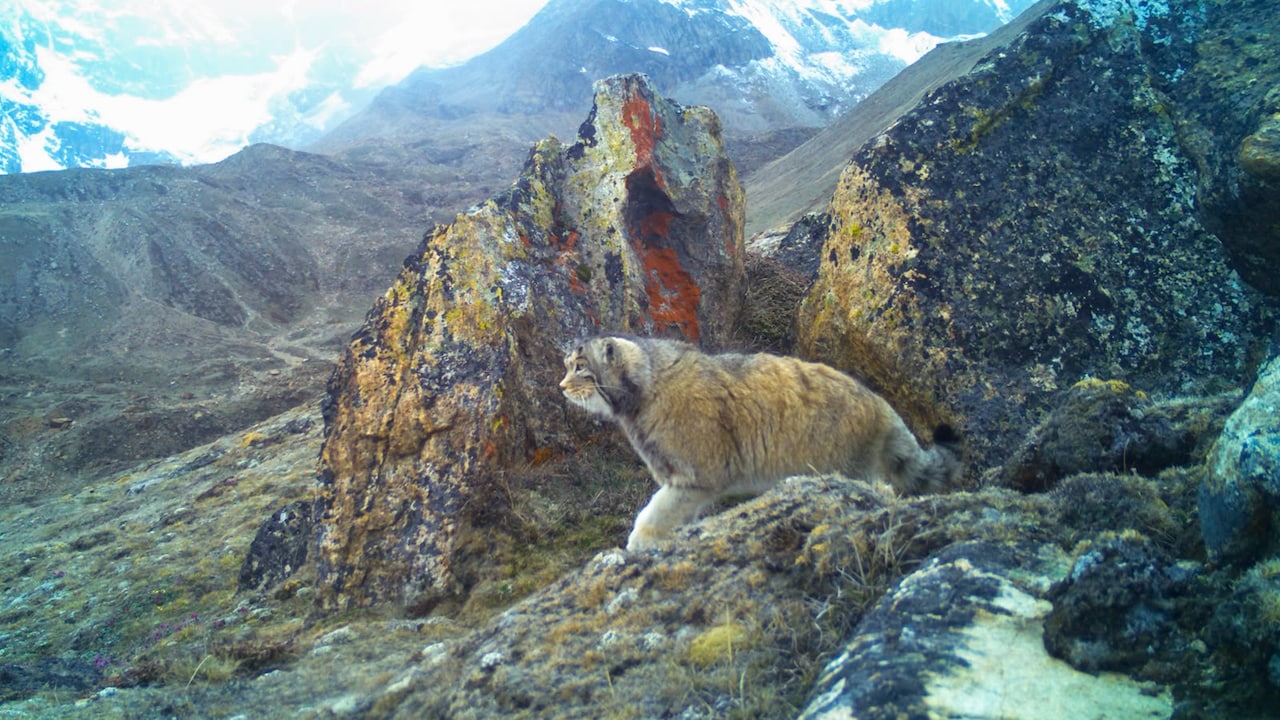
Photo Credit: Credit: WWF India
The Eurasian lynx is a medium-sized wild cat recognised by its tufted ears, short tail and thick coat, adaptations that allow it to survive in cold, high-altitude environments. The Tso Lhamo Plateau, one of India's highest cold desert ecosystems, experiences harsh winters, limited rainfall and only a brief growing season when alpine vegetation emerges.
According to Pandit, the plateau supports abundant prey species such as woolly hares, Himalayan marmots, blue sheep, Tibetan gazelles and Tibetan argali, creating an ideal habitat for predators including snow leopards, lynx, Tibetan wolves and Pallas's cats.
The discovery has also revived historical records of the species in Sikkim. Pandit revealed that shortly after WWF announced the finding, retired conservationist Usha Lachungpa informed researchers that physical remains of a Eurasian lynx had been recovered from the same region in 2004.
"Local Drokpa herders have always spoken about another cat smaller than the snow leopard with a short tail. They even have their own local name for it. However, they also told us sightings have become much rarer in recent years. We were uncertain whether the species still existed in the area. This photograph confirms that it does," he said.
He cautioned, however, that researchers still do not know whether the photographed animal belongs to a resident breeding population or was simply passing through the landscape.
"Our next objective is to determine whether the species is thriving in Sikkim, understand its habitat use, identify its prey base and assess how it coexists with other large carnivores," Pandit added.
Dr Rishi Kumar Sharma, Head of WWF-India's Himalayas Programme, said the discovery reflects both the extraordinary biodiversity of Sikkim and the increasing scientific exploration of remote Himalayan ecosystems.
"Sikkim has always been exceptionally rich in biodiversity. What has changed over the past decade is that more scientific research is reaching these difficult landscapes. The local communities have always known these animals existed. Science simply provides photographic confirmation and helps us understand their ecology," he said.
Dr Sharma emphasised that the discovery is only one piece of a much larger conservation puzzle.
"We currently know very little about the Eurasian lynx in Sikkim. We do not know whether there is a resident population, how large it might be, or how it interacts with snow leopards and other carnivores. Long-term monitoring will be essential to answer these questions," he said.
He noted that previous surveys conducted jointly with the Forest Department estimated Sikkim's snow leopard population at around 21 individuals but stressed that conservation extends beyond counting animals.
"Our focus is also on maintaining healthy grassland ecosystems that sustain wild herbivores, livestock and predators alike. These grasslands form the foundation of the entire ecosystem. Protecting them is essential for the long-term survival of species like the lynx and snow leopard," he said.
At the same time, he acknowledged the challenges of balancing conservation with local livelihoods, pointing out that carnivores occasionally prey on livestock, creating conflict with pastoral communities.
"It is important to ensure that biodiversity conservation goes hand in hand with supporting local communities. Finding that balance is central to our work," he added.
With Inputs from Pankaj Dhungel
Track Latest News Live on NDTV.com and get news updates from India and around the world

