





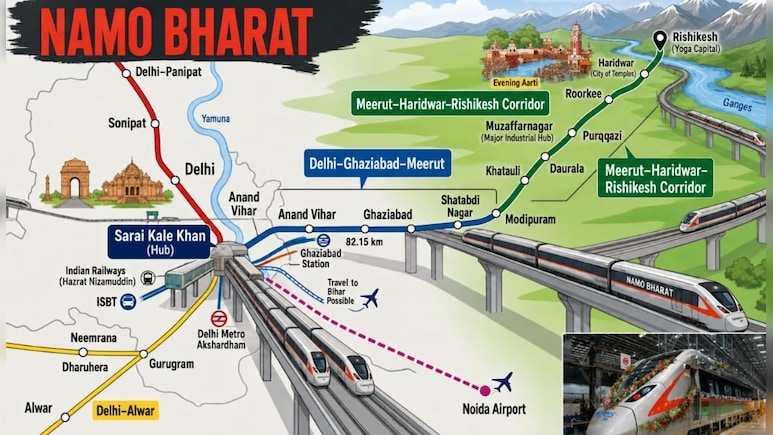
- The Meerut-Haridwar-Rishikesh Namo Bharat corridor has received in-principle approval, DPR survey is underway
- The 150 km route will connect Modipuram in Meerut to Haridwar and Rishikesh via Muzaffarnagar and Roorkee
- The corridor links with Delhi-Meerut, Delhi-Ghaziabad, and Delhi-Alwar rapid rail corridors
The upcoming Meerut-Haridwar-Rishikesh Namo Bharat (RRTS) corridor will get major connectivity with the rapidly expanding rapid rail network in Delhi-NCR.
The corridor has received in-principle approval and work on the Detailed Project Report (DPR) survey is currently underway.
The proposal was cleared in a meeting with Uttarakhand Chief Minister Pushkar Singh Dhami and Union Housing and Urban Affairs Minister Manohar Lal Khattar.
The National Capital Region Transport Corporation (NCRTC), along with the Uttar Pradesh and Uttarakhand governments, will work on extending the Delhi-Meerut Rapid Rail route.
The proposed route is around 150 km long and will extend from the last station of the Delhi-Meerut Namo Bharat train, Modipuram in Meerut.
Delhi-Meerut To Haridwar-Rishikesh Namo Bharat Corridor
In Uttar Pradesh, the 72-km stretch will pass through Meerut and Muzaffarnagar. In Uttarakhand, the 78-km section will go via Roorkee, Haridwar and Rishikesh.
The train will run from Modipuram to Daurala, Khaatauli, Muzaffarnagar, Purkazi, Roorkee, then through Har Ki Pauri in Haridwar, and finally up to near Lakshman Jhula in Rishikesh.
The Uttarakhand government has appointed Additional Secretary Reena Joshi as the nodal officer. NCRTC and the UP government have also appointed coordination officers to ensure there is no delay in land acquisition and route surveys.
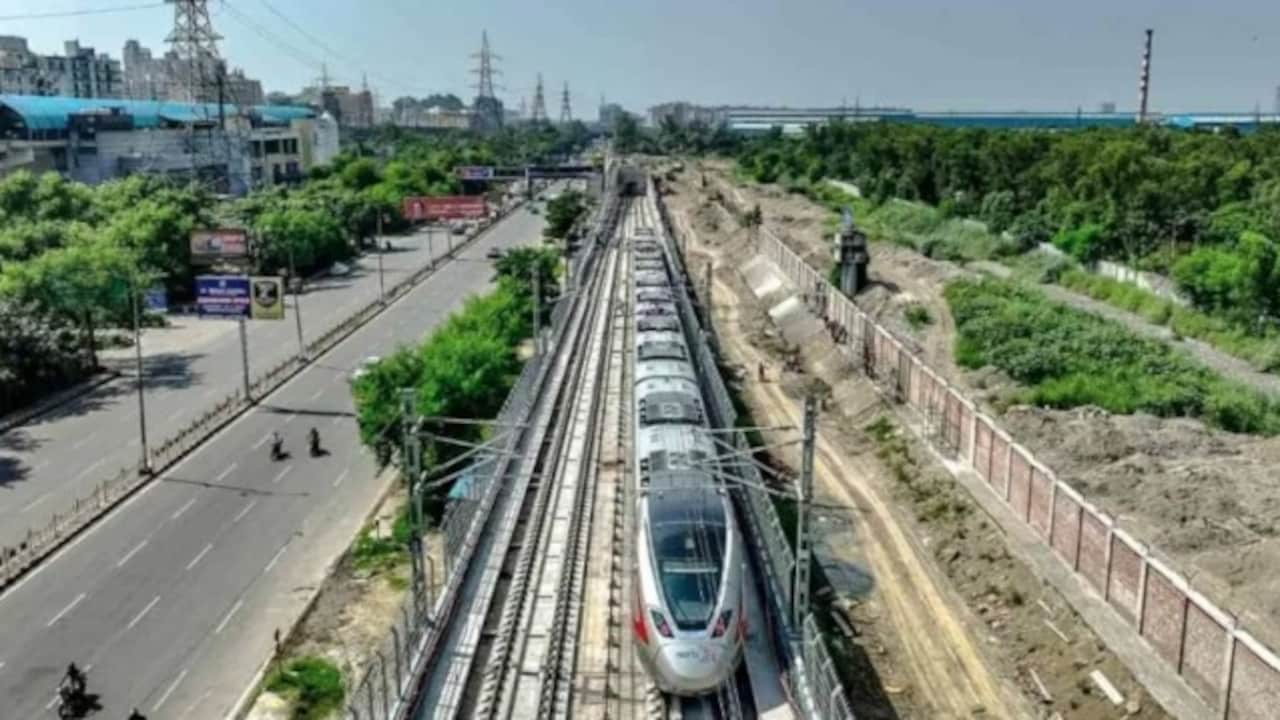
Delhi-Ghaziabad-Meerut Corridor
The Rishikesh Namo Bharat train will connect to the 82.15-km long Delhi-Meerut Namo Bharat route via Modipuram station in Meerut. This will create a direct network to stations in Ghaziabad - Sahibabad, Duhai, Guldhar - and to Delhi's Anand Vihar and Sarai Kale Khan, via Partapur and Shatabdi Nagar. Commuters from Noida and Ghaziabad will also get direct connectivity to Rishikesh.
Delhi-Alwar Corridor
Sarai Kale Khan in Delhi will also be the main hub for the Delhi-Gurugram-Shahjahanpur-Neemrana-Alwar Namo Bharat corridor. It is set to become Delhi-NCR's largest interchange hub. Passengers from Rishikesh and Haridwar will be able to travel to Alwar without changing trains, or by changing at the same station. People from Rishikesh and Haridwar will get high-speed connectivity to Gurugram, Neemrana and Alwar.
Delhi-Sonipat-Panipat Corridor
The Delhi-Sonipat-Panipat corridor is the third major rapid rail corridor connecting Delhi to Panipat in Haryana. Through interchanges at Sarai Kale Khan or Hazrat Nizamuddin, passengers from Uttarakhand and Muzaffarnagar will be able to connect directly to Sonipat and Panipat in Haryana. The route will run from Sarai Kale Khan via Mukarba Chowk to Panipat. It will later be extended to the Delhi-Panipat-Karnal corridor.
Ghaziabad To Noida Airport Route
The corridor from Ghaziabad to Noida International Airport in Jewar is an extension of the Delhi-Ghaziabad-Meerut route. It will go via Greater Noida to Noida International Airport. Passengers from Haridwar, Rishikesh and Muzaffarnagar will be able to reach Jewar Airport directly using the Ghaziabad interchange.
Connectivity With Delhi Metro
Namo Bharat train passengers can also connect to the Delhi Metro's Blue and Pink Lines from Anand Vihar, along with Anand Vihar Railway Terminal and the Inter-State Bus Terminal (ISBT). The Pink Line is directly connected to Hazrat Nizamuddin Railway Station and ISBT. With this expansion, the Namo Bharat network is set to link religious and tourist destinations in Uttarakhand directly with Delhi, NCR and the upcoming Jewar airport, giving a major boost to regional connectivity.
Track Latest News Live on NDTV.com and get news updates from India and around the world

