





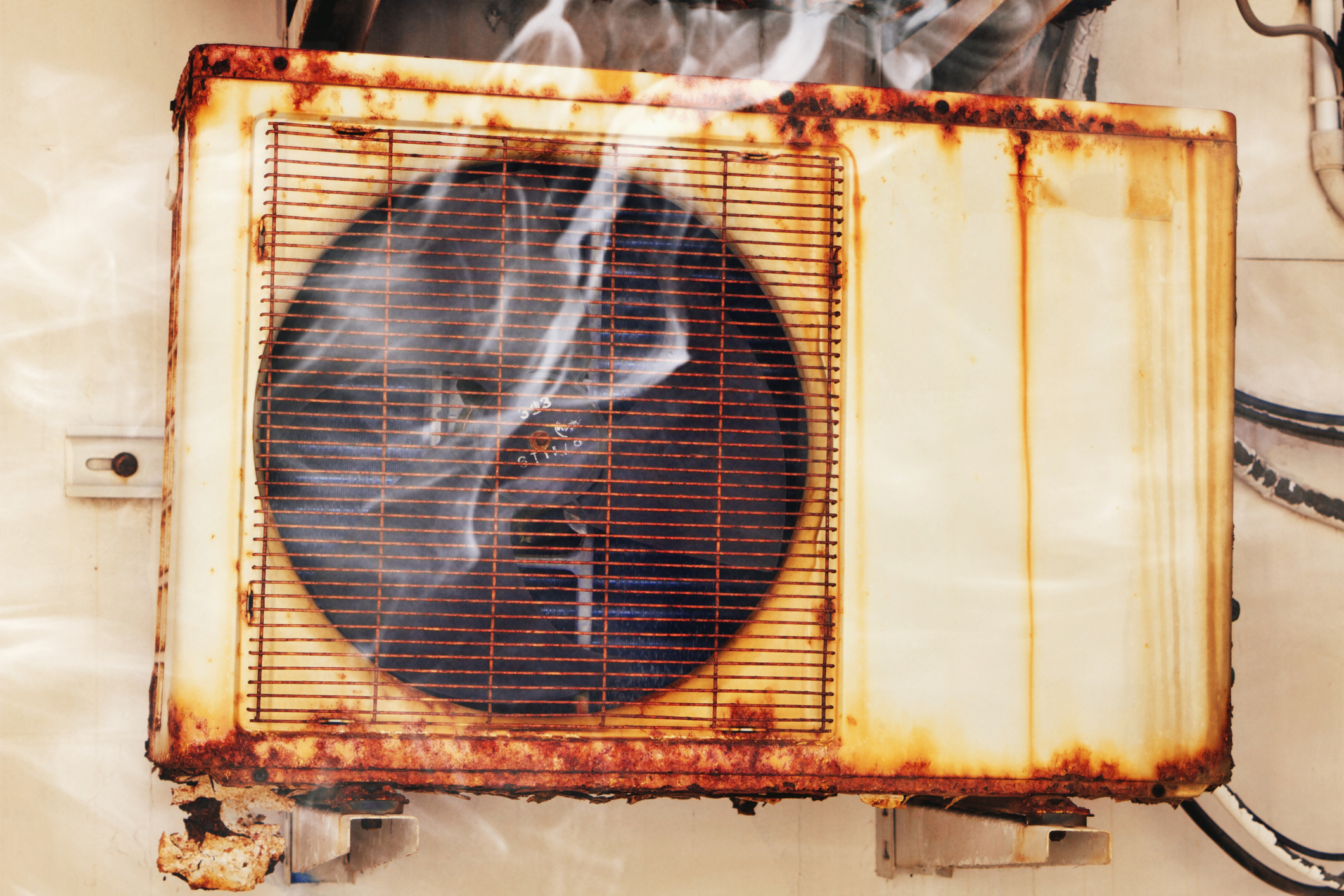
- Death of IAS officer Dhanendra Kumar linked to suspected AC blast in Delhi home
- AC units risk fire due to overheating from prolonged use and poor maintenance
- Electrical faults cause 60% of fire incidents in Delhi, says fire department
The death of retired IAS officer and Competition Commission of India's first chairman, Dhanendra Kumar, after a suspected AC blast triggered a fire at his South Delhi home, has once again raised serious questions about electrical safety during India's brutal summer months. Police said the fire at his Hauz Khas residence may have started from the indoor unit of an air-conditioner. Kumar later died due to smoke inhalation, while his son sustained injuries and is undergoing treatment.
As temperatures soar across north India, air-conditioners are running for longer hours than ever before. Experts say that prolonged use, coupled with poor maintenance and unstable electricity supply, can turn cooling appliances into a fire hazard.
According to the Delhi Fire Services department, nearly 60 per cent of fire incidents in the city are linked to electrical faults. These include short-circuits, overheating, overloading and the use of poor-quality electrical equipment.
So Why Do AC Units Catch Fire Or Explode?
One of the biggest reasons is overheating. During peak summer, many households run air-conditioners continuously for hours. This puts enormous pressure on the compressor - the heart of the cooling system. If the unit does not get enough time to cool down, internal temperatures can rise dangerously, increasing the risk of fire or even an explosion.
To prevent any such unfortunate incident, users should avoid running an AC endlessly through the day and night. Giving the compressor periodic breaks can significantly reduce overheating risks. Smart timers and intelligent AC controllers can also help manage usage better.
Another major cause is electrical short-circuiting. When current flows through a circuit for a long time, it generates intense heat. In severe cases, wires can melt and spark a fire. Normally, miniature circuit breakers (MCBs) are designed to trip automatically when the load becomes unsafe. But if the MCB itself is faulty, the safety mechanism can fail completely.
Voltage fluctuation is another silent threat. Sudden spikes or drops in power supply can damage compressors and sensitive electrical components inside the AC. In cities where voltage instability is common during summer, experts recommend using stabilisers, surge protectors, or inverter-based AC systems.
Refrigerant gas leakage can also become dangerous. If cooling gas escapes from damaged pipes or faulty components, the AC loses cooling efficiency and is forced to work harder. That extra strain can overheat the system. Warning signs include hissing sounds, weak airflow, warm air from vents and excessive ice formation on evaporator coils.
Blocked air filters are another overlooked danger. Dust and dirt buildup can restrict airflow, forcing the internal machinery to work harder to pull air through the system. This causes a sharp rise in operating temperature and increases the possibility of internal electrical failure.
Poor maintenance and ageing wiring further worsen the risk. Over time, insulation around wires can crack, connections may loosen, and electrical joints can deteriorate. When old wiring is forced to handle the heavy current drawn by an AC, the chances of a short-circuit rise sharply.
There are usually warning signs before a serious malfunction happens.
According to appliance manufacturer Haier, users should watch out for unusual noises, repeated on-and-off cycling, uneven cooling, burning smells, or smoke coming from the unit. These signs should never be ignored and require immediate inspection by a trained technician.
Safety experts also recommend a few simple precautions:
- Ensure indoor and outdoor wiring connections are tight and properly installed
- Regularly clean air filters to maintain airflow
- Keep the outdoor unit free from clutter
- Set the AC temperature between 24 and 26 degrees Celsius to reduce pressure on the system
- Use only authorised technicians for installation or repairs
- Check that circuit breakers and fuses are functioning properly
The tragedy involving Dhanendra Kumar is a grim reminder that an air-conditioner is not just another household appliance. In extreme summers, neglected electrical systems and overloaded cooling units can quickly turn deadly.
Track Latest News Live on NDTV.com and get news updates from India and around the world

