





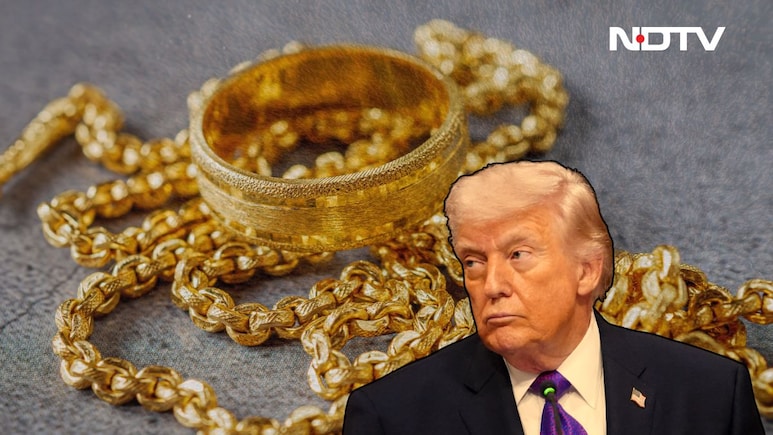
- Gold prices snapped higher above $4,550 an ounce, rising 4% in a single session
- After nine straight sessions of losses, traders reversed course
- Peace signals would normally weigh on gold. Instead, prices are climbing
Gold prices snapped higher above $4,550 an ounce, rising 4 per cent in a single session as hopes of US-Iran peace talks triggered a rush back into the metal after days of relentless selling.
The spark came after US President Donald Trump signaled that Iran had offered a "present" tied to energy flows through the Strait of Hormuz, hinting at possible progress in negotiations.
Talks could begin as early as Thursday, though Tehran has yet to respond.
The market reaction was immediate. After nine straight sessions of losses, traders reversed course.
But the bigger picture tells a more unsettled story. Gold is still down nearly 20 per cent from its January 2026 peak of $5,626 an ounce, a steep correction that has forced investors to rethink what is driving the metal.
Bengaluru-based strategist Naveen PMT called the move "a massive swing," driven by "classic headline risk volatility" as the crisis shifts tone.
He said the rally reflects a change in positioning rather than conviction. "The market is shifting from war panic to peace optimism," Naveen noted, describing the rise as a relief-driven bounce after one of gold's worst losing streaks in decades.
That has created an unusual moment. Peace signals would normally weigh on gold. Instead, prices are climbing.
Short covering is a big part of the story, with traders who had bet against gold rushing to close positions. Reports of a pause in strikes on Iranian energy infrastructure and easing fears of an oil-led inflation spike have also helped steady sentiment, while a softer dollar outlook has added support.
Naveen pointed to $4,600 as the next test. A sustained move above that level could signal the selloff has stabilised. Failure to hold gains could drag prices back toward $4,100.
The volatility has left investors questioning whether gold is still behaving like a hedge.
Dr. Renisha Chainani, Head of Research at Augmont, said the recent moves may look contradictory, but they follow a familiar pattern under stress.
"Typically, geopolitical tensions support gold, but in the current cycle, liquidity dynamics are dominating," she said. "During acute stress, investors sell their most liquid assets, like gold, to raise cash."
That pressure, she explained, can make gold fall even when uncertainty is rising. "The short-term reaction is driven more by liquidity and macro repricing than traditional safe-haven flows."
She pointed to inflation and interest rates as another force reshaping the market. "Higher oil prices are fuelling inflation, reinforcing a higher-for-longer rate environment," she said. "That raises real yields and pressures gold."
But why are central banks appearing reluctant to buy at current levels? "After aggressive accumulation over the past two years, some moderation is natural at elevated price levels," she said. "This is consolidation, not reversal."
She stressed that the broader trend remains intact. "Central banks remain net buyers," she said, linking purchases to long-term diversification away from the dollar.
Even concerns about India's vast household gold holdings, estimated at $5 trillion, need context. "Gold in India serves multiple roles, store of value, cultural asset, and emergency liquidity buffer," she said, adding that while overexposure can limit diversification, the asset itself carries no counterparty risk.
For Chainani, the recent turbulence does not redefine gold. "Gold is not becoming a risk asset structurally," she said. "Its behaviour in the short term can resemble one during liquidity shocks."
"Once liquidity stabilises and macro conditions normalise, gold typically reasserts its role as a hedge against inflation, currency debasement, and systemic risk."
Track Latest News Live on NDTV.com and get news updates from India and around the world

