





- Bandi Sikh politics resurfaces, challenging Akali Dal's monopoly in Punjab's Panthic issues
- Akali Dal's fragmentation weakens its hold on Sikh political and religious matters
- AAP and new Sikh groups actively engage with Panthic politics and prisoner release debates
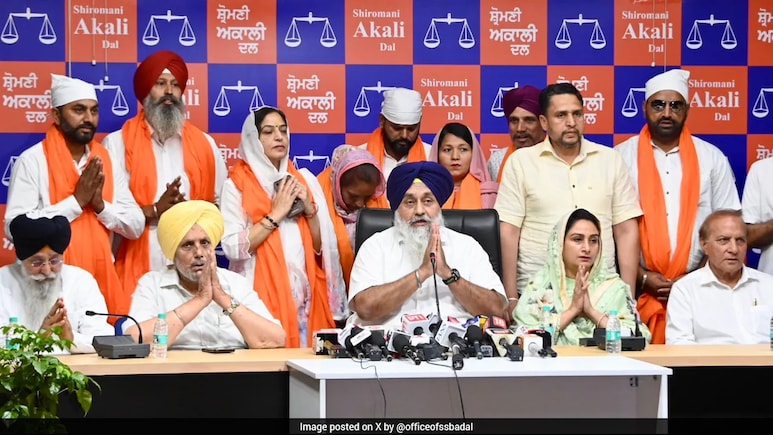
The return of Bandi Sikh politics to Punjab's electoral conversation ahead of the 2027 assembly polls is revealing an issue bigger than prisoner release: That Panthic politics is no longer the monopoly of the Shiromani Akali Dal or SAD.
For decades, the Akali Dal was seen as the natural political vehicle for Panthic issues. But that equation has weakened. The party itself has been fragmented and its political influence has declined.
AAP has stepped into the breach, along with newer Sikh formations and religious organisations to compete over issues that were once almost exclusively te provenance of the Akalis.
Read: Bhagwant Mann, BJP's Ravneet Bittu Back Parole For Beant Singh Murder Convict
The Bhagwant Mann government has opened a political and humanitarian conversation around Jagtar Singh Hawara. The Amritpal Singh led camp is seeking to build its own constituency around the Bandi Sikh issue. And the Damdami Taksal is building a statewide organisational structure that could potentially give it a political footprint.
The change, though, became clear with the Hawara parole issue. Jagtar Singh Hawara and Balwant Singh Rajoana were convicted for their involvement in the assassination of former Punjab Chief Minister Beant Singh in 1995.
Who Is Jagtar Hawara
Originally from Hawara village in Fatehgarh Sahib district, Punjab, Jagtar Singh Hawara was associated with Babbar Khalsa during the militancy. He is currently lodged in Delhi's Mandoli jail, convicted over the assassination of former Punjab Chief Minister Beant Singh and has remained at the centre of legal and political debates over parole and the issue of long-term Sikh prisoners in Punjab.
Panthic politics goes mainstream?
The Bandi Sikh issue is only one part of the larger context of the Akalis' weaking hold on issues revolving around Sikhs.
Sacrilege, the functioning of the SGPC and Akal Takht, Sikh prisoners, religious identity and the question of Sikh political representation have all become politically sensitive issues, with multiple takers willing to provide a separate political spin.
For the Akalis, this represents a paradox. The party needs Panthic issues to rebuild its relevance, but it can no longer depend on its getting ownership of the narrative.
Every time the Akalis seek to reclaim this space, another political actor can step in.
AAP's engagement with Jagtar Singh Hawara is particularly significant.
Chief Minister Bhagwant Mann's intervention seeking parole for Hawara on humanitarian grounds has allowed AAP to enter a space traditionally dominated by Panthic politics.
The Amritpal Singh camp makes the contest even more complicated. Its politics is built around a more assertive articulation of Sikh identity, and the Bandi Sikh issue gives it an emotive subject through which it can challenge both the established Akali leadership and AAP.
For a relatively new political formation, such issues offer a direct route to identity-based mobilisation, particularly in parts of rural Punjab.
The Damdami Taksal's moves are another indication of how the space is changing. Its decision to establish the Damdami Taksal Sewak Jatha and appoint halqa in charges across all 117 assembly and 13 Lok Sabha constituencies suggests that the religious institution is developing an organisational footprint with clear political possibilities.
Panthic Politics And Akali Dal
The Akali Dal once had a powerful political ecosystem connecting the party, SGPC, religious institutions, village networks and electoral politics.
That ecosystem has weakened. Panthic and Akali politics are no longer synonymous.
The irony is that weakening of the Akali Dal may actually be expanding the market for Panthic politics. There are now more political takers for Panthic issues precisely because no single force can claim uncontested ownership of them.
For the SAD, the challenge is therefore not simply to raise more Panthic issues. It is to convince Sikh voters that it remains the most credible political vehicle for those concerns.
For AAP, the challenge is to engage with Panthic sentiments without appearing opportunistic.
For emerging Sikh formations, the challenge is to convert emotional mobilisation into a sustainable political organisation.
And for institutions such as the Damdami Taksal, the question will be where the line between religious influence and electoral politics ultimately lie.
Track Latest News Live on NDTV.com and get news updates from India and around the world

