



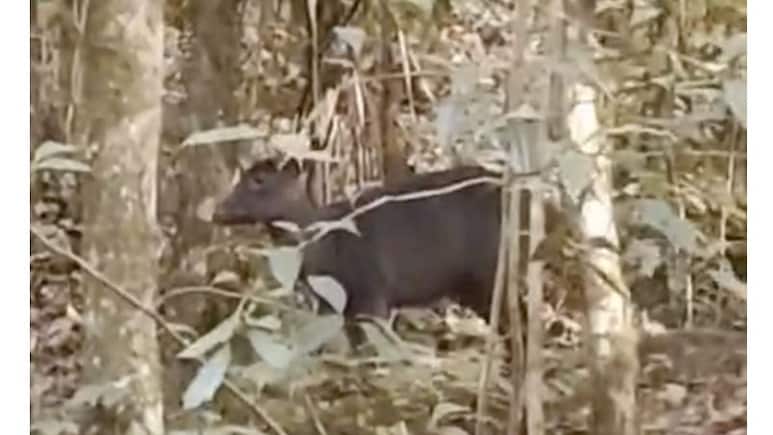
- A rare black deer was photographed in Dowhill forest, Kurseong Range, West Bengal
- The sighting was made by the Divisional Forest Officer during a routine patrol
- The dark coat is likely due to genetic mutation, not a different species
A rare black deer has been photographed in the Dowhill forest area of Kurseong Range in West Bengal. The sighting was made by the Divisional Forest Officer (DFO) during a routine patrol on Wednesday. The animal was captured on camera in the dense forest terrain, officials said. Forest authorities described the sighting as unusual for the region. The DFO told reporters that the dark coat is likely the result of a genetic mutation, rather than a separate species.
Similar sightings have previously been recorded only in isolated pockets of the Dowhill and Bagora forests, highlighting the ecological diversity of the Darjeeling Hills.
Watch The Video:
#Watch | A rare black deer has been photographed in the Dowhill forest area of Kurseong Range in West Bengal. The sighting was made by the Divisional Forest Officer (DFO) during a routine patrol on Wednesday pic.twitter.com/cDJ9NiIuPm
— NDTV (@ndtv) January 8, 2026
Sightings of black-coloured deer in India are extremely uncommon and usually represent genetic variations rather than a distinct species.
Melanism, a hereditary condition marked by excess dark pigmentation, can cause normally brown or tan deer to appear black. This has been documented in barking deer (muntjacs) in some forest areas, including parts of the Darjeeling hills, and is believed to result from a recessive gene.
Researchers note that melanistic animals are rare in wild deer populations because the genetic trait must be inherited from both parents. The condition does not necessarily indicate a separate species but a colour variation within an existing deer species.
While India is home to diverse deer species - including spotted deer (chital), sambar, and several musk deer species - fully black individuals are not typical and are most often the result of genetic mutation rather than a separate wildlife category.
With Inputs From Kawyesh Answari
Track Latest News Live on NDTV.com and get news updates from India and around the world

