





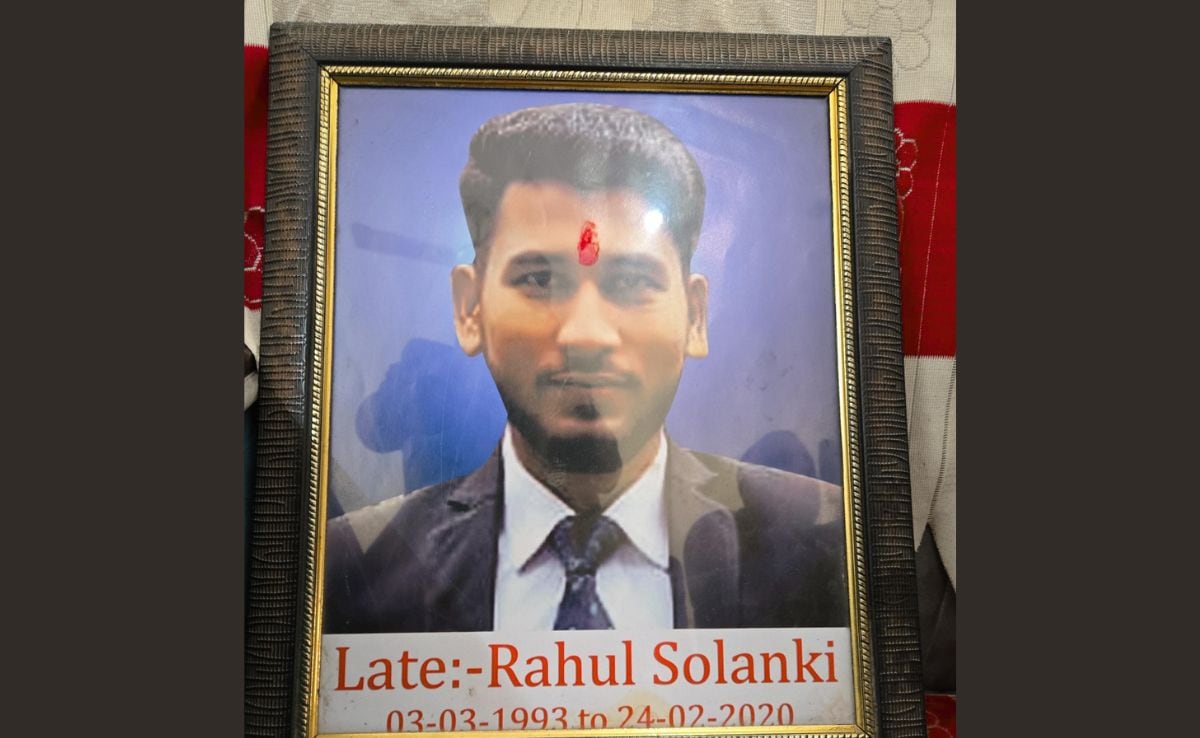
Rahul Solanki had stepped out to buy milk when he was caught by a violent mob and shot dead during the 2020 Delhi riots.
Two days after the communal clash broke out in northeast Delhi, 15-year-old Nitin Sugarth stepped out to buy fast food. He was caught amid the fight between the police and the violent crowd. The Sugarth family lost their son.
Today, as the Supreme Court rejected the bail pleas of student activists Sharjeel Imam and Umar Khalid, the Solankis and Sugarths welcomed the decision while wishing for the harshest punishment for the accused.
The Supreme Court granted bail to five others named in the case: Gulfisha Fatima, Meeran Haider, Shifa Ur Rehman, Mohd Saleem Khan, and Shadab Ahmed, with conditions.
Rahul Solanki, 26, was employed as a junior engineer with a private company in Dehradun while the family lived in Mustafabad at the time.
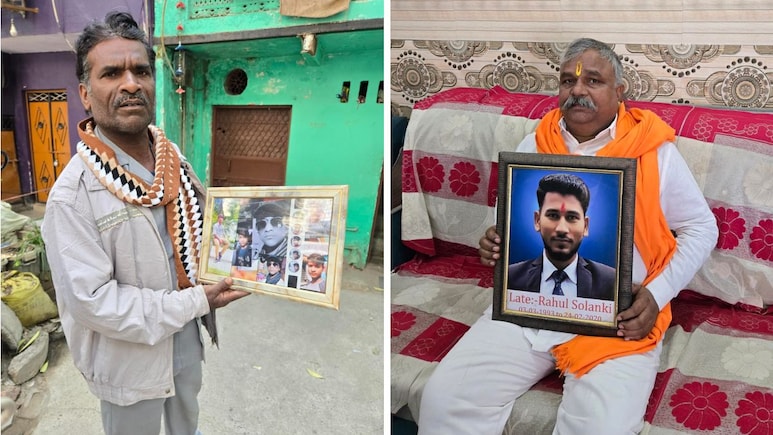
Recalling the horrific night, Hari Singh Solanki, father of Rahul Solanki, said he carried his son's lifeless body in his arms, desperately trying to reach a nearby hospital. "Wherever I went, I was met by bloodthirsty people looking to shed more blood," he said.
Speaking to NDTV after the Supreme Court's verdict, Solanki said he welcomes the rejection of bail but said it is "unfortunate" that five other accused have been granted bail. He claimed their release could lead to renewed violence and pose a threat to witnesses and evidence. "There is no guarantee they will not try to influence or threaten witnesses," he said, reiterating his demand for the harshest punishment for those responsible.
Holding a framed picture collage of his son Nitin, Ram Sugarth demanded justice. He believes that no compensation can be enough given the scale of the grief, but "we really want the culprits to be punished harshly."
Also Read | Why Supreme Court Granted Bail To 5 But Not Umar Khalid And Sharjeel Imam
What The Supreme Court Said
While reading out the verdict, the Supreme Court said it "cannot treat all individuals equally" for bail.
"The record discloses that all the appellants do not stand on equal footing as regards culpability. The hierarchy of participation requires the court to assess each application individually. Article 21 requires the state to justify prolonged pre-trial custody," the Supreme Court said.
The top court also noted that the two cannot be given the benefit of the delay in the trial.
Sharjeel Imam and Umar Khalid had challenged the Delhi High Court order denying them bail in a case filed under the stringent Unlawful Activities (Prevention) Act, or (UAPA), linked to the alleged larger conspiracy behind the 2020 Delhi riots.
2020 Delhi Riots Case
On February 24, 2020, during widespread protests against the Citizenship (Amendment) Act (CAA) and the National Register of Citizens (NRC), a communal clash broke out in northeast Delhi. The riots continued for days, leaving more than 50 people, mostly Muslims, dead and over 700 injured.
Twenty people, including Umar Khalid, Sharjeel Imam and former Aam Aadmi Party (AAP) councillor Tahir Hussain, were among those who were charged for their alleged involvement in the larger conspiracy to incite the riots.
Track Latest News Live on NDTV.com and get news updates from India and around the world

